
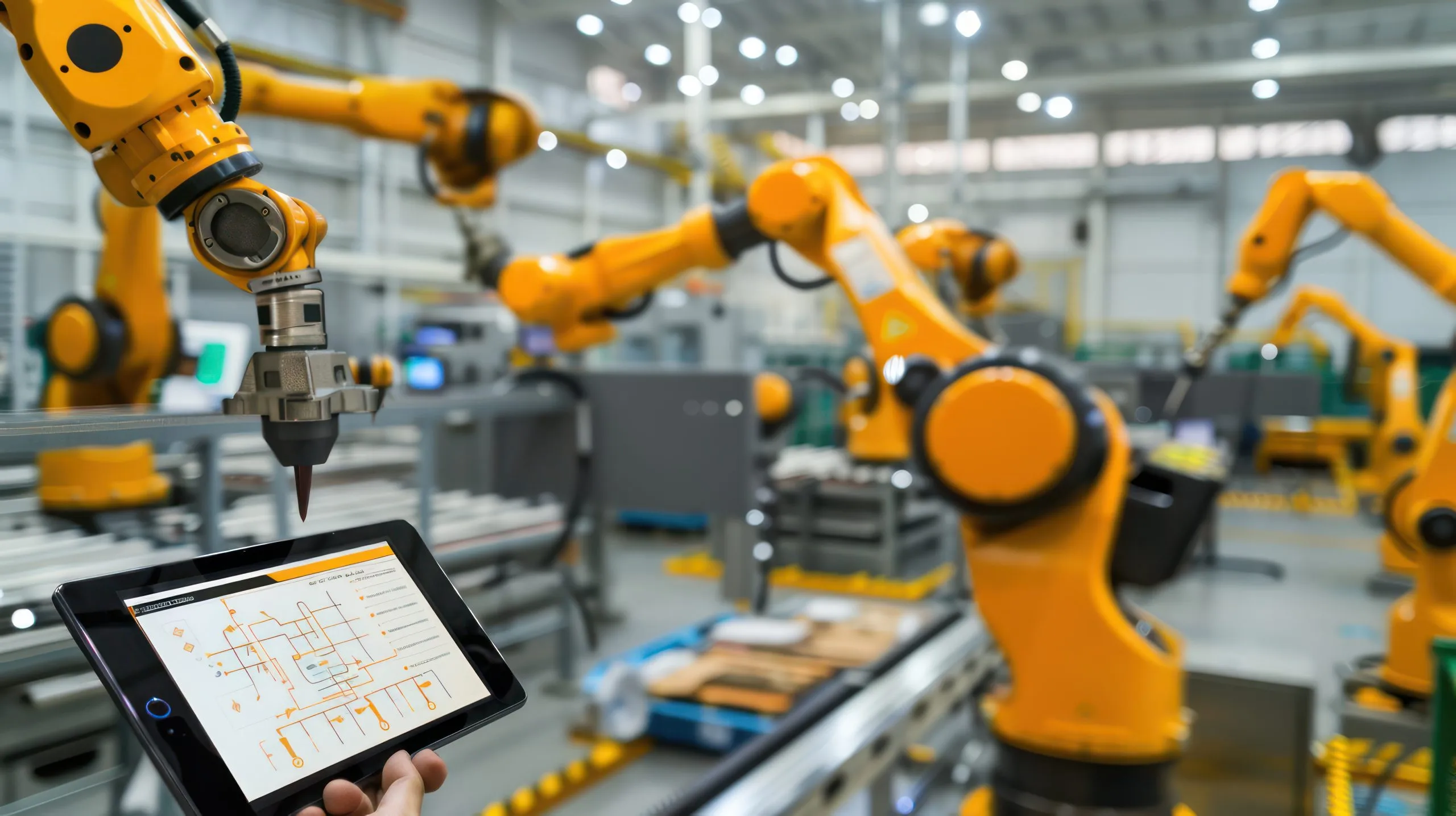
Saudi Arabia’s industrial automation market is on a strong growth path, driven by the country’s push for economic diversification and digital transformation. With industries across manufacturing, oil & gas, logistics, and utilities increasingly turning to automation, the demand for cutting-edge technologies like robotics, AI-driven controls, and smart sensors is rising. Automation is seen as the key to improving efficiency, cutting costs, and boosting competitiveness. As Saudi Arabia moves towards its future goals, the role of industrial automation in modernizing industries and improving operational performance is set to expand even further.
Factors fueling growth of Automation Market in Saudi Arabia
Digital Transformation and Operational Efficiency
A major driver of the industrial automation boom in Saudi Arabia is the growing push for digital transformation across sectors. In manufacturing, automation technologies help companies streamline production lines, reduce errors, and increase efficiency. These systems are reducing downtime by 15–30%, making processes smoother and more cost-effective. The oil & gas industry, which is crucial to Saudi Arabia’s economy, is also increasingly relying on automation to optimize extraction processes, improve safety, and enhance the efficiency of refineries. As businesses seek ways to stay competitive in the global market, automation is becoming an essential tool for driving efficiency and reducing costs.
Smart Infrastructure and Logistics Growth
Another key factor behind the rise in industrial automation is the expansion of smart infrastructure and modern logistics systems in Saudi Arabia. The country’s strategic position as a trade hub between Asia, Europe, and Africa is making it more important for logistics networks to be efficient and high performing. Automation plays a big role in this transformation. Automated warehouses, real-time tracking systems, and robotic material handling are becoming standard solutions for the logistics and supply chain sectors. With e-commerce growth driving higher demand for faster deliveries, automating these processes helps businesses meet consumer expectations while improving operational accuracy and efficiency.
KSA Government Vision towards enhancing Industrial Automation Market
Saudi Arabia’s government is heavily investing in the country’s technological future. Vision along with initiatives like the National Industrial Development and Logistics Programme (NIDLP), aims to diversify the economy and make it more technologically advanced. These initiatives provide incentives for businesses to adopt automation technologies, as well as invest in digital infrastructure and workforce training. With government backing, industries in Saudi Arabia are being encouraged to embrace automation to stay competitive in a rapidly changing global market.
Competitive Landscape in Saudi Arabia’s Automation Market
The automation market in Saudi Arabia is a mix of global players, regional companies, and local innovators. International companies bring advanced automation technologies, while local system integrators focus on custom solutions tailored to Saudi Arabia’s industries. This blend of global expertise and local knowledge is helping businesses in Saudi Arabia implement automation solutions that meet specific needs in sectors like oil & gas, manufacturing, and logistics. As the demand for automation increases, competition in the market is intensifying, with companies striving to offer the best value through innovative and flexible solutions.
Challenges Facing the Industrial Automation Market in Saudi Arabia
Integration with Existing Systems
One of the main challenges is integrating new automation technologies with existing legacy systems. Many industries in Saudi Arabia still rely on older equipment that wasn’t designed to be connected to modern automation systems. This creates extra costs and complexity when trying to integrate new technologies, slowing down the adoption process, especially for smaller businesses with limited resources.
Skills Shortage and Talent Development
Another significant challenge is the shortage of skilled workers trained to manage and operate advanced automation systems. With the rapid growth of digital technologies, there is a growing need for professionals skilled in robotics, AI, and data analysis. To address this gap, there needs to be more focus on training programs, partnerships with educational institutions, and a push toward workforce development to ensure that Saudi Arabia can build the talent pool necessary to support the automation sector.
Future Outlook
Saudi Arabia’s industrial automation market is set to experience continued growth as technology adoption expands across sectors. Automation will become more widespread in industries ranging from manufacturing and logistics to healthcare and utilities. The use of AI, machine learning, and predictive analytics will make automation smarter and more adaptive, allowing businesses to optimize their operations further. The government’s ongoing support and investments in infrastructure and skills development will be crucial in ensuring that Saudi Arabia remains at the forefront of industrial innovation. As automation continues to shape the future of the Kingdom, it will play a central role in the country’s economic transformation, driving productivity and efficiency across industries.
Consultants at Nexdigm, in their latest publication KSA Industrial Automation Market Outlook 2035, analyze the sector by System Type (PLC Type, SCADA System, DCS System, Industrial Robots, Safety Instrumented Systems), by End User segment (Automotive Industry, Electronics and Semi-Conductors, Oil and Gas, Food and Beverage, Pharmaceuticals).
Nexdigm suggests that businesses in Saudi Arabia should prioritize investing in industrial automation to enhance operational efficiency, improve product quality, and drive cost savings. By embracing technologies such as AI, robotics, and data analytics, companies can optimize their manufacturing processes, reduce downtime, and increase production flexibility.
To take the next step, simply visit our Request a Consultation page and share your requirements with us.
Harsh Mittal
+91-8422857704