
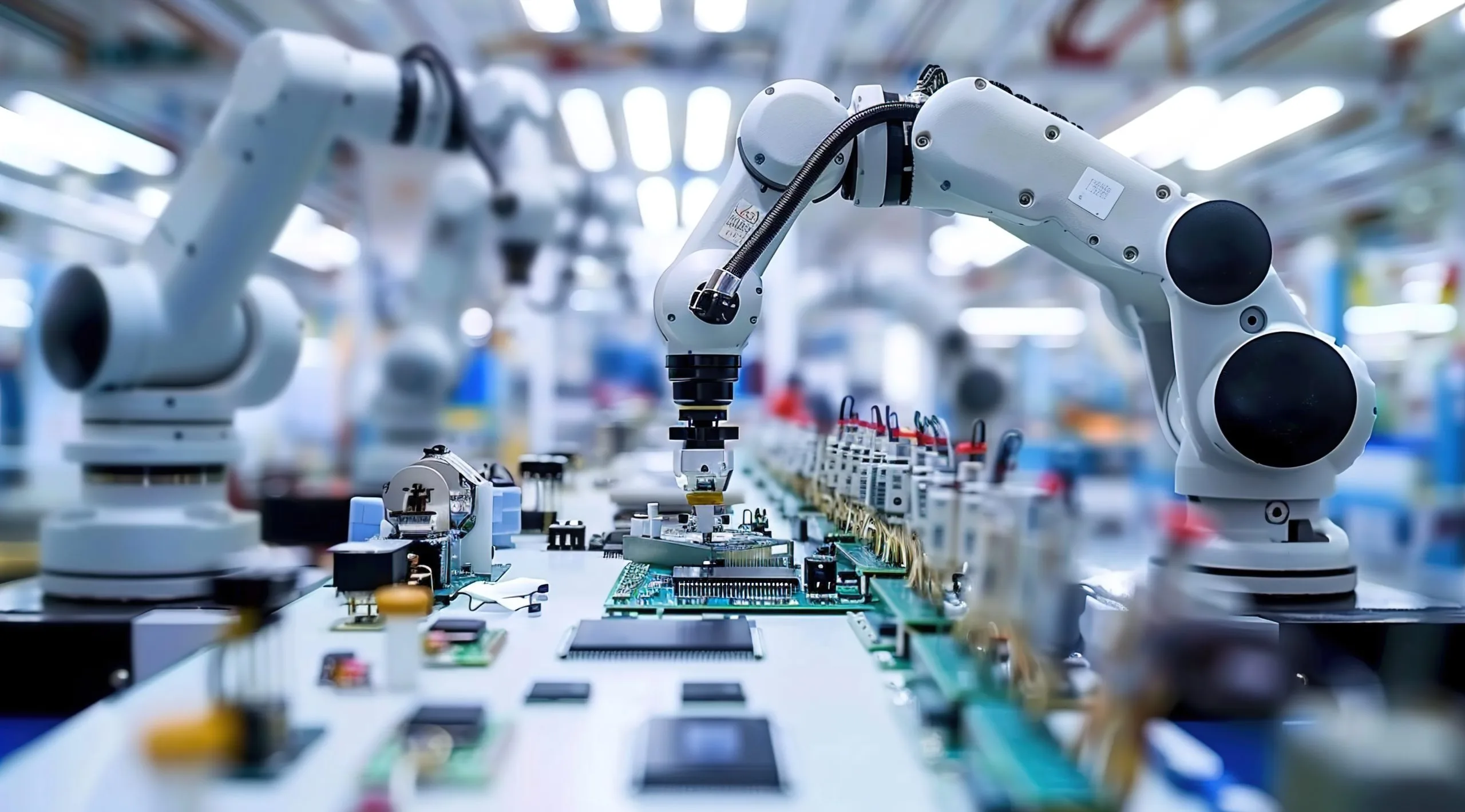
Saudi Arabia’s robotics market is set to grow rapidly over the next decade, fueled by the country’s push for technological innovation and modernization. With industries across the Kingdom increasingly adopting automation and robotics to enhance productivity, improve safety, and reduce costs, the demand for robotics is expected to surge. As part of Saudi Arabia’s Strategic Vision and policies, which aims to diversify the economy, robotics will play a key role in sectors such as manufacturing, logistics, healthcare, and public services. The Kingdom is investing in building a future where automation is central to its growth and global competitiveness.
Factors Accelerating Robotics Adoption in Saudi Arabia
Boosting Industrial Automation and Smart Manufacturing
A major driver of robotics adoption in Saudi Arabia is the focus on modernizing industries through automation. Sectors like manufacturing, automotive, and electronics are embracing robotics to streamline production, improve product quality, and boost efficiency. Industrial robots are already being used to handle repetitive tasks, reducing human error and freeing workers for more complex jobs. With manufacturing processes becoming smarter and more efficient, automation is quickly becoming a competitive advantage for businesses across the Kingdom.
Revolutionizing Logistics and E-Commerce
E-commerce is growing at a rapid pace in Saudi Arabia, creating an increasing need for efficient logistics and faster order fulfillment. Robotics is transforming the logistics sector, with automated warehouses, robots for sorting packages, and autonomous vehicles for deliveries. These innovations help logistics companies handle higher volumes of orders and meet growing consumer expectations for quick and accurate deliveries. Given Saudi Arabia’s strategic location as a trade hub, automation in logistics will continue to grow, supporting the Kingdom’s position as a key player in global trade.
Healthcare and Public Sector Innovations
The healthcare sector in Saudi Arabia is also seeing the benefits of robotics. From surgical robots to telepresence and disinfecting robots, technology is improving patient care and making operations more efficient. The Kingdom’s healthcare system, which is rapidly expanding to meet the needs of a growing population, relies increasingly on automation to deliver higher-quality services. Moreover, public sector initiatives, like smart city projects, are integrating robotics to improve everything from waste management to traffic control, enhancing the quality of life for citizens.
Government Support to transform Robotics Market in KSA
The Saudi government has made significant strides in fostering a favorable environment for robotics through its agenda. Policies that support digital transformation, investment in high-tech industries, and public-private partnerships are driving the growth of robotics. Initiatives like technology parks and investment in STEM education are helping to build a strong foundation for the future. With these strategic investments, Saudi Arabia is positioning itself to become a leader in robotics and automation in the Middle East.
Competitors and Leaders of Saudi Arabia’s Robotics Market
Saudi Arabia’s robotics market are characterized by a mix of international giants, regional players, and local startups. Global robotics companies bring in cutting-edge technologies and advanced robotics systems, while local players focus on adapting these systems to meet the specific needs of Saudi industries. Partnerships between international firms and local businesses are key to building local expertise and enhancing the capabilities of Saudi companies. As demand continues to grow, the market is becoming more competitive, pushing innovation and the development of new robotics applications.
Barriers in Saudi Arabia’s Robotics Market
High Costs and Integration Challenges
Despite the growing interest in robotics, high upfront costs and integration with existing systems remain challenges. Setting up advanced robotic systems requires significant investment in infrastructure, training, and technology, which can be a barrier for smaller businesses. Additionally, integrating new robotics systems with legacy infrastructure can be complex and expensive, particularly for industries with older equipment.
Skills Gap and Workforce Training
A major challenge facing the robotics sector is the shortage of skilled workers capable of operating, programming, and maintaining these advanced systems. While the demand for robotics is increasing, there is still a gap in the availability of qualified talent. Bridging this skills gap will require investments in education and training, and the creation of programs to equip the workforce with the necessary technical expertise.
Future Outlook
Looking forward, Saudi Arabia’s robotics market is set for continued growth. As industries increasingly rely on automation to stay competitive, the adoption of robotics will expand beyond traditional sectors like manufacturing and logistics into healthcare, retail, and public services. Advances in artificial intelligence, machine learning, and autonomous technology will make robotics even more efficient and versatile, improving both operational processes and customer experiences. Government policies focused on innovation, coupled with ongoing investments in education and workforce development, will help the Kingdom build a robust robotics ecosystem. The future of robotics in Saudi Arabia is bright, with automation playing a central role in the country’s push to diversify its economy and strengthen its technological capabilities.
Consultants at Nexdigm, in their latest publication KSA Robotics Market Outlook to 2035, analyze the sector by Platform Type (Mobile Platform, Stationary Platform, Integrated Platform, Modular Platforms and Robotic arms), by Procurement Type (Direct Procurement, Government Tenders, Private sector Procurement, Online bidding Platforms, Third party distributors).
Nexdigm suggests that businesses in Saudi Arabia invest in robotics and automation to boost operational efficiency, lower costs, and maintain a competitive edge in the fast-changing market. By adopting advanced robotics technologies, companies can optimize manufacturing, enhance product quality, and meet the increasing demand for faster, more precise outcomes.
To take the next step, simply visit our Request a Consultation page and share your requirements with us.
Harsh Mittal
+91-8422857704