
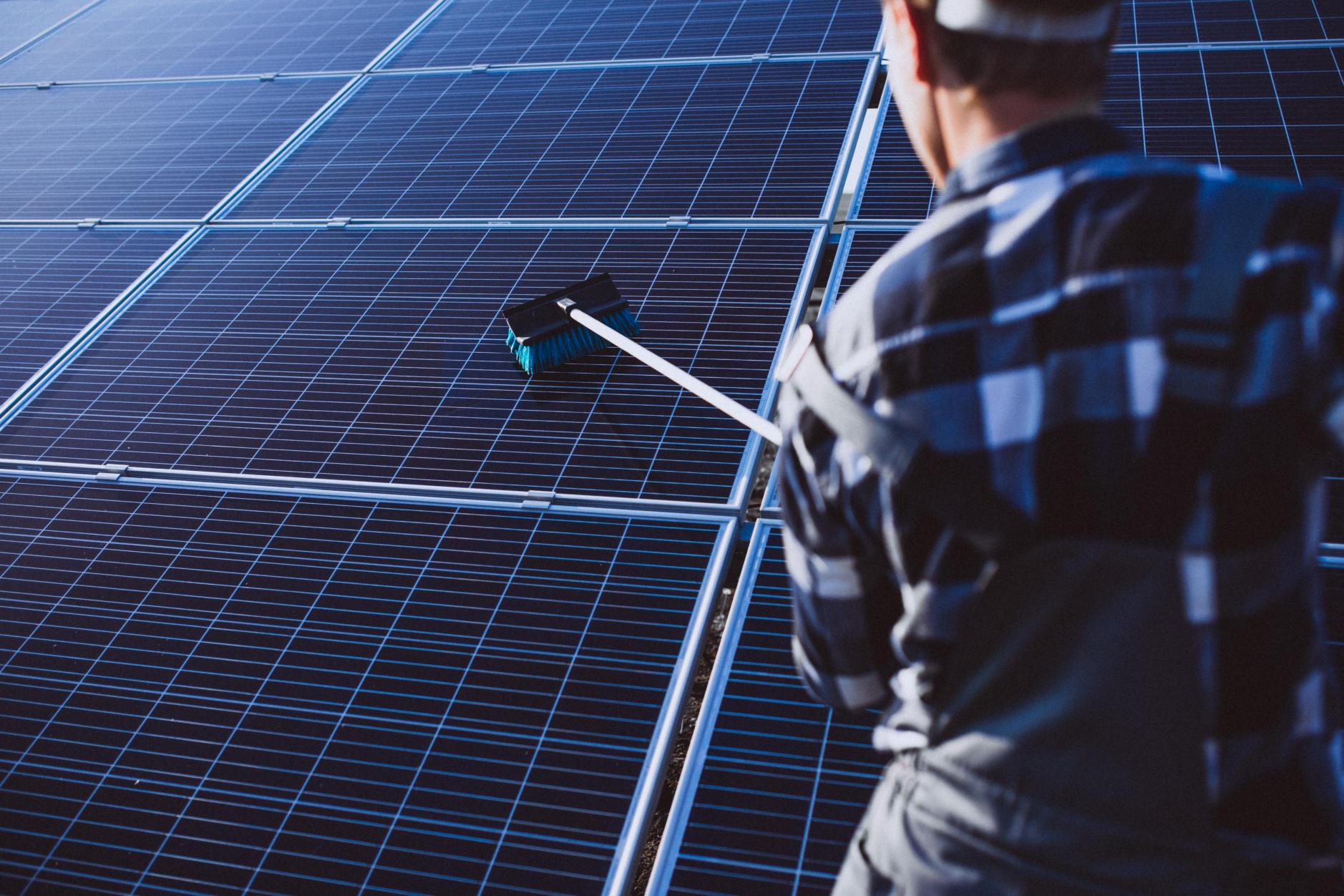
Saudi Arabia’s growing renewable energy sector is creating significant opportunities for solar panel cleaning systems and services. The country’s solar cleaning industry was valued at approximately USD 412.5 million in 2025, with an expected compound annual growth rate (CAGR) of 8.4% through 2035. Increasing solar installations, harsh desert conditions, and frequent sand accumulation are driving demand for efficient panel maintenance. As large-scale projects expand under Vision 2030, operators are adopting automated cleaning robots, waterless technologies, and AI-enabled monitoring to improve energy generation and operational efficiency.
Market Drivers Advancing Saudi Solar Panel Cleaning Growth
Expansion of Utility-Scale Solar Installations
Saudi Arabia’s ambitious renewable energy expansion is increasing the installed base of photovoltaic (PV) panels requiring regular maintenance. According to the General Authority for Statistics, the Kingdom had 6,151 MW of operational solar capacity by the end of 2024, supported by nine solar projects. The expansion of large installations, including Sudair Solar and Sakaka Solar, is creating recurring demand for cleaning equipment, robotic systems, and specialized maintenance services. As solar assets become larger, operators increasingly require scalable cleaning solutions to maintain energy output and reduce maintenance costs.
Desert Dust and High Soiling Losses
Frequent sandstorms, airborne dust, and dry climatic conditions accelerate dust accumulation across solar modules. Locations such as the Nafud Desert experience challenging environmental conditions that can reduce panel efficiency when cleaning is delayed. Regular maintenance is therefore essential to prevent soiling-related power losses and maintain consistent electricity generation. This is encouraging demand for automated cleaning robots, waterless systems, and scheduled maintenance services that can operate across extensive solar installations.
Growing Adoption of Robotics and Smart Maintenance
Technology adoption is reshaping solar cleaning operations. Robotic cleaners, autonomous systems, AI-enabled sensors, and predictive maintenance platforms are helping operators optimize cleaning schedules and reduce manual intervention. Waterless robotic technologies are particularly attractive in regions facing water constraints. These solutions can improve operational consistency, reduce dependence on conventional water-intensive methods, and support long-term asset performance across utility-scale solar facilities.
Government Initiatives Supporting Saudi Solar Panel Cleaning Sector
Saudi Arabia’s Vision 2030 and National Renewable Energy Program (NREP) are accelerating renewable energy deployment, with a target of generating approximately 50% of electricity from renewable sources by 2030. The Saudi Green Initiative further supports sustainability, emissions reduction, and resource efficiency. These programs encourage investment in solar infrastructure and technologies that improve operational performance. The government’s emphasis on sustainable water management also creates opportunities for waterless cleaning and automated maintenance solutions.
Competitive Landscape of Saudi Solar Panel Cleaning Industry
The competitive landscape includes specialized solar maintenance contractors, robotic cleaning technology providers, equipment manufacturers, and integrated operations and maintenance companies. Riyadh-based Desert Solar Tech, established in 2018, represents the growing presence of domestic service providers transitioning towards autonomous and waterless cleaning technologies. Competition increasingly focuses on cleaning efficiency, equipment reliability, water consumption, automation capabilities, and long-term service contracts. Companies offering locally adapted solutions for desert environments are positioned to address the evolving requirements of large solar installations.
Challenges Impacting Saudi Solar Panel Cleaning Industry
Water Scarcity and Environmental Constraints
Traditional wet-cleaning techniques require significant water resources, making them less attractive in an arid country where water conservation remains a priority. Companies must balance cleaning effectiveness with sustainable resource consumption.
High Technology and Maintenance Costs
Autonomous robotic systems, sensors, and AI-based monitoring solutions require considerable initial investment. Equipment maintenance, replacement costs, and integration with existing solar infrastructure can also challenge smaller service providers.
Future Outlook
Increasing Demand for Automated Cleaning Solutions
Saudi Arabia solar cleaning industry is expected to maintain steady expansion, supported by an estimated 8.4% CAGR through 2035. The growing deployment of utility-scale solar projects will increase demand for autonomous robots, AI-powered monitoring, and advanced cleaning equipment. Technology providers focusing on operational efficiency and reduced water consumption are likely to gain stronger opportunities.
Opportunities in Sustainable Industrial Maintenance
The transition towards waterless cleaning, predictive maintenance, and locally manufactured equipment will shape future industry development. Partnerships between solar developers, equipment manufacturers, and maintenance contractors can strengthen domestic capabilities. As renewable energy infrastructure expands, efficient panel cleaning will become increasingly important for maximizing generation, improving asset longevity, and supporting Saudi Arabia’s sustainability ambitions.
Consultants at Nexdigm, in their latest publication “KSA Solar Panel Cleaning Systems and Services Market Outlook to 2035,” analyze the sector By (Definition of Utility-Scale PV, Bottom-Up Capacity Estimation, Analysis of Saudi Vision 2030, Supply Chain Vendor Interviews, Sandstorm Soiling Impact Assessment).
Nexdigm suggests that businesses in the KSA Solar Panel Cleaning Systems and Services Industry focus on adopting AI-powered robotic cleaning technologies, water-efficient maintenance solutions, and environmentally compliant practices. Companies that enhance operational efficiency, reduce maintenance costs, and support expanding utility-scale solar installations can strengthen their competitive position and capitalize on the industry’s strong growth potential.
To take the next step, simply visit our Request a Consultation page and share your requirements with us.
Harsh Mittal
+91-8422857704