
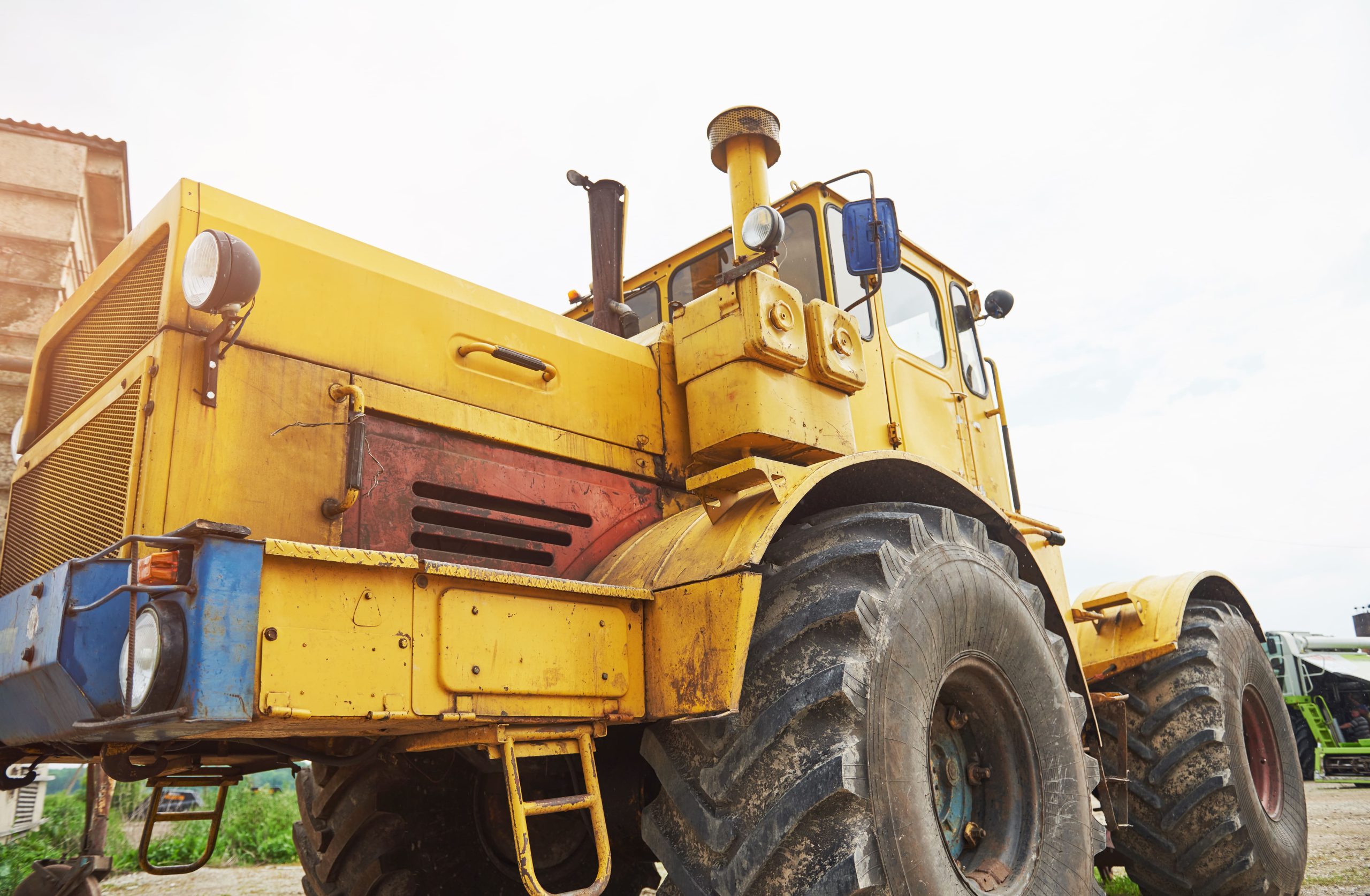
The Saudi Arabian agricultural equipment market is going through a steady shift as the Kingdom advances food security goals under Vision 2030 and expands modern farming in water-efficient and controlled environments. While Saudi Arabia has limited arable land and faces water scarcity, government support for greenhouse farming, precision irrigation, and desert agriculture is driving demand for affordable and reliable machinery. As of 2026, the majority of tractors operating in KSA are imported from global OEMs, with a growing volume entering the secondary market after 4–8 years of use due to fleet renewal cycles by large farms and contractors. The used tractor segment is gaining traction as small and mid-sized farms, agri-enterprises, and landscaping contractors seek to optimize capital expenditure amid rising equipment prices and operating costs.
What’s Driving the Used Tractor Market in KSA?
Food Security Programs and Controlled-Environment Farming
Saudi Arabia’s food security agenda under Vision 2030 emphasizes reducing import dependency for select crops and improving domestic production through modern farming methods. Investments in greenhouses, hydroponics, and shade-net cultivation are expanding the addressable market for compact and mid-horsepower tractors used in soil preparation, material handling, and on-farm logistics. For smaller operators and new agri-tech ventures, used tractors offer a cost-effective entry point, accelerating mechanization adoption in emerging agricultural clusters across Riyadh, Al-Qassim, and Al-Jouf.
Farm Consolidation and Commercial Agriculture
The gradual consolidation of farms and the rise of commercial-scale agri-businesses are creating replacement cycles for machinery fleets. Large operators upgrade to newer, fuel-efficient or precision-enabled tractors, releasing mid-life equipment into the resale channel. This improves availability in the secondary market and broadens options for price-sensitive buyers. Additionally, contract farming and service providers increasingly rely on used tractors for seasonal workloads, strengthening demand beyond core farming applications.
Landscaping, Municipal, and Construction Support Demand
Beyond agriculture, tractors are widely used in landscaping, municipal services, and light construction support. Saudi Arabia’s urban development projects and giga-projects under Vision 2030 are expanding demand for utility tractors used in land preparation, site maintenance, and transportation. Contractors prefer used equipment for project-based deployment to control upfront investment, which provides a stable, non-agricultural demand base for the used tractor market.
Government-Led Initiatives Supporting Mechanization
Public and semi-public programs supporting smart irrigation, water-efficient farming, and agricultural financing are indirectly encouraging mechanization in rural and peri-urban areas. Subsidized credit lines, equipment financing through development funds, and support for sustainable agriculture are improving affordability for farmers transitioning from manual to mechanized operations. Sustainability targets and fuel-efficiency standards are also nudging large farms to refresh fleets more frequently, increasing secondary supply of serviceable tractors.
Market Competition and Distribution Landscape
The KSA used tractor market is moderately fragmented. Authorized dealer networks linked to global OEMs dominate the organized resale and certified pre-owned segment, while independent traders and regional brokers serve price-sensitive buyers. Digital equipment marketplaces and online auctions are improving price discovery and widening reach, particularly for buyers in remote agricultural zones. Over time, refurbishment standards, warranty-backed used equipment, and financing options are expected to formalize the market further and build buyer confidence.
Limited Arable Land and Water Constraints
Saudi Arabia’s arid climate and limited arable land naturally cap large-scale agricultural expansion. Water scarcity and rising irrigation costs restrict cultivation intensity in certain regions, moderating overall demand for tractors compared to major agrarian economies. This structural constraint keeps market volumes concentrated in specific pockets such as controlled-environment farms, landscaping, and municipal applications.
Future Outlook
The KSA used tractor market is expected to witness steady, structural growth through 2035, supported by mechanization in controlled farming environments, landscaping demand linked to urban development, and fleet replacement cycles among large agri-enterprises. By 2035, the market is likely to become more organized, with greater penetration of certified refurbishment programs, wider adoption of leasing and financing models, and higher transparency in pricing. While Saudi Arabia may not emerge as a high-volume agricultural machinery market, it is well-positioned to serve as a regional trading and redistribution hub for used tractors across the Middle East and North Africa, supported by its logistics infrastructure and re-export capabilities.
Consultants at Nexdigm, in their latest publication “KSA Used Tractor Market Outlook to 2035”, analyzed the market by Horsepower (Below 50 HP, 50–100 HP, Above 100 HP), By Application (Agriculture, Landscaping, Municipal Services, Construction Support), and By Sales Channel (Authorized Dealers, Independent Traders, Online Platforms, Auctions). Nexdigm believes businesses should prioritize certified refurbishment, strong after-sales service networks, and digital sales platforms, while leveraging re-export opportunities to Africa and South Asia as key growth levers in the secondary tractor market.
To take the next step, simply visit our Request a Consultation page and share your requirements with us.
Harsh Mittal
+91-8422857704