
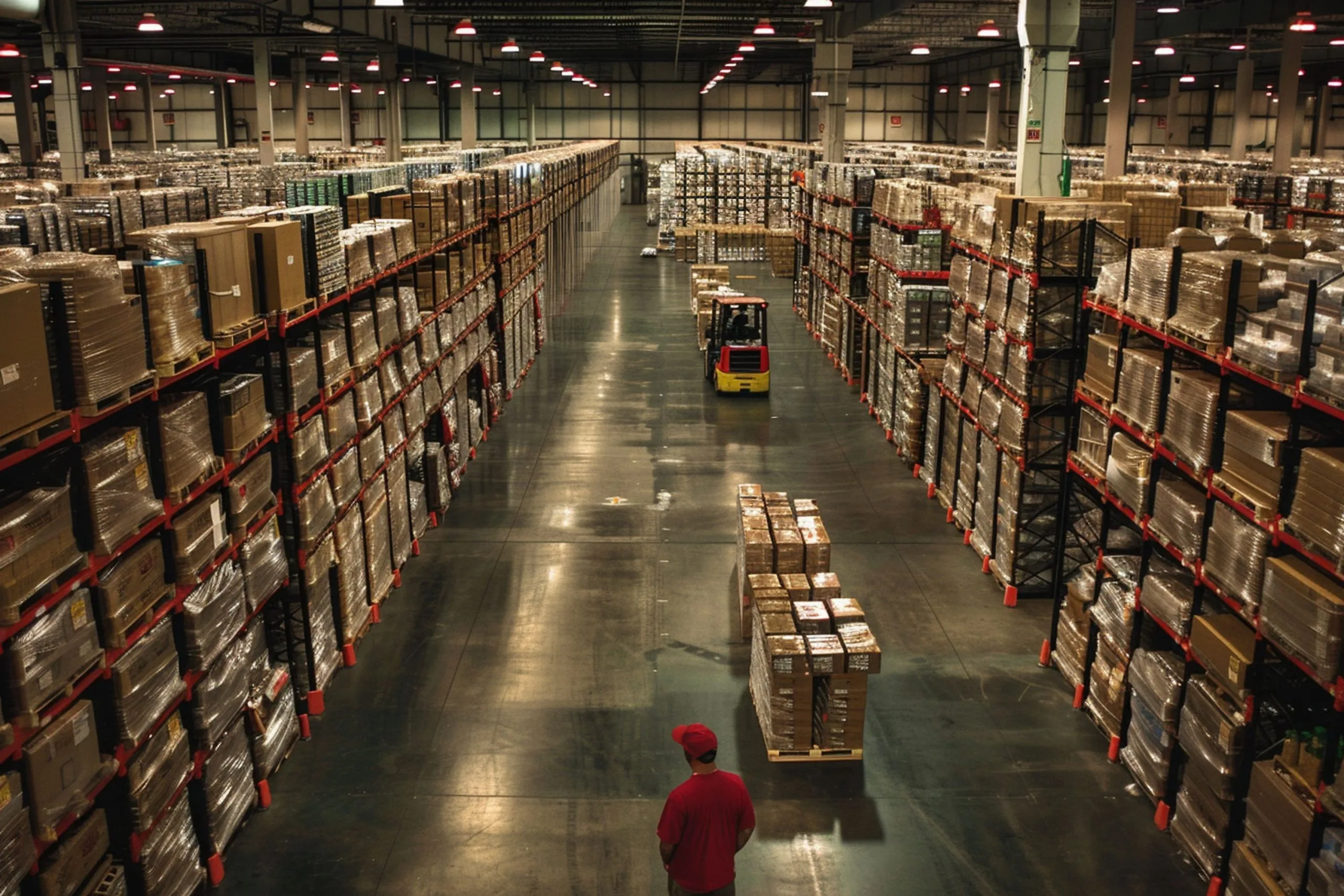
Saudi Arabia’s warehousing sector has moved well beyond basic storage sheds on industrial land. It now sits at the center of the Kingdom’s trade, retail, and manufacturing ambitions. As of 2026, demand is strongest in Riyadh, Jeddah, and Dammam, where consumption, port activity, and industrial output naturally converge. Companies that once accepted older low-spec facilities are now asking for higher ceilings, better truck access, dock systems, and real-time inventory visibility. This shift has not happened by accident. Vision 2030 reforms, faster online retail adoption, and efforts to produce more goods locally have all changed what occupiers need from warehouse space. In practice, the market is splitting into two tiers: modern Grade-A assets with premium rents, and older stock that remains cheaper but often less efficient. That gap will likely define the next decade of investment.
What’s Driving the Warehousing Market in KSA?
E-commerce Needs Faster Fulfillment
Online retail has changed warehouse requirements more than many expected. A traditional bulk storage facility on the outskirts of a city does not always work when customers want next-day delivery. Retailers now need smaller urban nodes, sorting centers, and facilities designed for rapid picking and returns processing. In Riyadh, for example, proximity to dense residential districts can matter almost as much as rental cost. The same applies to Jeddah, where delivery speed and traffic planning often shape site selection. This has made well-located plots far more valuable than they were five years ago.
Manufacturing Expansion Requires Better Storage
Saudi Arabia’s push to build domestic industry has practical warehousing consequences. Factories need inbound raw material storage, spare parts management, and outbound distribution capacity. Food processing plants need temperature-controlled space. Pharmaceutical producers need compliance-ready facilities with traceability systems.That means industrial warehousing is no longer one-size-fits-all. increasingly want built-to-suit layouts that match their production flow. Around Dammam and the Eastern Province, this trend is particularly visible because of the concentration of industrial activity and port access.
Ports, Roads, and Regional Trade Flows
Geography still matters. Saudi Arabia sits on trade routes linking Asia, Europe, and Africa, and logistics users know it. Warehousing demand tends to cluster near major gateways such as Jeddah Islamic Port and King Abdulaziz Port, where importers want cargo moved quickly into storage and onward distribution. Road upgrades and freight corridors help too, though execution on the ground can vary by location. A modern warehouse loses value if trucks face delays getting in and out. Connectivity remains just as important as the building itself.
Government-Led Initiatives
Public policy has played a major role in accelerating this market. The National Transport and Logistics Strategy aims to improve customs processes, expand infrastructure, and attract private investment into logistics assets. That has encouraged developers to think bigger and financiers to view warehousing as a long-term asset class rather than a niche real estate segment. Special economic zones and industrial cities are also helping. Investors usually prefer areas where utilities, roads, and licensing processes are clearer. In that sense, policy support reduces friction as much as it creates demand.
Market Competition and Investment Landscape
Competition is becoming sharper. Local developers still hold an important role, but international logistics groups and regional funds are entering through partnerships, sale-leasebacks, and build-to-suit deals. The easiest assets to lease are usually modern units with clear specifications and reliable management. Older facilities still find tenants because price matters, especially for smaller distributors. Yet many occupiers eventually discover that cheaper rent can be offset by higher labor costs, slower loading times, or inventory losses. That trade-off is pushing gradual upgrades across the market.
Shortage of Modern Supply
A common challenge is the limited availability of high-quality warehousing stock in prime corridors. Demand has grown faster than supply in several pockets, especially around Riyadh. Some occupiers face a choice between paying premium rents or accepting outdated buildings that require retrofits. Construction costs, land pricing, and power requirements for automation add further pressure. Skilled labor for warehouse technology and systems management is another constraint that gets less attention than it should.
Future Outlook
By 2035, Saudi warehousing will likely look far more specialized than it does today. Cold chain assets should expand with healthcare and food demand. Automated fulfillment centers will become more common, particularly for retail and consumer goods. Riyadh may emerge as the Kingdom’s dominant inland distribution hub, while Jeddah and Dammam remain essential trade gateways. The more interesting shift may be in standards. Tenants are learning that efficient buildings save money over time, even when rents are higher. That mindset usually changes markets for good.
Consultants at Nexdigm, in their latest publication “KSA Warehousing Market Outlook to 2035”, analyzed the market by Warehouse Type (General Warehousing, Cold Storage, Bonded Warehousing, Automated Warehousing), By End User (Retail, E-commerce, Manufacturing, FMCG, Healthcare, Automotive), and By Region (Riyadh, Jeddah, Dammam, Rest of KSA). Nexdigm believes businesses should focus on Grade-A development, automation readiness, and transport-linked locations to capture the strongest demand pockets over the coming decade.
To take the next step, simply visit our Request a Consultation page and share your requirements with us.
Harsh Mittal
+91-8422857704