

A learning management system used to be judged largely on whether it could host courses, record attendance and track completion. Those functions still matter. But organisations now expect learning systems to work alongside assessment tools, student information systems, collaboration software and workforce development programmes.
That shift changes the buying decision. An LMS is no longer evaluated only as a place to upload content. It increasingly needs to connect learning activity with the systems and decisions surrounding it.
Learning Management System Market Trends
The demand base spans several distinct markets. Schools use LMS platforms to distribute learning materials, manage assignments and communicate with students. Universities need course administration, assessment and reporting across departments. Employers use them to deliver onboarding, compliance training and role-specific development.
The requirements differ substantially. A school may prioritise ease of use for teachers and students. A university may need support for large course volumes, integrations and academic reporting. An enterprise may require role-based learning paths, completion records and evidence for compliance audits.
Hybrid learning has also made flexibility important. Users may move between classroom instruction, live online sessions, self-paced modules and assessments. The platform needs to maintain continuity across these activities rather than treating each as a separate course.
LMS Integration, Analytics and Skills-Based Learning
The OECD’s Digital Education Outlook 2023 found that learning management systems were widely used in school systems across OECD countries, but interoperability with broader student information systems remained limited in many jurisdictions. Where systems do not exchange data reliably, staff may need to enter the same information more than once, and useful insights remain trapped in separate applications.
For buyers, integration is therefore a practical procurement issue. A platform that requires extensive manual administration may increase the workload it was meant to reduce.
Demand is also moving towards more targeted learning and reporting. Institutions may want to identify students who are falling behind, while employers may need to understand whether training has built a specific competency. Course completion is one signal, but it does not prove that a learner can apply the material.
Vendors should be prepared to explain what their analytics measure, which systems they connect to and how administrators can act on the information. Data privacy, access controls and reliable records are part of the product proposition, particularly where learning data is sensitive.
Learning Management System Market Analysis: What Buyers Compare
A Learning management system market analysis should distinguish between a platform’s basic functionality and the capabilities that influence selection or renewal.
Key evaluation areas include:
- Core course management: Content delivery, enrolment, assignments, assessment and completion tracking.
- Integration and interoperability: Connections to student information systems, HR platforms, identity management and third-party learning tools.
- Learner and administrator experience: Mobile access, accessibility, navigation, reporting and support.
- Skills and outcome tracking: Learning pathways, competency records, assessment results and links to workforce or academic objectives.
- Total cost of ownership: Licensing, implementation, migration, training, customisation and ongoing support.
Procurement can be shaped by the existing technology environment. A buyer already committed to a wider software ecosystem may prefer a platform that integrates cleanly with it, even if a competing LMS offers more standalone features. For smaller institutions, simplicity and predictable costs may outweigh advanced analytics.
Nexdigm’s LMS Product Strategy Framework
The LMS Market Fit and Procurement Framework helps suppliers prioritise product and market opportunities.
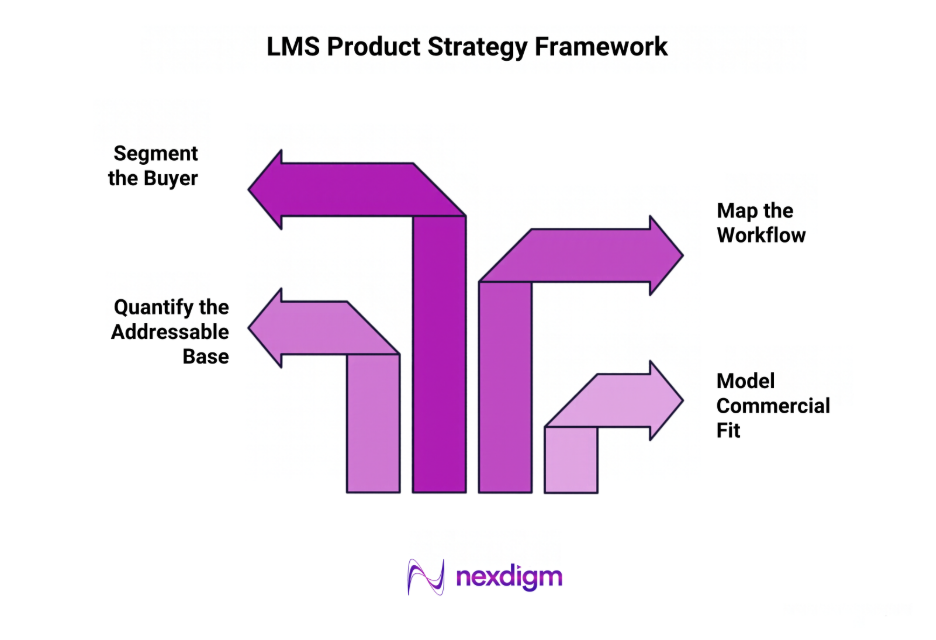
- Segment the Buyer: Separate schools, higher education, corporate learning and training providers by needs and procurement process.
- Map the Workflow: Identify where the LMS must connect with existing systems and how users manage learning today.
- Validate Differentiation: Test the value of integrations, analytics, accessibility assessment, and skills tracking.
- Model Commercial Fit: Compare pricing, implementation effort, support costs and likely renewal drivers.
The best opportunity may not be a complete platform replacement. Some buyers need a specialist layer for assessment, analytics or workforce skills that works with their existing LMS. Suppliers that recognise this can pursue narrower entry points with lower switching barriers.
Nexdigm Case Study: Prioritising LMS Product Development
Nexdigm assessed demand across school, higher education and corporate LMS buyers, comparing procurement criteria, system integration needs, pricing and support requirements. The study identified three recurring priorities: easier integration, more useful progress reporting and lower implementation effort. The client prioritised improvements to integration and reporting for its target institutional segment rather than expanding the platform’s feature list indiscriminately.
To take the next step, simply visit our Request a Consultation page and share your requirements with us.
Harsh Mittal
+91-8422857704