
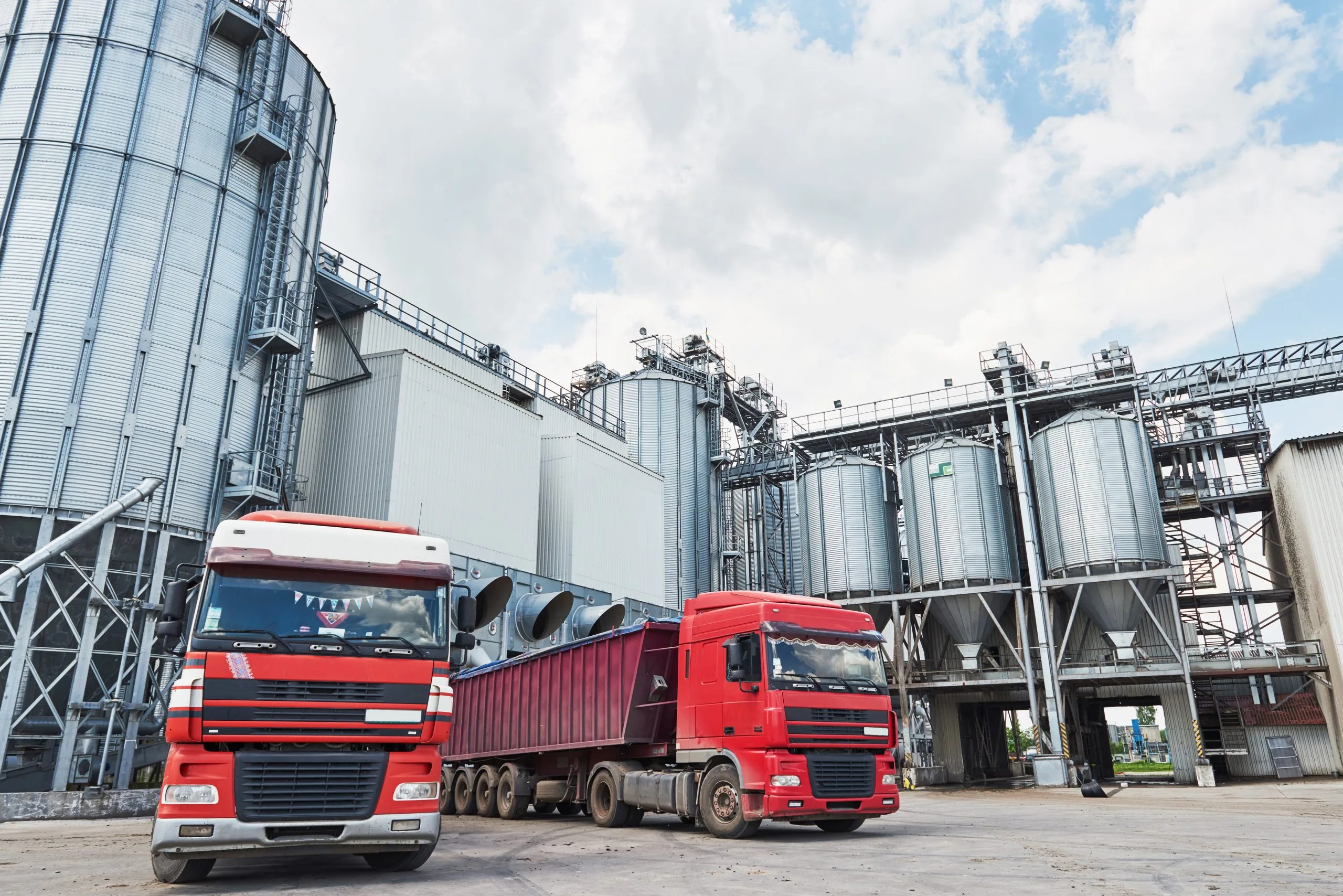
LNG truck benchmarking involves comparing LNG trucks with traditional freight vehicles to evaluate cost reduction, operational efficiency, and emission compliance performance. By analyzing adoption trends, companies can understand how logistics players are shifting toward cleaner and more economical transport solutions.
The LNG truck market in India is still in an early adoption phase but is expanding steadily, with LNG-powered trucks increasing by about 75% in recent years, reaching over 1,300 units in 2025. However, penetration remains limited due to infrastructure gaps and high upfront costs.
Studies show LNG trucks can reduce operational costs by up to 23–37% compared to diesel under favorable conditions, while also cutting CO₂ emissions by around 28–30%, making them a key transitional fuel for freight decarbonization and competitive intelligence benchmarking in logistics.
Effect of Competitive intelligence on Freight segments
Effect of competitive intelligence on freight segments focuses on analyzing cost efficiency, emission compliance, and fleet adoption trends, helping businesses evaluate competitiveness, operational shifts, and strategic positioning in logistics markets.
Fleet Benchmarking and Efficiency Optimization
Competitive intelligence enables benchmarking of fleet utilization fuel efficiency and cost structures helping operators identify performance gaps and optimize freight operations strategically
Segment Suitability Assessment
Market intelligence evaluates freight segment viability across bulk long haul and urban logistics enabling targeted deployment of assets for maximum operational efficiency
Cost Structure and Pricing Competitiveness
Analysis of freight pricing models and cost drivers helps operators optimize tariffs reduce inefficiencies and strengthen competitiveness in dynamic logistics markets
Technology Adoption and Fleet Modernization
Competitive insights guide adoption of LNG EV and telematics technologies enabling freight operators to modernize fleets and improve operational performance
Route Optimization and Corridor Strategy
Intelligence-driven route analysis helps identify high-demand freight corridors improving asset utilization reducing fuel consumption and enhancing overall logistics efficiency
Sustainability and Emission Compliance Tracking
Competitive intelligence supports monitoring of emission norms and ESG requirements enabling freight companies to align operations with regulatory sustainability standards
Nexdigm’s Fleet Transition Strategy services
Nexdigm’s fleet transition strategy benchmarking focuses on a phased shift from diesel to alternative fuels such as LNG and electric mobility. The approach evaluates cost efficiency, infrastructure readiness, and emission compliance, enabling logistics operators to optimize total cost of ownership while aligning with evolving sustainability and regulatory frameworks.
Nexdigm’s landscape in Freight Segment Suitability
From Nexdigm’s perspective, freight segment suitability for LNG is assessed through cost efficiency, emission compliance, and operational feasibility across bulk, long-haul, FMCG, and urban logistics value chains:
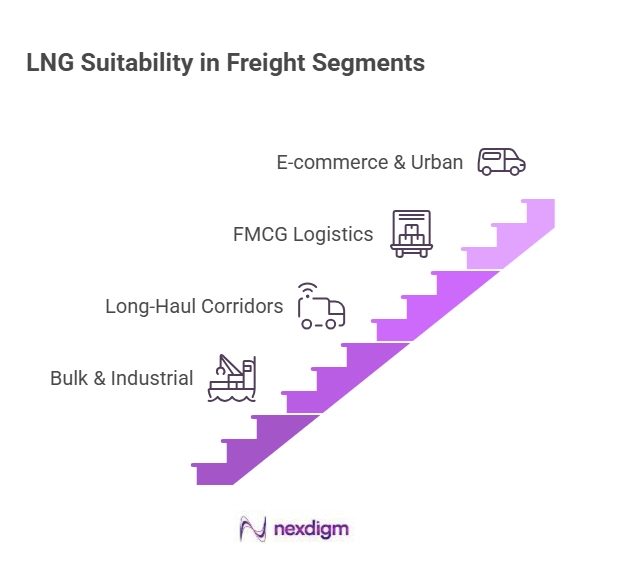
Bulk & Industrial Freight Suitability Assessment
From Nexdigm’s perspective, bulk freight (cement, steel, mining) presents highest LNG viability due to predictable demand cycles, high asset utilization, and strong cost sensitivity.
Long-Haul Corridor-Based Optimization Strategy
Nexdigm evaluates LNG competitiveness strongest in long-haul corridors where high mileage, route stability, and developing refuelling infrastructure improve TCO advantage over diesel fleets.
FMCG Structured Logistics Adoption Potential
Nexdigm notes FMCG freight shows moderate LNG suitability, driven by organized distribution networks, though evolving EV penetration is reshaping mid-mile logistics competitiveness.
E-commerce & Urban Freight Competitive Constraints
From Nexdigm benchmarking, urban and e-commerce freight remain low LNG-fit segments due to fragmented routes, high stop frequency, and superior EV economics in last-mile delivery.
Nexdigm’s Case:
Nexdigm highlights LNG adoption in long-haul freight as a transitional strategy, where industry data shows 20–30% CO₂ reduction versus diesel, improving TCO in high-utilization corridors, though limited refuelling infrastructure continues to constrain large-scale scalability across freight networks.
To take the next step, simply visit our Request a Consultation page and share your requirements with us.
Harsh Mittal
+91-8422857704