

Localization strategy research matters because consumer preferences, cultural expectations, buying behavior, language, pricing sensitivity, and product usage can vary significantly across markets. A product or campaign that works well in one region may fail in another if it does not reflect local needs and decision-making patterns.
As part of a strong market entry strategy, localization strategy research helps businesses understand these differences before launch and adapt their offering, messaging, channels, and customer experience accordingly. This reduces market entry risk, improves relevance, builds trust with local consumers, and supports stronger acceptance, conversion, and long-term growth in new markets.
Industry research shows that localization strategy research directly affects customer trust and purchase decisions. A global survey of 8,709 consumers across 29 countries found that 76% of online shoppers prefer buying products with information in their native language, while 40% will not buy from websites in other languages. Another finding shows that 75% are more likely to repurchase from a brand when customer care is available in their language, proving localization supports conversion and retention.
How Localization Strategy Research Strengthens Market Entry Planning?
Localization strategy research strengthens market entry planning by helping businesses understand local preferences, cultural expectations, pricing sensitivity, and buying behavior before adapting products, messaging, channels, and customer experience:
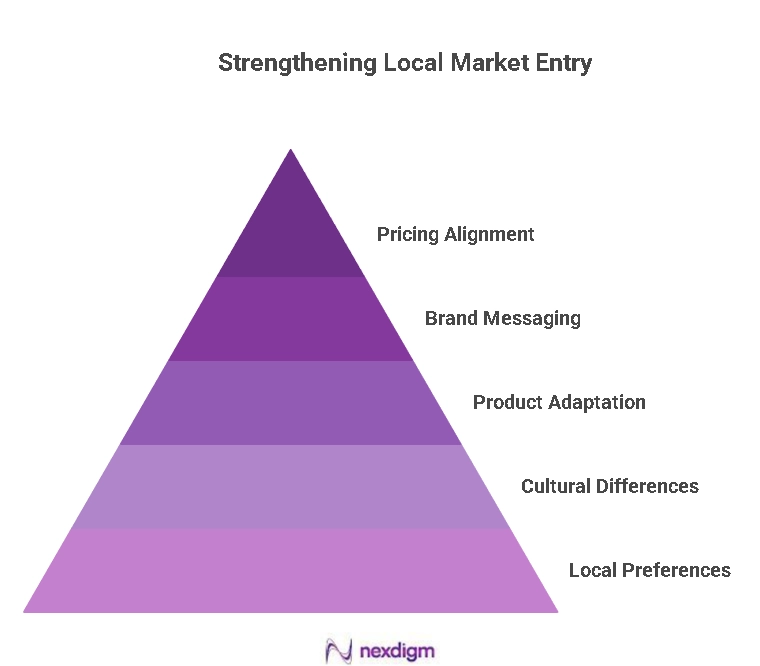
- Understanding Local Consumer Preferences: Identify what customers value, expect, avoid, and prioritize before adapting products, services, messaging, or launch communication.
- Mapping Cultural and Regional Differences: Study language, traditions, habits, and social norms to avoid misalignment and improve local customer acceptance.
- Adapting Product Features and Benefits: Modify product attributes, packaging, usage instructions, or benefits to match local needs and market expectations.
- Localizing Brand Messaging: Create communication that reflects local language, emotions, pain points, and decision-making triggers for stronger audience connection.
- Aligning Pricing with Market Sensitivity: Assess affordability, perceived value, competitor pricing, and purchasing power to build a practical market entry pricing approach.
Nexdigm’s Market entry Support for Region-Specific Business Expansion
Nexdigm’s market entry support helps businesses expand into region-specific markets with greater clarity and control. It includes assessing market potential, studying local consumer preferences, analyzing competition, reviewing regulatory factors, and identifying suitable entry channels. This enables companies to adapt their products, pricing, messaging, and rollout plans for stronger local acceptance and sustainable business expansion.
Nexdigm’s Product Adaptation Research to Match Local Market Expectations
Nexdigm’s product adaptation research helps businesses understand local customer needs, usage habits, preferences, and cultural expectations, enabling product features, packaging, pricing, and messaging to align with market expectations.
- Assessing Local Customer Needs: Identify what customers expect, value, and prioritize to adapt the product for stronger relevance in each market.
- Studying Usage Habits: Understand how customers use similar products locally to refine features, packaging, instructions, and service support.
- Adapting Product Features: Modify product design, functionality, size, format, or benefits to better match regional preferences and practical requirements.
- Localizing Packaging and Labeling: Align packaging, language, visuals, claims, and product information with cultural expectations and regulatory requirements.
Nexdigm’s case:
Nexdigm assisted a global consumer goods company adapt its product for entry into three regional markets with different taste, packaging, and pricing expectations. Through localization strategy research, Nexdigm surveyed 1,200 consumers, analyzed 15 competitors, and tested three packaging variants. The insights helped the company refine product features, localize messaging, and adjust pricing, leading to a 28% improvement in purchase intent and a 22% increase in early campaign conversions during rollout.
To take the next step, simply visit our Request a Consultation page and share your requirements with us.
Harsh Mittal
+91-8422857704