
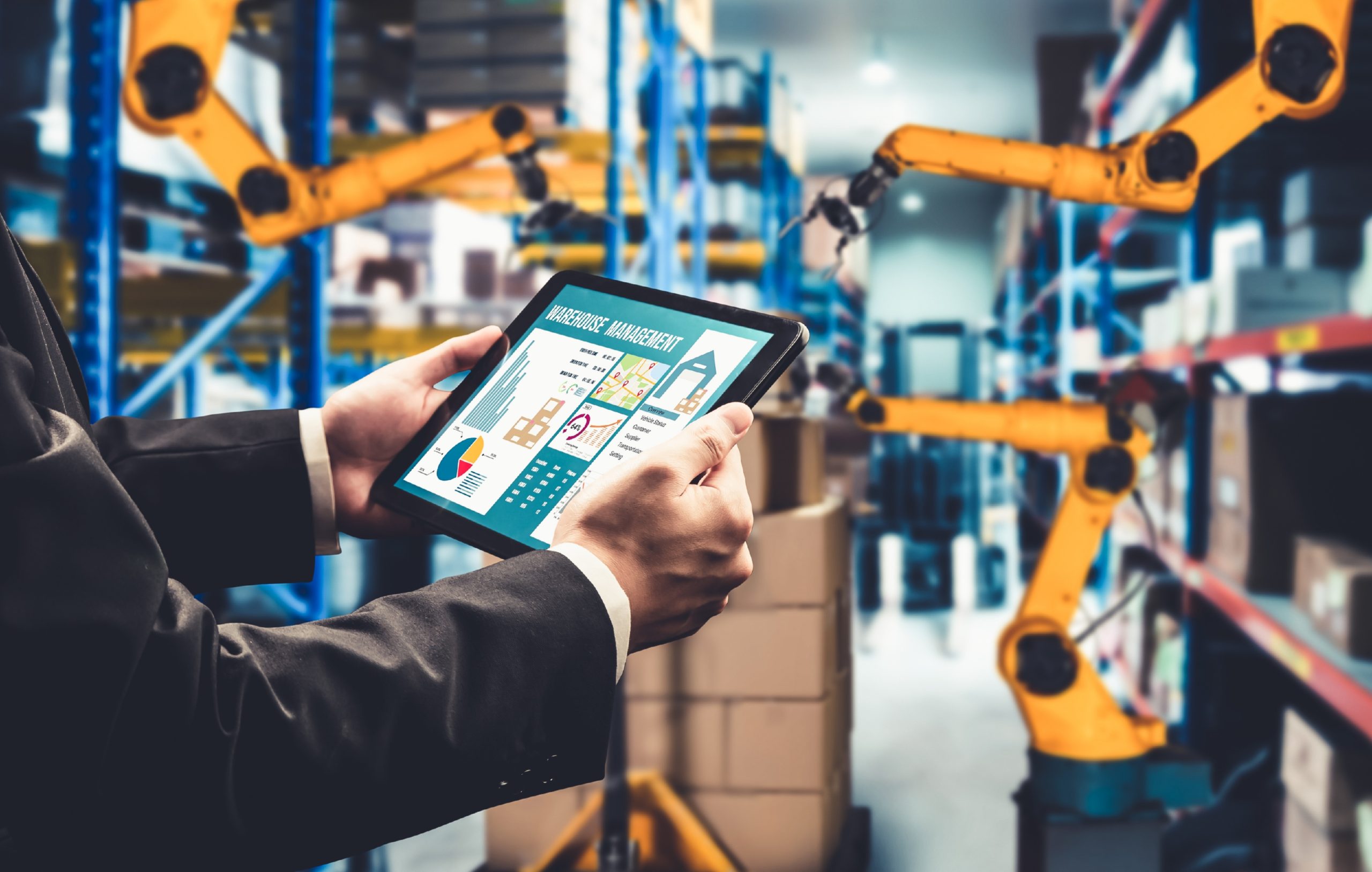
Automation in logistics is becoming easier to justify in some operations and considerably harder to justify in others. A warehouse processing millions of repetitive movements may have a compelling case for sortation or autonomous transport. A facility handling irregular, low-volume products may gain little from the same technology.
The global market is already showing where adoption is strongest. The International Federation of Robotics reported that 117,500 transport and logistics service robots were sold in 2025, an increase of 21% from the previous year. The category represented 47% of all professional service robot sales, making logistics the largest application segment.
India is also moving towards more technology-intensive warehousing. CBRE projects the country’s warehouse automation market to reach US$1.42 billion by 2030, while the expansion of quick commerce is encouraging smaller, technology-enabled fulfilment facilities closer to consumers.
The opportunity, however, is not created by technology availability. It is created when a particular operational problem is expensive enough to solve.
Start with the movement, not the machine
The most useful automation assessments begin by observing how goods actually move through a facility.
Some operations involve highly repetitive horizontal movement between storage and picking zones. Others are dominated by manual sorting, pallet handling or order consolidation. Picking can be particularly difficult because product dimensions, demand patterns and handling requirements vary considerably.
This creates different technology opportunities. Autonomous mobile robots can address repetitive movement. Automated storage and retrieval systems can increase storage density. Sortation systems can handle high parcel throughput. Robotic picking may be appropriate where product and order characteristics are sufficiently standardised. Warehouse-management and orchestration software can improve performance without replacing physical labour altogether.
The assessment therefore needs to establish whether the problem is capacity, labour intensity, space, throughput, accuracy or scheduling. Choosing the technology first reverses the investment logic.
Volume creates the economics
The business case becomes stronger when the same task is repeated at high frequency.
Consider a distribution centre operating around the clock. A small reduction in handling time, multiplied across hundreds of thousands of movements, can materially affect labour requirements and throughput. The same automation may be uneconomic in a smaller facility where equipment sits idle for long periods.
Peak demand also matters. A warehouse designed around average volume may struggle during festive periods, promotional events or seasonal production cycles. Automation can provide additional throughput without requiring the operator to permanently staff for the highest peak.
This is one reason the growth of quick commerce is relevant. CBRE expects India’s quick-commerce gross order value to reach INR 2 trillion by 2028, alongside continued expansion of micro-fulfilment centres and technology-enabled distribution models.
Nexdigm’s role is to find where automation actually pays
A logistics automation opportunity assessment should connect operational data to investment economics rather than produce a catalogue of available technologies.
The analysis can be built around five questions:
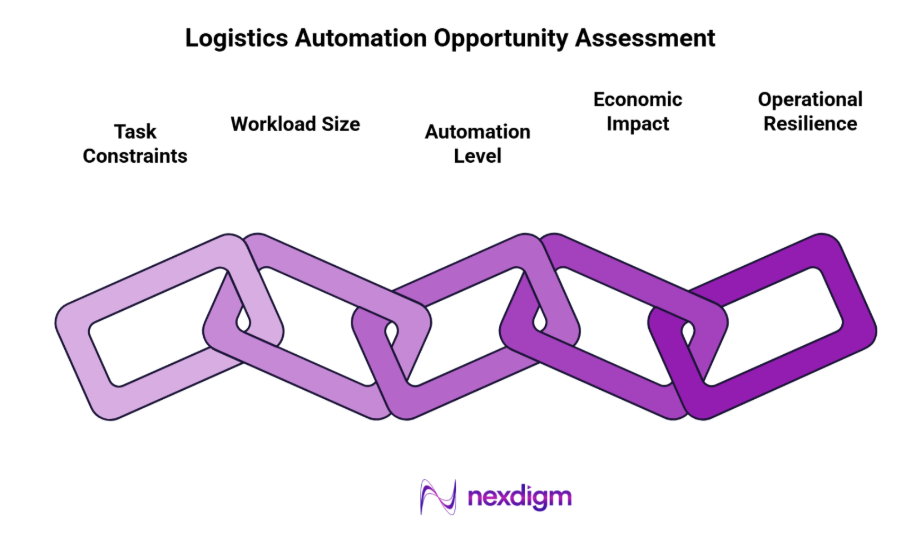
- Which tasks are constraining performance? Identify repetitive movements, bottlenecks, excessive walking, manual sorting, handling errors and capacity constraints.
- How large is the workload? Quantify daily volume, cycle times, labour hours, peak requirements and utilisation throughout the operating day.
- What level of automation fits the task? Compare robotics, AMRs, automated storage, sortation, conveyors and software according to the operating problem rather than technology popularity.
- Does the investment improve the economics? Model capital expenditure against labour savings, throughput gains, space utilisation, accuracy and maintenance costs.
- Can the system survive operational change? Examine WMS integration, product-mix changes, workforce transition, maintenance capability and the ability to scale as volumes increase.
The final output should distinguish between technologies that are technically feasible and those that are commercially justified. That distinction can prevent significant capital from being committed to automation that solves a relatively inexpensive problem.
Nexdigm Case: Prioritising Automation Investments
A Nexdigm assessment reviewed 18 automation use cases at a 600,000 sq. ft. distribution centre, analysing throughput, labour hours, peak utilisation and capital requirements. Six applications met the client’s investment threshold. Sortation and autonomous movement generated the strongest combined improvement, increasing projected throughput while reducing manual handling requirements.
To take the next step, simply visit our Request a Consultation page and share your requirements with us.
Harsh Mittal
+91-8422857704