
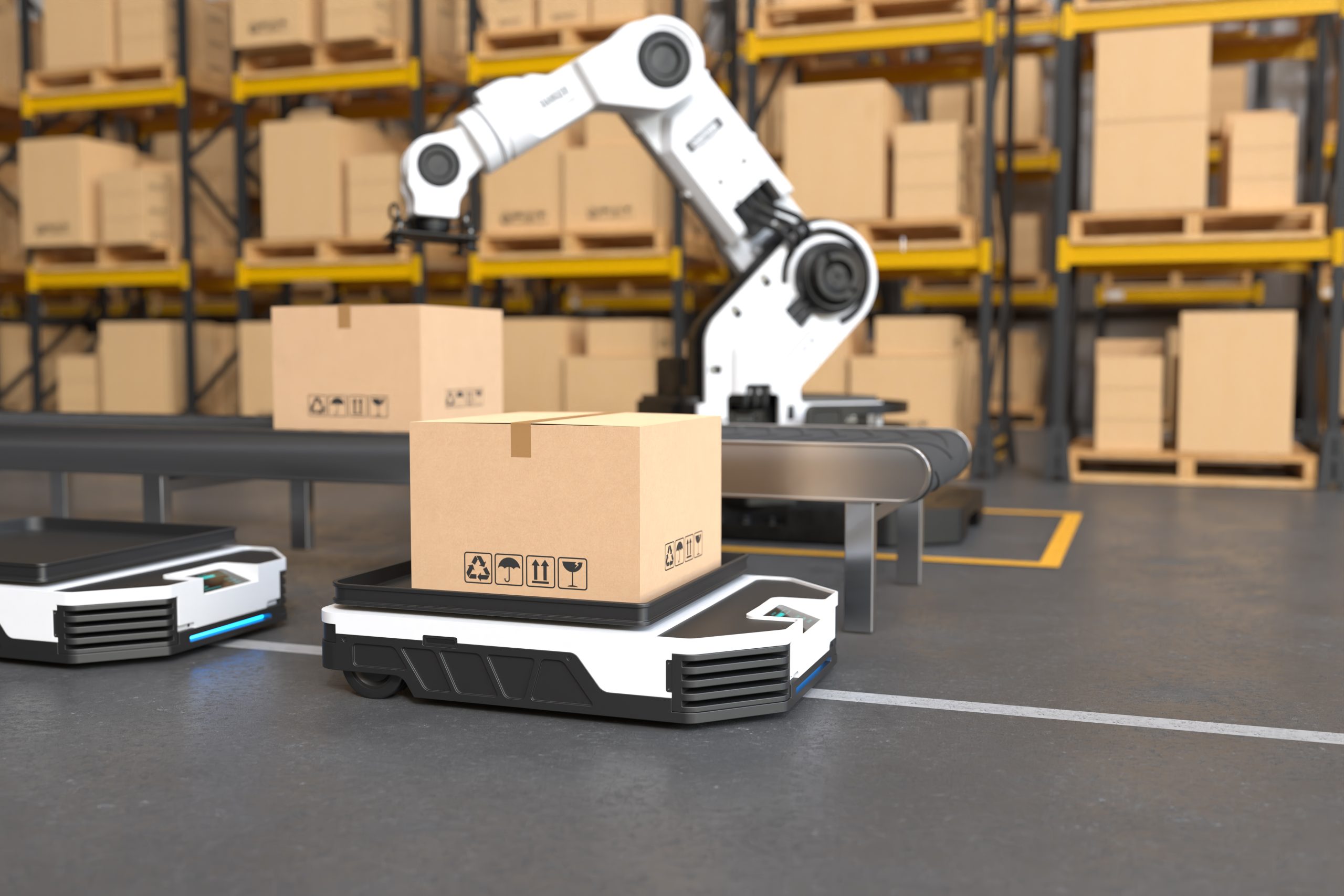
Logistics operations increasingly depend on automation to manage warehouse activities, transportation workflows, inventory movement and order fulfilment. Technologies such as autonomous mobile robots, automated storage and retrieval systems, conveyor networks, robotic picking and intelligent sorting are changing how businesses manage distribution facilities.
However, investing in automation involves more than identifying the latest available technology. Organisations must evaluate supplier capabilities, system compatibility, implementation requirements, scalability and the financial returns expected from deployment.
A structured supplier assessment helps procurement teams distinguish between technology providers offering practical operational improvements and those whose solutions may require substantial infrastructure changes.
Why Logistics Automation Supplier Evaluation Matters
Automation can improve warehouse throughput, reduce repetitive manual activities and support more consistent inventory handling. However, the benefits depend on the type of operation, facility design, order volumes and integration with existing systems.
The Department for Promotion of Industry and Internal Trade’s warehousing handbook discusses applications such as intelligent barcode scanning, machine vision, robotics and automated warehouse processes.
Automation requirements also differ across facilities. A high-volume e-commerce warehouse may benefit from automated picking and sorting, while a manufacturing warehouse may prioritise material movement and automated storage.
Procurement teams should evaluate suppliers across six areas:
- Technology capability: Availability of robotics, automated storage, conveyor systems and intelligent sorting solutions.
- Operational compatibility: Suitability for existing warehouse layouts, product categories and workflows.
- System integration: Connectivity with WMS, ERP and warehouse control systems.
- Scalability: Ability to increase throughput and expand deployment across facilities.
- Vendor support: Maintenance, technical assistance, spare parts and system upgrades.
- Financial performance: Capital expenditure, operating costs, productivity improvements and payback period.
Comparing Logistics Automation Technologies
Automation suppliers offer different technologies depending on the operational problem being addressed.
- Automated Storage and Retrieval Systems (AS/RS): These systems automate the storage and retrieval of goods, improving space utilisation and reducing manual movement.
- Autonomous Mobile Robots (AMRs): AMRs move inventory and materials within facilities using navigation systems and sensors. They can support picking, replenishment and internal transportation.
- Automated Guided Vehicles (AGVs): These vehicles follow predefined routes or navigation systems to move materials between designated warehouse locations.
- Conveyor and sortation systems: These technologies automate the movement and sorting of packages, cartons and other materials.
- Robotic picking systems: These solutions automate selected picking, handling and packing activities, depending on product characteristics and system capability.
- Machine vision and intelligent scanning: These systems use cameras and image processing to identify labels, inspect products and support automated quality checks.
Each technology should be assessed against actual operational requirements rather than its technical specifications alone.
Evaluating Integration, Scalability and Supplier Support
A major challenge in logistics automation is integrating equipment with existing software and warehouse infrastructure.
Automation systems must communicate with warehouse management software, warehouse control systems and enterprise applications. Without reliable integration, organisations may experience disconnected workflows, inaccurate inventory records and delays in task execution.
Procurement teams should examine:
- Integration architecture: Availability of APIs, standard interfaces and compatibility with existing systems.
- System interoperability: Ability to coordinate equipment from different manufacturers.
- Operational flexibility: Capacity to accommodate changing warehouse layouts and product volumes.
- Scalability: Ability to expand automation across additional processes and facilities.
- Maintenance support: Availability of technical teams, replacement components and preventive maintenance.
- System resilience: Backup processes, fault detection and recovery arrangements.
Supplier support should also be evaluated beyond installation. Organisations need clarity on software upgrades, equipment servicing, technical training and long-term maintenance commitments.
Measuring Automation ROI and Total Cost of Ownership
Automation investments should be evaluated through measurable operational and financial indicators.
A supplier’s proposed return on investment should be tested against the organisation’s actual operating data.
Relevant performance indicators include:
- Orders processed per hour.
- Picking accuracy.
- Warehouse labour hours per order.
- Inventory movement time.
- Equipment utilisation.
- Downtime frequency.
- Maintenance expenditure.
- Space utilisation.
- Energy consumption.
The financial assessment should include initial equipment costs, software licensing, installation, infrastructure modifications, integration, training and ongoing maintenance.
Procurement teams should also distinguish between projected savings and realised benefits. A technology may offer higher throughput but still deliver limited financial value if utilisation remains low or maintenance expenses exceed expectations.
A phased implementation can help organisations validate operational performance before expanding automation across multiple facilities.
Logistics Automation Supplier Evaluation Framework
A structured logistics automation technology vendor research exercise should compare suppliers across technical, operational and commercial dimensions.
The evaluation can follow six stages:
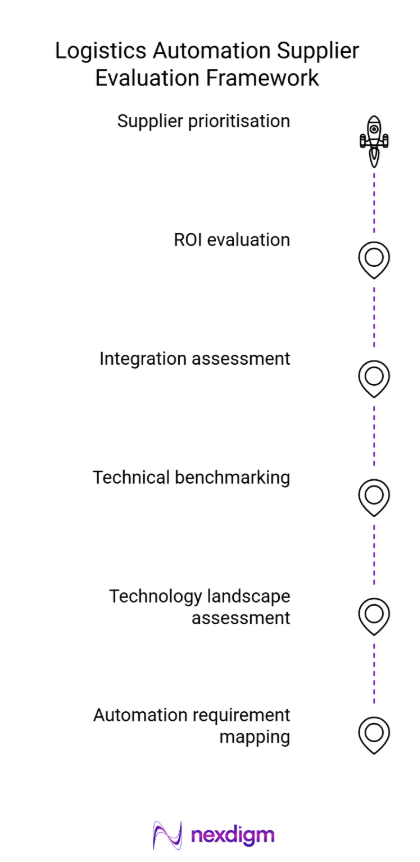
- Automation requirement mapping: Identify operational bottlenecks, throughput targets and processes suitable for automation.
- Technology landscape assessment: Map suppliers offering robotics, automated storage, conveyors, sorting and intelligent scanning.
- Technical benchmarking: Compare equipment specifications, performance capacity, reliability and technology maturity.
- Integration assessment: Evaluate WMS, ERP and warehouse control system compatibility.
- ROI evaluation: Calculate capital expenditure, operating costs, expected productivity improvements and payback periods.
- Supplier prioritisation: Rank vendors based on technical suitability, scalability, service support and total cost of ownership.
Nexdigm can support organisations through logistics automation market research, technology vendor mapping, supplier benchmarking and commercial assessments. These exercises help procurement teams understand available technologies, compare supplier capabilities and evaluate investment requirements before committing to large-scale automation programmes.
Nexdigm’s Case Study
Nexdigm assessed 10 logistics automation vendors across 3 warehouse operations, comparing robotics, system integration, throughput and maintenance costs. The assessment shortlisted 3 suppliers, identified a 22% variation in implementation costs and established measurable ROI and scalability criteria for technology procurement.
To take the next step, simply visit our Request a Consultation page and share your requirements with us.
Harsh Mittal
+91-8422857704