

Cost-plus pricing models help logistics providers determine sustainable rates by combining operating expenses with targeted profit margins across transportation, warehousing, and distribution services. Logistics cost-plus pricing models integrate pricing analysis, cost-to-serve assessment, fleet utilization, maintenance requirements, and market benchmarking to establish commercially viable prices.
With evaluation of asset depreciation, route complexity, regulatory costs, capacity utilization, and customer demand, businesses can improve cost recovery, protect margins, strengthen pricing transparency, and support long-term profitability in increasingly competitive logistics markets worldwide.
A recent survey shows an international logistics provider adopted cost-plus pricing analysis to align fuel, labor, and fleet expenses with customer rates. The initiative improved operating margins by 14%, reduced pricing discrepancies, and increased asset utilization by 11%, strengthening profitability, pricing governance.
Pricing Analysis for Cost-Plus Logistics Rate Design and Margin Protection
Pricing analysis combines operating costs, service complexity, asset usage, and targeted markups to create transparent logistics rates and support commercially sustainable pricing decisions across networks. Core benefits of cost plus logistics pricing are:
- Stronger Fuel Cost Recovery: Fuel consumption, mileage, route conditions, and price movements are converted into rates, helping providers recover variable transport expenses without relying on delayed or inconsistent surcharge adjustments.
- Improved Labor Cost Visibility: Driver wages, warehouse staffing, overtime, benefits, and supervision costs are assigned accurately to services, enabling rates that reflect actual workforce requirements and protect operating margins.
- Better Asset Return Management: Vehicle depreciation, financing, insurance, maintenance, and equipment utilization are included in pricing, helping providers generate adequate returns from capital-intensive logistics assets across their useful lives.
- More Transparent Customer Quotations: Clearly separating operating costs, surcharges, and profit markups improves quotation transparency, strengthens customer confidence, and reduces disputes concerning freight, storage, handling, and delivery charges.
How Nexdigm Supports Cost-Plus Pricing Analysis for Logistics Providers
Nexdigm supports logistics providers through cost-plus pricing analysis, cost allocation, and market intelligence to improve cost recovery, strengthen margins, optimize pricing decisions, and enhance long-term operational profitability. Such a strategic approach helps businesses with:
- Increased pricing transparency and customer confidence
- Enhanced route and customer profitability
- Reduction in pricing inconsistencies and discount leakage
- Support with data-driven markup and surcharge decisions
- Improved fleet utilization and asset returns
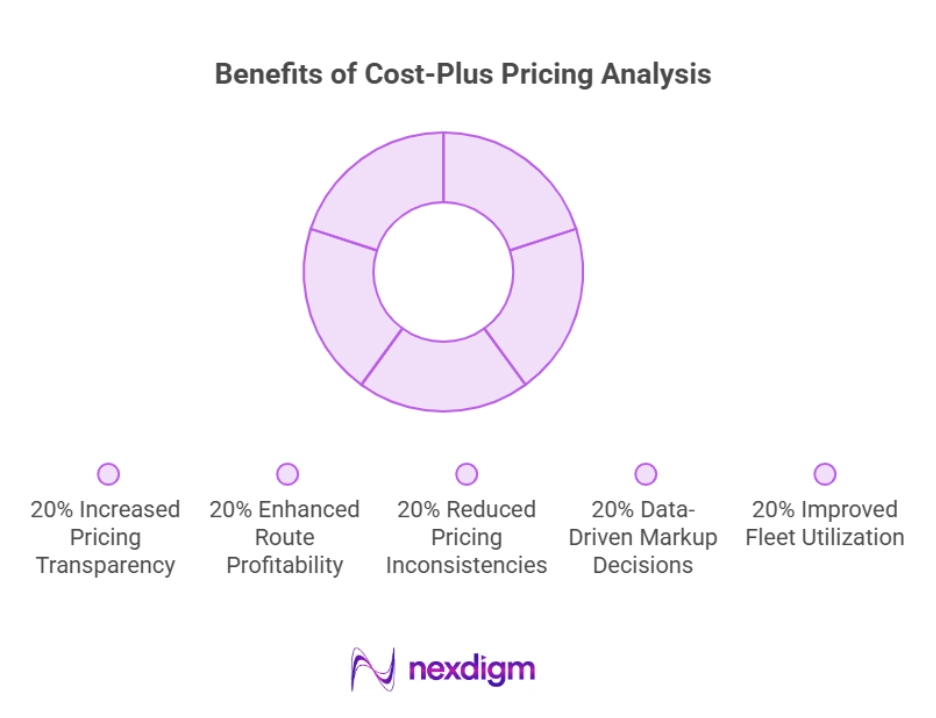
By combining pricing analysis with operational cost intelligence, Nexdigm helps logistics providers establish profitable cost-plus pricing models that support sustainable growth, stronger margins, and improved commercial performance.
Nexdigm’s Integrated Architecture for Cost-Plus Pricing Analysis
Nexdigm’s integrated architecture combines cost intelligence, pricing analysis, governance controls, and profitability metrics to develop sustainable logistics rates, improve transparency, strengthen margins, and support scalable growth. Some important characteristics of the model helping businesses to grow are:
- Map End-to-End Cost Structures: The model captures fuel, labor, warehousing, maintenance, insurance, and asset expenses, creating a comprehensive cost foundation for accurate rate development and stronger cost visibility.
- Activity-Based Cost Allocation: Costs are assigned to specific activities, shipments, routes, customers, and service levels, improving cost visibility and reducing distortions created by broad or generalized allocation methods.
- Utilization-Sensitive Pricing: Vehicle loads, warehouse occupancy, workforce capacity, and equipment usage influence cost allocation, helping businesses price underused and constrained resources more effectively.
- Customer-Specific Rate Design: Shipment frequency, service requirements, payment terms, account support, and operational complexity are incorporated to create cost-based rates reflecting each customer’s commercial profile.
Nexdigm’s Case
Nexdigm supported a logistics provider with activity-based costing, automated cost refreshes, and margin-led rate design. The model reduced transportation costs by 13.12%, lowered vehicle requirements by 11.27%, improved cost visibility, strengthened quotation accuracy, and supported sustainable profitability across complex operations.
To take the next step, simply visit our Request a Consultation page and share your requirements with us.
Harsh Mittal
+91-8422857704