

Logistics networks are built around where goods are produced, where buyers are located and how reliably cargo can move between them. When import-export patterns change, the effects reach beyond trade balances. Warehouses may need to serve new destinations, transport providers may need different routes, and ports may experience changes in cargo composition or demand.
Track Changes In Trade Direction
Import and export statistics show how products move between countries and how trading relationships evolve. Analysing these records by product, partner and time period helps identify changes that broad national totals may conceal.
The World Trade Organization’s 2025 trade statistics reported that global trade in goods and commercial services increased by 8% in value during 2025. Value growth, however, does not necessarily mean physical cargo volumes increased by the same amount. Prices, exchange rates and product mix can affect the comparison.
For logistics planning, the distinction is important. Cargo volumes influence storage, handling and transport requirements, while changes in product value may affect insurance, security and working-capital exposure. Both measures are useful, but they answer different questions.
Understand The Network Consequences
Effective logistics import export trends analysis connects shifts in product-level trade with the routes, facilities and services required to move those goods. A growing import relationship may increase demand for inbound handling and warehousing, while stronger exports may create new requirements for outbound consolidation, documentation and capacity booking.
The most useful indicators include:
- Origin-Destination Changes: Identify countries and product groups gaining or losing trade volume.
- Cargo Composition: Determine whether flows involve containers, bulk cargo, temperature-controlled goods or specialised handling.
- Route Dependence: Identify reliance on particular ports, border crossings or transshipment hubs.
- Direction Imbalances: Compare inbound and outbound volumes that may affect equipment repositioning and empty returns.
- Service Requirements: Assess delivery frequency, storage needs, customs procedures and onward distribution.
The World Bank’s 2025 Logistics Performance Indicators 2.0 use shipment-level data to measure connectivity and time performance across maritime, aviation and postal networks. The indicators highlight how transshipment and border procedures can add time and how delays are often concentrated at particular network points.
Distinguish Demand Shifts From Route Changes
A change in recorded trade does not always mean that the underlying logistics network is being permanently reconfigured. Cargo may be diverted because of temporary disruption, inventory replenishment, seasonal demand or changes in reporting.
Companies should compare several periods and validate trade signals against carrier schedules, port activity and customer requirements. They should also examine whether a new trade relationship can be served through existing infrastructure or requires different warehousing, customs or distribution arrangements.
For example, rising imports from a new origin may require additional inbound capacity, but the change could also represent shipments being routed through a new intermediary. Confirming the production origin and final destination prevents a route change from being mistaken for a new sourcing relationship.
The Trade-Driven Logistics Network Framework
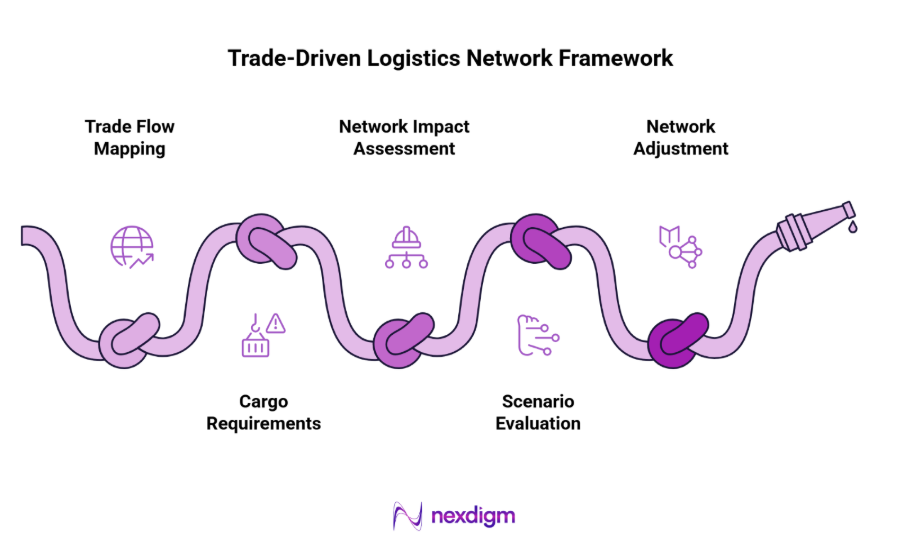
- Trade Flow Mapping: Identify products, trading partners, shipment directions and changes in volume.
- Cargo Requirements: Establish handling, storage, transport and documentation needs.
- Network Impact Assessment: Evaluate effects on ports, warehouses, routes and equipment balance.
- Scenario Evaluation: Compare existing capacity with the requirements of changing trade flows.
- Network Adjustment: Prioritise routing, facility, service or capacity changes supported by evidence.
Case Study: Adapting A Distribution Network
An importer reviewed two years of product-level trade data and found that inbound volumes were shifting toward a different origin country. The logistics team assessed port access, warehouse capacity and inland delivery costs before revising its preferred routing and adjusting inventory allocation between two distribution facilities.
To take the next step, simply visit our Request a Consultation page and share your requirements with us.
Harsh Mittal
+91-8422857704