

Effective logistics network optimization analysis is essential for reducing costs and improving delivery performance in modern supply chains. By strategically evaluating routes, distribution centers, and fleet deployment, organizations can identify inefficiencies and streamline operations. Integrating competitive intelligence enables companies to benchmark their network against industry peers, adopt best practices, and make data-driven decisions.
Leveraging insights from competitors’ performance and industry standards helps optimize resource utilization, lower transportation and operational costs, and enhance overall delivery reliability across the logistics network.
Recent industry figures highlight the impact of logistics network optimization analysis on costs and delivery performance. Data shows that AI‑driven network and route optimization can reduce total logistics costs by 10–30 % and cut delivery times by 15–25 %, while boosting fuel efficiency and on‑time delivery rates. Improved utilization of transportation assets and optimized network design also correlate with lower cost‑to‑serve and higher customer satisfaction.
Using Competitive Insights to Optimize Routes and Distribution Centers
Optimizing routes and distribution centers using competitive insights involves analyzing competitor network strategies, identifying efficiency gaps, and redesigning logistics paths to reduce costs, improve delivery speed, and maximize resource utilization.
- Competitor Route Analysis – Study competitor delivery paths to identify faster, cost-efficient routes, reducing transit times and improving fleet utilization.
- Distribution Center Location Benchmarking – Compare network layouts with industry peers to optimize warehouse placement, minimizing transportation distance and operational costs.
- Load and Capacity Optimization – Use competitor insights to maximize vehicle loads, reducing trips and improving overall network efficiency.
- Demand Forecasting Integration – Analyze competitor demand patterns to align routes and centers, ensuring timely deliveries and resource allocation.
- Technology-Driven Route Planning – Implement AI and analytics tools informed by competitive intelligence for dynamic, real-time routing decisions.
Nexdigm Transportation Cost Optimization and Improvement Programs
Nexdigm’s Transportation Cost Optimization Improvement Programs focus on reducing operational expenses while maintaining high delivery performance. By analyzing fuel consumption, route efficiency, vehicle utilization, and maintenance patterns, the programs identify cost-saving opportunities. Leveraging competitive intelligence and data-driven strategies, Nexdigm helps logistics operators implement optimized routes, fleet allocation, and scheduling practices, resulting in lower transportation costs, improved fuel efficiency, and enhanced overall network performance.
Nexdigm Comprehensive Logistics Network Assessment and Performance Benchmarking for Cost Reduction
Nexdigm’s Comprehensive Logistics Network Assessment and Performance Benchmarking evaluates network efficiency, identifies cost-saving opportunities, and compares operations against industry standards, enabling data-driven decisions to reduce expenses and enhance delivery performance:
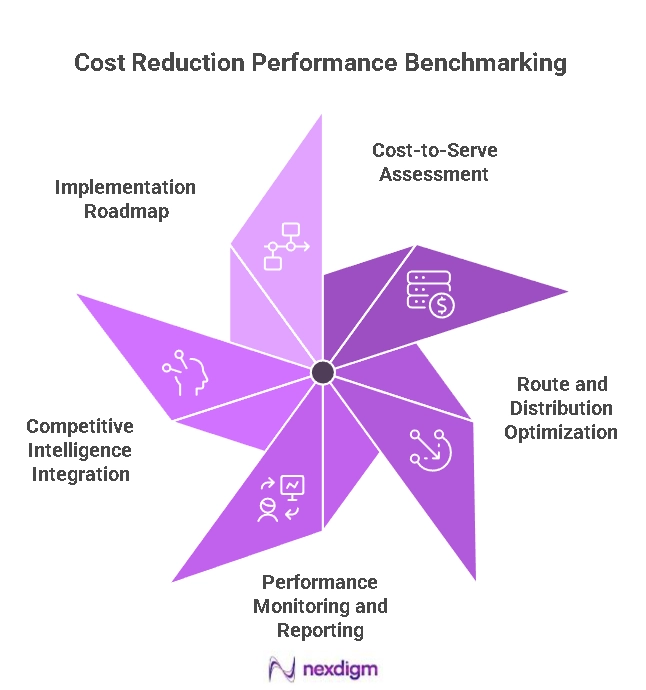
- Cost-to-Serve Assessment – Evaluate per-unit delivery costs to identify high-expense areas and optimize resource allocation.
- Route and Distribution Optimization Recommendations – Suggest strategic adjustments to routes, warehouse placement, and fleet deployment for maximum efficiency.
- Performance Monitoring and Reporting Framework – Establish dashboards and reporting systems to continuously track network improvements and cost reduction outcomes.
- Integration of Competitive Intelligence – Incorporate competitor insights to refine strategies, enhance efficiency, and maintain operational advantage in the market.
- Implementation Roadmap for Network Optimization – Provide stepwise execution plans with timelines, KPIs, and monitoring mechanisms to achieve cost reduction objectives.
Nexdigm’s case:
Nexdigm helped a national 3PL provider restructure its logistics network, resulting in measurable gains like transportation costs fell by 18 %, average delivery lead times improved by 22 %, and overall fleet utilization rose from 71 % to 86 %. By benchmarking performance against industry peers and redesigning routes and distribution hubs, the client achieved sustained cost reduction and better delivery reliability.
To take the next step, simply visit our Request a Consultation page and share your requirements with us.
Harsh Mittal
+91-8422857704