

Logistics procurement involves a wide range of expenditure categories, including transportation, warehousing, packaging, material handling, inventory management and third-party logistics services. As supply chains become more complex, organisations may find it difficult to establish where costs are increasing, which supplier arrangements offer the best commercial value and where procurement improvements can generate measurable savings.
A logistics procurement cost analysis helps businesses examine expenditure across their supply chain operations, understand the factors influencing supplier pricing and identify opportunities to improve cost efficiency.
Understanding the Components of Logistics Procurement Costs
Logistics expenditure extends beyond the freight charges paid to transportation providers. It includes several direct and indirect costs incurred as goods move from suppliers to manufacturing facilities, warehouses and customers.
The September 2025 Assessment of Logistics Cost in India, published by DPIIT in collaboration with NCAER, provides a detailed view of these components. The study estimates India’s logistics cost at ₹24.01 lakh crore for 2023–24, equivalent to 7.97% of GDP.
Its analysis covers transportation, warehousing, inventory carrying, administration, packaging and other logistics-related expenses.
For procurement teams, understanding these components is important because savings in one category can sometimes increase expenditure elsewhere. For example, selecting a lower-cost transportation provider with longer transit times may increase inventory holding requirements.
Identifying the Major Logistics Cost Drivers
Transportation is a significant component of logistics procurement expenditure. However, its cost structure varies according to transportation mode, route, shipment volume and operating conditions.
For road transportation, fuel, vehicle maintenance, tolls, labour and fixed operating expenses influence freight quotations. The DPIIT assessment identifies fuel as the largest individual component of road transport costs, accounting for 42.1% in its cost breakdown.
Warehousing introduces another set of expenses. These include facility rentals, utilities, labour, equipment maintenance, storage systems and inventory handling. Businesses operating multiple facilities should examine whether warehouse utilisation and geographical distribution are aligned with actual demand.
Packaging and material handling can also influence overall procurement expenditure. Material specifications, packaging weight, equipment requirements and handling frequency affect the cost of moving and storing products.
Supplier pricing practices are an additional source of cost variation. Differences in contract structures, minimum volume commitments, fuel adjustments and additional service charges can make supplier quotations difficult to compare.
Where Do Commercial Gaps Occur?
Commercial gaps often develop when organisations lack standardised procurement processes or consistent supplier performance data.
One common issue is the use of different pricing structures for similar services. Transportation providers may quote different combinations of base freight, fuel charges, waiting fees and handling expenses.
Another issue involves fragmented supplier relationships. Businesses working with multiple vendors across locations may lose opportunities to consolidate volumes or negotiate consistent commercial terms.
Contract management also deserves attention. Outdated freight agreements, unclear service-level provisions and automatic price escalation clauses can create avoidable expenditure.
Procurement teams should examine whether contracted rates reflect current market conditions and whether suppliers are meeting the service commitments agreed during negotiations.
Identifying Savings Opportunities Across Logistics Operations
Cost optimisation requires a combination of supplier benchmarking, operational analysis and commercial review.
Transportation savings may come from route consolidation, improved vehicle utilisation, alternative transport modes and better carrier allocation. Warehousing improvements may involve inventory rationalisation, facility utilisation and more efficient storage arrangements.
Supplier negotiations can also address rate structures, volume discounts, service-level agreements, payment terms and surcharge transparency.
However, savings should be measured against a consistent baseline. A reduction in freight expenditure should not be considered successful if it results in higher damage rates, missed deliveries or increased inventory costs.
Organisations should therefore track both financial and operational indicators when evaluating procurement improvements.
Logistics Procurement Cost Analysis Framework
A structured logistics procurement cost analysis should examine expenditure across the entire supply chain.
The assessment can follow six stages:
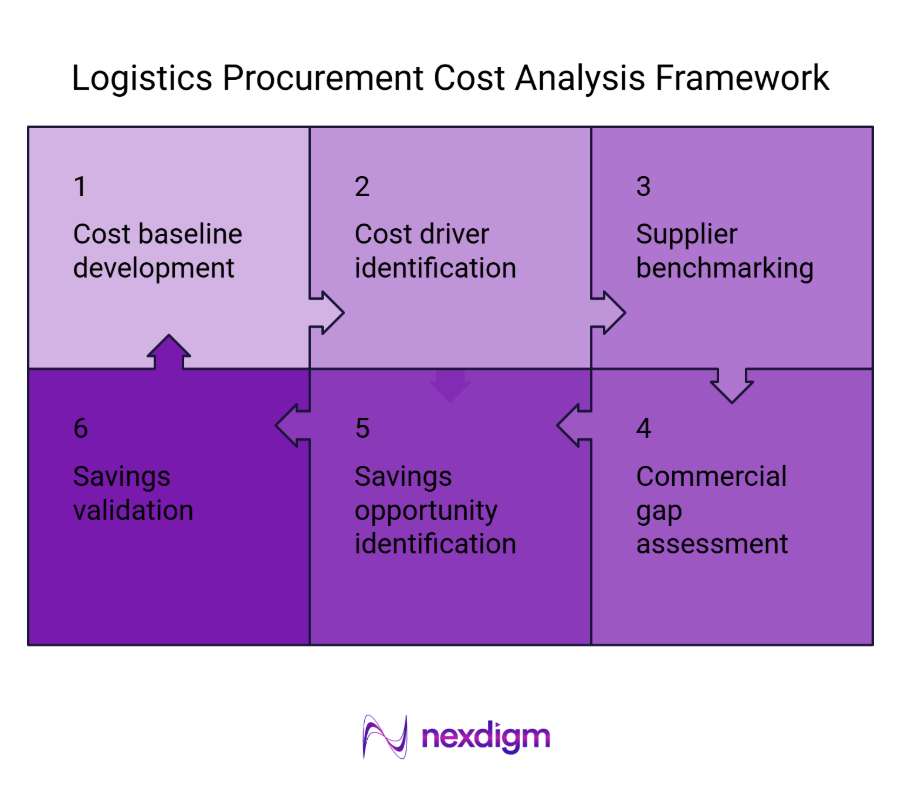
- Cost baseline development: Consolidate expenditure across transportation, warehousing, packaging, handling and third-party logistics.
- Cost driver identification: Examine fuel, labour, utilisation, storage, surcharges and supplier pricing structures.
- Supplier benchmarking: Compare contracted rates against market quotations and equivalent service arrangements.
- Commercial gap assessment: Identify inconsistent pricing, contract inefficiencies, duplicated services and additional charges.
- Savings opportunity identification: Evaluate consolidation, route optimisation, supplier rationalisation and alternative sourcing arrangements.
- Savings validation: Establish baseline costs, implementation requirements and measurable performance indicators.
Nexdigm can support organisations through logistics cost research, supplier benchmarking, commercial analysis and procurement opportunity assessments. These services help businesses understand expenditure patterns, identify commercial gaps and prioritise savings opportunities without compromising service quality.
Nexdigm’s Case Study: Identifying Hidden Logistics Procurement Costs
Nexdigm analysed 18 logistics suppliers across 5 expenditure categories, reviewing freight rates, warehousing, packaging and additional charges. The assessment identified a 17% variation in comparable supplier costs, uncovered 6 commercial improvement opportunities and established 8 cost and service benchmarks for procurement optimisation.
To take the next step, simply visit our Request a Consultation page and share your requirements with us.
Harsh Mittal
+91-8422857704