

India’s logistics sector is experiencing continued expansion, increasing the importance of dependable supplier networks. According to CBRE’s India Logistics Figures H2 2025, warehousing absorption exceeded 30 million sq. ft. during July–December 2025, with third-party logistics providers accounting for approximately 44% of total space take-up.
Separately, the NCAER Assessment of Logistics Cost in India, published in September 2025, estimated logistics costs at 7.97% of GDP, equivalent to approximately ₹24.01 lakh crore for last year. These indicators highlight the scale and commercial significance of logistics operations.
As networks expand, businesses must also consider whether their procurement arrangements can withstand capacity shortages, supplier failures, and service interruptions. Logistics procurement resilience analysis helps organizations evaluate these vulnerabilities and identify areas requiring attention.
Why Logistics Procurement Resilience Deserves Attention
Logistics procurement networks depend on multiple service providers, infrastructure facilities, transportation routes, and commercial arrangements. A disruption affecting one supplier or location can create delays across interconnected operations. Businesses therefore need to understand how supplier dependencies, capacity limitations, and regional constraints influence continuity. Assessing these relationships helps procurement teams identify vulnerabilities before they affect delivery commitments, inventory movement, or customer service.
What Determines the Strength of a Procurement Network?
A resilient procurement network must be able to maintain logistics operations despite changing demand, supplier constraints, and unexpected disruptions. Businesses need to evaluate whether providers have sufficient capacity, dependable service coverage, and the flexibility to respond when operating conditions change. These factors help assess network reliability and identify weaknesses that could affect transportation, warehousing, and distribution continuity.
Recognizing Vulnerabilities Across Supplier Relationships
Procurement resilience also depends on how suppliers are connected to wider logistics operations. Heavy reliance on specific providers, limited regional alternatives, and inflexible commercial arrangements can increase disruption exposure. Nexdigm’s procurement research can help businesses examine these relationships, identify potential supplier dependencies, and assess available alternatives. This provides a stronger basis for understanding where sourcing arrangements may require greater flexibility or continuity support.
How Nexdigm’s Resilience Analysis Strengthen Supplier Relations
Nexdigm’s logistics procurement resilience analysis can help businesses translate supplier and market intelligence into practical sourcing priorities. The findings can support three areas of procurement improvement:
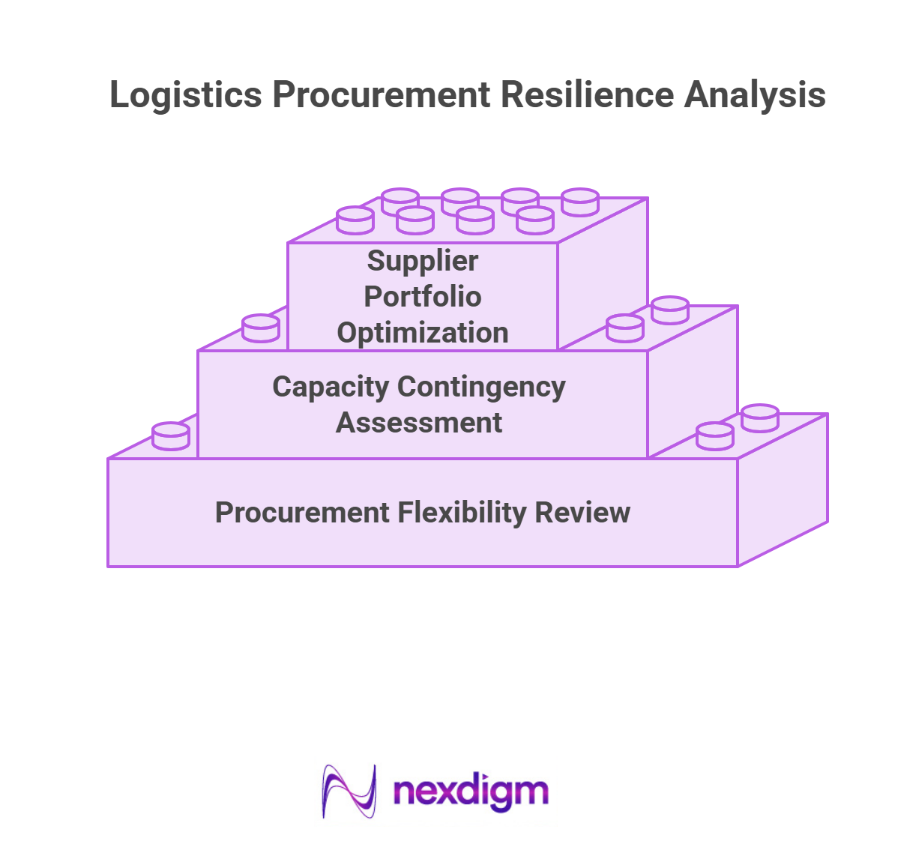
- Supplier Portfolio Optimization: Identify critical supplier dependencies and evaluate opportunities to broaden the provider base across key logistics categories and regions.
- Capacity Contingency Assessment: Examine alternative providers, available infrastructure, and regional service coverage to identify potential backup sourcing options.
- Procurement Flexibility Review: Assess commercial arrangements, supplier commitments, and market alternatives to identify opportunities for more adaptable sourcing decisions.
This approach helps organizations connect resilience findings with supplier selection, capacity planning, and continuity priorities.
Why Logistics Procurement Resilience Analysis Matters
A structured resilience assessment helps businesses understand whether their logistics sourcing arrangements can support operations during changing market conditions and unexpected disruptions. It enables procurement teams with:
- Reduced Operational Disruption: Identify supplier dependencies and capacity constraints that could interrupt transportation, warehousing, or distribution activities.
- Improved Cost and Risk Visibility: Examine commercial exposure, supplier limitations, and market conditions that may affect procurement stability.
- Stronger Long-Term Preparedness: Evaluate alternative providers and sourcing options to support continuity as business requirements evolve.
These benefits help organizations build a more dependable procurement network while aligning supplier decisions with operational priorities.
Nexdigm’s Framework for Evaluating Logistics Procurement Resilience
Nexdigm’s expert-led research support can help businesses follow a structured, step-by-step approach to assess supplier dependencies, identify vulnerabilities, and evaluate sourcing alternatives.
- Map the Procurement Network: Identify logistics suppliers, transportation routes, warehouse locations, service categories, and critical dependencies across the network.
- Assess Supplier Capabilities: Examine provider capacity, infrastructure, geographic coverage, service performance, and ability to meet operational requirements.
- Identify Resilience Gaps: Evaluate supplier concentration, capacity constraints, regional limitations, commercial exposure, and potential disruption points.
- Evaluate Alternative Providers: Research available suppliers and compare their capabilities, service offerings, market presence, and suitability for backup arrangements.
- Prioritize Improvement Areas: Rank identified vulnerabilities by potential operational impact and highlight areas requiring sourcing diversification or stronger continuity planning.
- Monitor Market Developments: Track changes in supplier capabilities, market availability, and logistics conditions to maintain visibility into emerging risks.
This step-by-step framework helps organizations turn supplier and market intelligence into practical procurement resilience priorities.
Nexdigm’s Case
A large retail distribution company faced recurring service interruptions across its logistics network, relying on 42 providers across eight regions. Nexdigm’s assessment examined supplier dependencies, warehouse coverage, transportation capacity, and regional availability. The research identified 16% of critical routes with high supplier concentration, 11 locations with limited backup coverage, and shortlisted 9 alternative providers across three regions to strengthen sourcing flexibility.
To take the next step, simply visit our Request a Consultation page and share your requirements with us.
Harsh Mittal
+91-8422857704