

The rapid evolution of logistics operations has made software platforms critical for optimizing supply chains, enhancing delivery speed, and reducing operational costs. Companies increasingly rely on advanced tools for route planning, inventory management, warehouse automation, and real-time tracking to maintain efficiency. Conducting a logistics software competitor study provides essential competitive intelligence, enabling firms to benchmark performance, analyze rivals’ technology adoption, and identify opportunities for strategic advantage in a highly competitive logistics landscape.
The global logistics software market was valued at around USD 16–18 billion in 2025 and is projected to more than double by the early 2030s, reaching roughly USD 35–42 billion as firms adopt real‑time tracking, automation, and cloud‑based tools for operational efficiency. Cloud platforms and AI analytics are prevalent, with many users reporting 30% improvements in routing and delivery performance upon adoption.
Understanding The Growing Role of Software in Logistics Efficiency
The Growing Role of Software in Logistics Efficiency highlights how advanced platforms streamline supply chains, optimize routes, automate warehouses, and enable real-time tracking, enhancing delivery speed, reducing costs, and supporting strategic decisions:
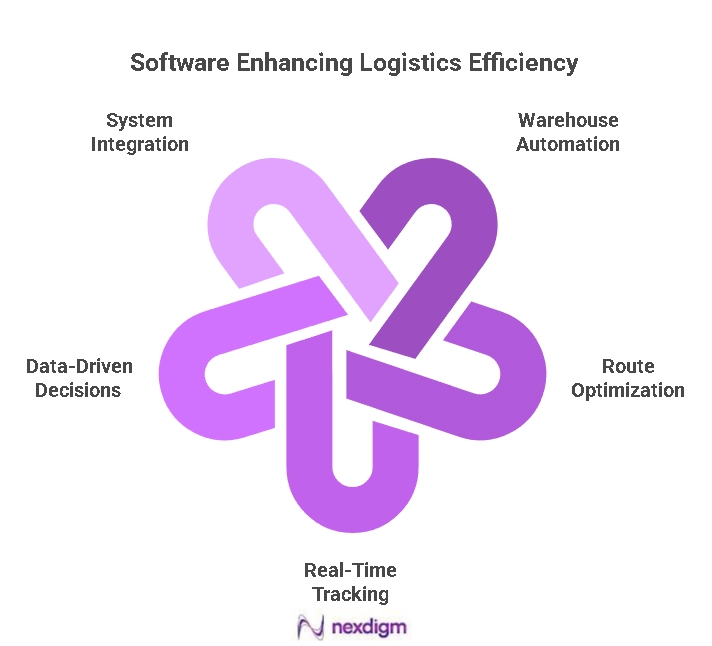
- Automation of Warehouse Operations – Software streamlines inventory management, picking, and packing processes, reducing errors and improving overall operational efficiency.
- Route Optimization and Fleet Management – Platforms use AI and analytics to plan efficient delivery routes, lowering fuel costs and improving punctuality.
- Real-Time Tracking and Visibility – Logistics software provides end-to-end tracking of shipments, enhancing transparency and enabling proactive problem resolution.
- Data-Driven Decision Making – Advanced analytics from software platforms guide strategic supply chain decisions, optimizing cost, speed, and resource allocation.
- Integration with Existing Systems – Seamless connectivity with ERP, CRM, and SCM systems ensures unified operations and improved cross-functional coordination.
Nexdigm Competitive Intelligence and Logistics Software Benchmarking
Nexdigm Competitive Intelligence and Logistics Software Benchmarking helps organizations evaluate and compare logistics software platforms against industry standards and competitors. By analyzing features, performance metrics, adoption trends, and ROI, Nexdigm enables data-driven decision-making.
This benchmarking approach identifies best solutions, uncovers operational gaps, and guides strategic investments, ensuring clients achieve optimized supply chain efficiency and maintain a competitive advantage in fast-evolving logistics markets.
Nexdigm Insights for Logistics Software Selection and Implementation
Logistics Software Selection and Implementation guide businesses in choosing, customizing, and deploying software platforms effectively, ensuring seamless integration, optimized workflows, and enhanced operational efficiency across supply chain and logistics operations.
- Needs Assessment and Gap Analysis – Identify business requirements, operational bottlenecks, and software gaps to select platforms aligned with strategic logistics goals.
- Vendor Evaluation and Benchmarking – Compare features, performance, and adoption trends of multiple software vendors to ensure informed, data-driven selection decisions.
- System Integration Planning – Design seamless integration of new software with ERP, SCM, and CRM systems for streamlined logistics workflows.
- Customization and Configuration – Tailor software features and modules to match operational processes, ensuring efficiency, scalability, and user adoption.
- Implementation Roadmap Development – Develop phased deployment plans, including timelines, milestones, and resource allocation for smooth software rollout.
Nexdigm’s case:
By rebalancing demand loads and optimising warehouse locations, Nexdigm helped the client realize 16 % savings in supply chain costs, 7% service levels and an additional 27 % savings through strategic redistribution of assets and transportation lanes. This case demonstrates Nexdigm’s ability to improve logistics performance using analytical benchmarking and software insights.
To take the next step, simply visit our Request a Consultation page and share your requirements with us.
Harsh Mittal
+91-8422857704