

India’s expanding transport infrastructure is creating new opportunities for businesses to review logistics sourcing strategies. According to the Government of India, the National Highway network grew from 91,287 km in 2014 to 146,204 km in 2025, an increase of around 60%. Major ports handled approximately 855 million tonnes of cargo in FY 2024–25, recording 4.3% growth over the previous year.
These developments are expanding connectivity and freight movement options for businesses. However, choosing the right suppliers, routes, and service arrangements remains essential. Logistics sourcing cost optimization helps organizations identify cost-saving opportunities while maintaining delivery performance, supplier reliability, and operational efficiency.
Understanding the Balance Between Cost and Service Quality
Reducing logistics expenditure requires more than selecting suppliers with lower quotations. Businesses must consider delivery timelines, shipment handling, network coverage, and service consistency when evaluating providers. A low-cost arrangement may create additional expenses if it results in delays, damages, or operational disruptions. Effective procurement therefore focuses on overall value rather than immediate price reductions.
Where Logistics Procurement Can Improve Cost Efficiency
Logistics costs are influenced by supplier pricing, transportation choices, shipment volumes, and contractual arrangements. Businesses can review existing sourcing practices to identify unnecessary expenses, compare alternative providers, and improve resource utilization. Examining these factors together helps procurement teams find practical savings opportunities while ensuring that changes do not negatively affect delivery schedules, service quality, or supply chain continuity.
How Nexdigm Helps Identify Logistics Cost Opportunities
Nexdigm’s procurement and market research capabilities can help organizations identify where logistics expenditure can be optimised without affecting service quality. Our approach focuses on three key areas:
- Understanding Cost Drivers: Analyze transportation, warehousing, freight handling, and related expenses to identify areas of high spending and potential inefficiencies.
- Evaluating Supplier Competitiveness: Compare vendor pricing, service capabilities, geographic coverage, and contractual terms to identify better-value sourcing options.
- Identifying Sourcing Alternatives: Assess alternative suppliers, logistics models, and procurement arrangements to explore opportunities for cost reduction while maintaining operational requirements.
Through these assessments, Nexdigm can help businesses develop more informed sourcing strategies and prioritize practical cost-saving opportunities.
Connecting Nexdigm’s Procurement Analysis with Business Priorities
Experts of Nexdigm support logistics sourcing cost optimization through several focused areas of assessment:
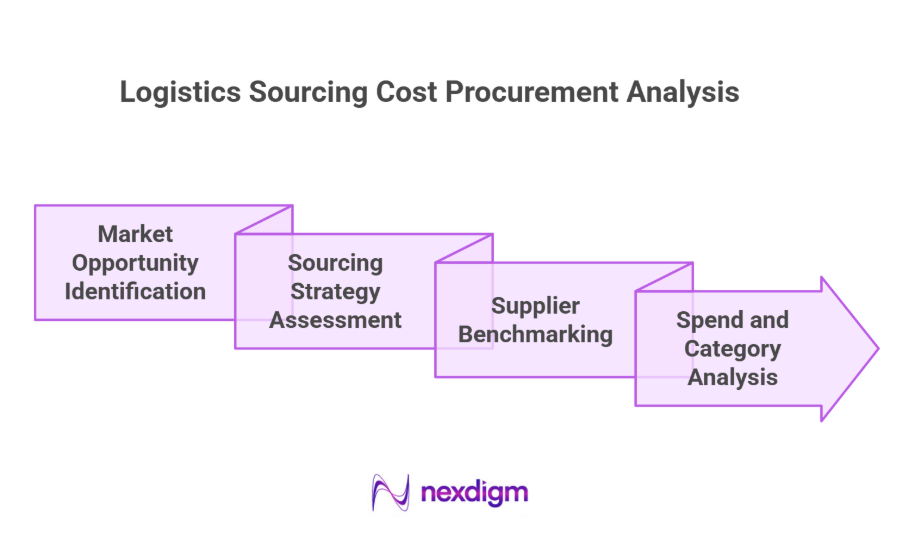
- Spend and Category Analysis: Examine expenditure across transportation, warehousing, freight handling, and other logistics categories to identify major cost drivers.
- Supplier Benchmarking: Compare supplier pricing, service coverage, operational capabilities, and commercial terms to identify improvement opportunities.
- Sourcing Strategy Assessment: Evaluate alternative suppliers, consolidated sourcing, and outsourcing arrangements based on cost and operational requirements.
- Market Opportunity Identification: Study regional supplier availability, pricing trends, and emerging service options to support more competitive procurement decisions.
These assessments help procurement teams prioritise sourcing opportunities based on their potential commercial and operational value.
How Nexdigm’s Experts Offer Reliability Through Better Supplier Decisions
Cost savings should not come at the expense of supply chain continuity. Nexdigm’s research can help businesses incorporate service performance into procurement evaluations by examining:
- Delivery Performance: Assess delivery consistency, transit times, and fulfilment capabilities when comparing logistics providers.
- Operational Risk: Identify supplier dependencies, capacity limitations, and geographic constraints that may affect service continuity.
- Performance Accountability: Review service-level commitments, penalty structures, and escalation procedures to strengthen supplier management.
- Long-Term Supplier Value: Consider reliability, scalability, and service improvements alongside pricing when developing sourcing partnerships.
This approach helps organizations evaluate the wider impact of procurement decisions and pursue sustainable cost improvements.
Nexdigm’s Case
A retail company managing deliveries across multiple regions wanted to improve transport costs while maintaining order fulfilment timelines. Nexdigm’s assessment compared regional logistics providers, shipment volumes, delivery performance, and contractual terms. The analysis identified 11% potential savings in transportation costs, 16% scope for improving load consolidation, and opportunities to strengthen supplier coverage in high-demand regions.
To take the next step, simply visit our Request a Consultation page and share your requirements with us.
Harsh Mittal
+91-8422857704