

India’s logistics infrastructure is experiencing growth across multiple freight channels, increasing the importance of dependable sourcing arrangements. According to the Ministry of Statistics and Programme Implementation, air cargo traffic increased 12% to 18.6 lakh tonnes during April–August 2026. Major ports handled 390.4 million tonnes of cargo during the same period, registering 7.2% growth year-on-year.
As freight activity expands, businesses must ensure that logistics partners can accommodate changing volumes, maintain service standards, and manage cost pressures. Supplier capacity limitations, operational disruptions, and commercial uncertainties can affect supply chain performance. Logistics sourcing risk evaluation helps organizations identify these exposures and assess whether existing sourcing arrangements can support business requirements.
Why Logistics Sourcing Decisions Carry Operational Exposure
Logistics sourcing involves dependencies across transportation providers, warehouse operators, freight handlers, and distribution partners. Weaknesses in any of these relationships can affect delivery schedules, inventory availability, operating costs, and customer commitments. Businesses therefore need to examine supplier capabilities, market conditions, and contractual arrangements together. This broader assessment helps procurement teams recognise vulnerabilities that may not be visible through routine price comparisons or service-level reviews.
Signals That Deserve Attention During Sourcing Reviews
Procurement teams can examine several indicators to understand where logistics sourcing arrangements may become vulnerable:
- Capacity Availability: Evaluate fleet availability, warehouse utilisation, workforce strength, and seasonal readiness to identify potential constraints during demand fluctuations.
- Service Reliability: Review delivery consistency, handling standards, geographic coverage, and service-level performance to understand the possibility of operational interruptions.
These indicators provide a foundation for prioritizing supplier reviews and identifying areas requiring further investigation.
How Nexdigm Connects Supplier Research with Risk Evaluation
Nexdigm’s procurement research and market intelligence capabilities can help businesses examine logistics sourcing vulnerabilities through supplier-level and market-level assessments. Our logistics sourcing risk evaluation supports the following areas of analysis:
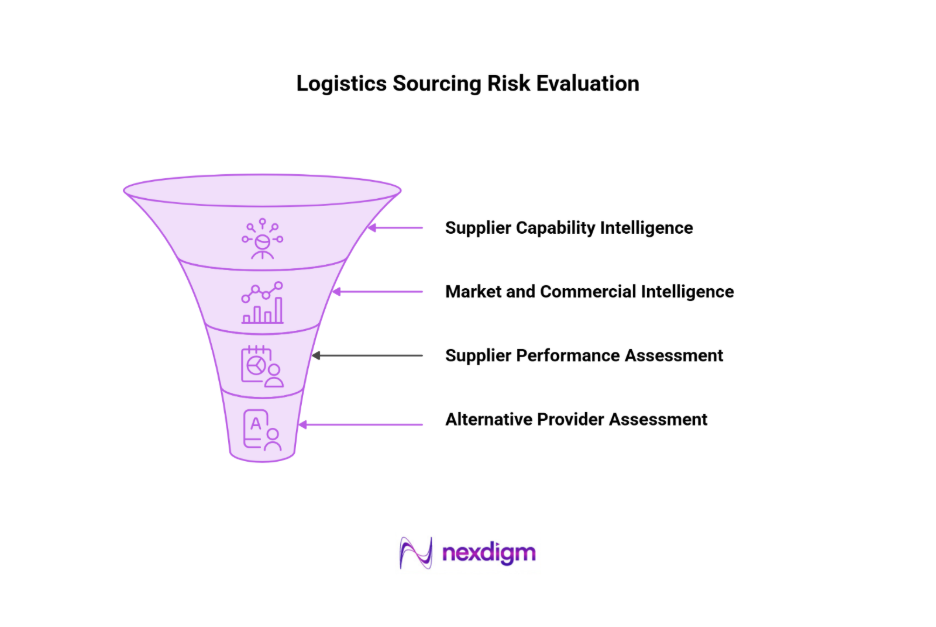
- Supplier Capability Intelligence: Research provider infrastructure, fleet or storage capacity, geographic presence, and service capabilities to assess their ability to meet operational requirements.
- Supplier Performance Assessment: Examine service reliability, delivery consistency, operational track records, and service coverage to identify potential weaknesses in supplier performance.
- Market and Commercial Intelligence: Compare supplier pricing, contractual conditions, cost drivers, and market developments to identify potential commercial exposure and sourcing concerns.
- Alternative Provider Assessment: Identify other market participants, evaluate their service offerings, and examine their suitability as alternative sourcing options when existing arrangements face constraints.
This research can help organizations develop a clearer understanding of supplier exposure and available market alternatives.
Converting Nexdigm’s Risk Insights into Stronger Sourcing Arrangements
Risk evaluation becomes more valuable when findings inform procurement priorities. Nexdigm can help businesses interpret supplier and market intelligence to identify practical areas for improvement:
- Supplier Portfolio Review: Identify sourcing concentration and assess whether the current provider mix offers sufficient operational flexibility.
- Commercial Risk Visibility: Highlight cost pressures and contractual conditions that may affect long-term sourcing competitiveness.
- Continuity Preparedness: Examine alternative supplier availability and potential capacity options to support business operations during disruptions.
By converting these findings into sourcing priorities, businesses can strengthen supplier arrangements, address potential vulnerabilities, and improve preparedness for changing logistics requirements.
The Business Value of Partnering with Nexdigm
Working with Nexdigm can help organizations bring greater structure to logistics sourcing decisions. Its research-led approach combines supplier intelligence, market comparisons, and procurement insights to help businesses understand potential vulnerabilities and evaluate available options. This supports more informed supplier selection, better visibility into commercial exposure, and sourcing arrangements aligned with operational priorities.
Nexdigm’s Case
A distribution company experienced rising transportation costs and inconsistent service across regional routes. Nexdigm’s research reviewed supplier capacity, delivery performance, commercial terms, and alternative providers. The assessment identified 17% of routes with potential supplier capacity exposure, highlighted alternative providers across 5 regions, and identified opportunities for improved cost and service alignment.
To take the next step, simply visit our Request a Consultation page and share your requirements with us.
Harsh Mittal
+91-8422857704