

India’s logistics network is expanding, increasing the scale and complexity of supplier relationships across transportation, warehousing, and distribution. The Economic Survey 2025–26 reported that major port cargo traffic reached 672.9 million tonnes during April–December 2025, growing 8.2% year-on-year. Railway freight loading increased 3.3% to 1,215 million tonnes, while air cargo traffic grew 5.1% to 2.6 million tonnes during the same period.
As freight movement expands, businesses become increasingly dependent on suppliers for timely deliveries, storage capacity, and distribution continuity. However, weaknesses in supplier finances, infrastructure, compliance, or operational capabilities can expose supply chains to disruption. A structured logistics supplier risk assessment helps organisations identify these vulnerabilities and evaluate their potential business impact.
Understanding Supplier Risks Across Logistics Operations
Logistics suppliers influence the movement, storage, and availability of goods across the supply chain. Their operational weaknesses can affect delivery schedules, inventory management, customer commitments, and business costs. Risks may arise from inadequate fleet capacity, warehouse infrastructure, financial instability, regulatory non-compliance, or limited technology capabilities. Identifying these concerns early allows businesses to evaluate supplier reliability, prepare contingency arrangements, and reduce exposure to operational disruptions.
Risk Areas That Require Closer Evaluation
A comprehensive supplier review should examine risks across three interconnected areas:
- Operational and Infrastructure Risks: Assess fleet availability, vehicle maintenance, warehouse capacity, equipment condition, and network coverage to identify vulnerabilities that could interrupt daily logistics activities.
- Financial and Commercial Risks: Examine supplier financial stability, pricing structures, payment dependencies, insurance coverage, and contractual commitments to identify potential service interruptions or unexpected cost increases.
- Compliance and Technology Risks: Review regulatory adherence, safety standards, data security, tracking systems, and reporting capabilities to identify legal exposure and weaknesses in operational visibility.
Considering these areas together helps businesses distinguish routine supplier limitations from risks that could significantly affect logistics continuity.
How Nexdigm Approaches Logistics Supplier Risk Assessment
Nexdigm’s procurement and market research capabilities can help businesses evaluate logistics suppliers beyond their quoted prices and stated service capabilities. Our logistics supplier risk assessment can support a structured review by conducting:
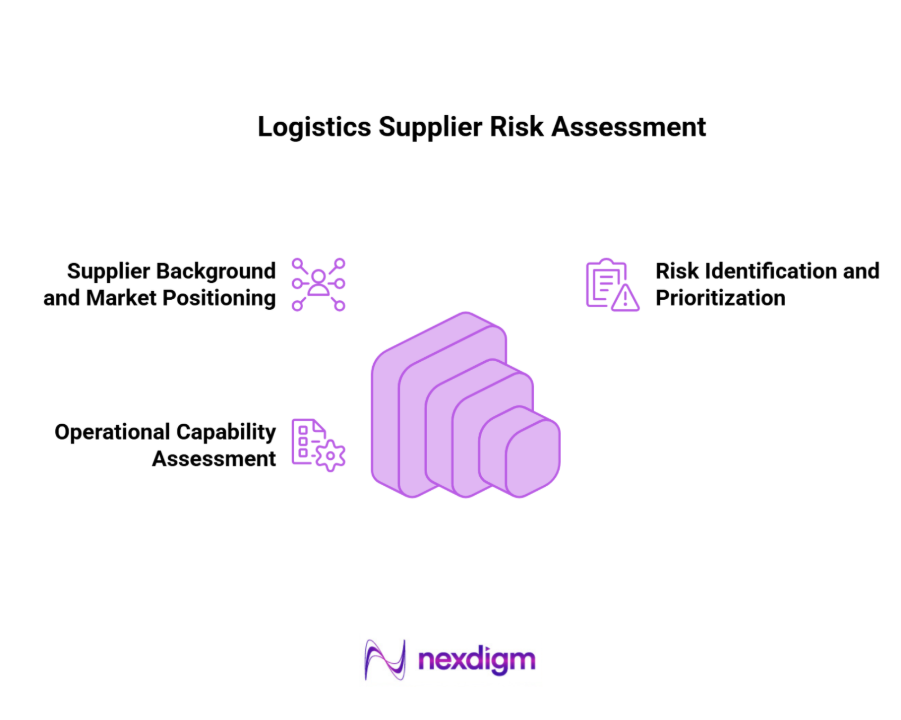
- Supplier Background and Market Positioning: Research supplier ownership, business presence, industry experience, customer segments, and market reputation to understand their stability and suitability for business requirements.
- Operational Capability Assessment: Examine transportation networks, warehousing infrastructure, fleet strength, service coverage, and technology adoption to identify capacity constraints and operational dependencies.
- Risk Identification and Prioritization: Evaluate identified vulnerabilities based on their likelihood and potential impact, helping procurement teams prioritize suppliers requiring closer monitoring or alternative sourcing arrangements.
This approach can help organizations build a clearer picture of supplier exposure and strengthen decisions around supplier selection, retention, and contingency planning.
The Value of Partnering with Nexdigm
Partnering with Nexdigm enables businesses to bring greater structure and market visibility to logistics supplier risk evaluation. By combining procurement research, supplier intelligence, and industry analysis, Nexdigm can help organizations identify potential vulnerabilities, assess supplier suitability, and understand market alternatives. These insights support proactive risk management and more resilient sourcing decisions across transport, warehousing, and distribution operations.
Nexdigm’s Supplier Risk Findings Supporting Procurement Decisions
Identifying risks is only useful when the findings inform practical action. Nexdigm can help businesses connect supplier research with procurement priorities by examining alternative providers, assessing market availability, and identifying areas where supplier diversification may be necessary. This can support more informed sourcing decisions, improve supplier monitoring, and help businesses develop contingency options for critical transportation, warehousing, and distribution activities.
Nexdigm’s Case
A consumer goods company experienced recurring delivery delays across regional distribution centres. Nexdigm’s assessment examined transport vendor capacity, warehouse coverage, financial stability, and service dependencies. The review identified 18% of assessed suppliers as requiring enhanced monitoring, highlighted alternative providers for 2 critical regions, and identified opportunities to strengthen contingency coverage.
To take the next step, simply visit our Request a Consultation page and share your requirements with us.
Harsh Mittal
+91-8422857704