

Luxury retail expansion is rarely just about entering a new market. It is about finding the right consumers, establishing the right presence, and creating an experience that aligns with both brand positioning and local market expectations. While many markets may appear attractive based on economic indicators alone, luxury brands require a much deeper understanding of consumer wealth concentration, spending behavior, competitive dynamics, and commercial viability.
A market with strong purchasing power may not necessarily deliver sustainable luxury demand, while an emerging market could offer significant untapped potential. Through its luxury retail feasibility study consulting services, Nexdigm helps luxury brands evaluate market opportunities, identify high-value consumer clusters, and select market entry strategies that support long-term growth.
Where Are the Luxury Consumers?
The success of a luxury retail expansion often begins with understanding where affluent consumers are concentrated and how they engage with luxury brands. Nexdigm helps businesses assess:
- High-net-worth individual (HNWI) concentrations
- Premium residential locations
- Luxury shopping destinations
- Business and tourism districts
- Affluent lifestyle communities
- Consumer mobility and spending patterns
By mapping these consumer clusters, brands can identify locations with the highest potential for luxury retail success.
Is the Market Ready for a Luxury Retail Brand?
Luxury market success depends on the alignment between a brand’s positioning and the characteristics of the target market. Before entering a new location, businesses must assess:
- Presence of high-net-worth consumers
- Luxury spending potential
- Brand awareness and aspiration levels
- Competitive landscape
- Commercial viability
Through its luxury retail feasibility study consulting services, Nexdigm helps organizations evaluate these factors to support confident market-entry decisions. By combining market intelligence with commercial insight, Nexdigm enables luxury brands to identify the most promising opportunities, mitigate entry risks, and establish a sustainable presence in high-value markets.
Understanding the High-Value Consumer Clusters
In luxury retail, market success begins with understanding where target consumers live, work, and spend. It is important for businesses to answer the following questions:
Why Consumer Clusters Matter
A luxury store’s performance is closely linked to the concentration of affluent consumers within a specific geography. Nexdigm helps brands identify:
- High-net-worth individual (HNWI) concentrations: Evaluate locations with a significant population of affluent consumers who drive demand for luxury products and experiences.
- Premium residential zones: Assess upscale residential communities where higher disposable incomes and luxury consumption patterns are typically concentrated.
- Luxury shopping corridors: Identify established retail districts known for premium brands, strong footfall, and luxury-focused consumer traffic.
- Business and tourism hubs: Analyze commercial centers and high-end travel destinations that attract affluent professionals, executives, and international visitors.
- Premium lifestyle destinations: Evaluat locations such as luxury mixed-use developments, exclusive clubs, fine-dining districts, and entertainment hubs that align with luxury consumer lifestyles.
This analysis helps brands prioritize markets with the strongest luxury demand potential.
Understanding Luxury Consumption Behaviour
Affluent consumers often exhibit purchasing behaviors that differ significantly from mainstream shoppers. Nexdigm evaluates:
- Luxury purchase frequency
- Category preferences
- Brand loyalty trends
- Aspirational buying behavior
- Omnichannel shopping preferences
- Premium service expectations
These insights help businesses align their offerings with local luxury consumer expectations.
What Drives Luxury Demand
Luxury purchasing decisions are influenced by more than income levels. Factors such as brand aspiration, exclusivity, lifestyle preferences, and status perception play a critical role. Several areas need to be assessed to understand the forces driving the demand. Nexdigm evaluates:
- Luxury spending behavior
- Category-wise demand
- Brand awareness levels
- Premium product preferences
- Customer loyalty trends
- Emerging luxury consumption patterns
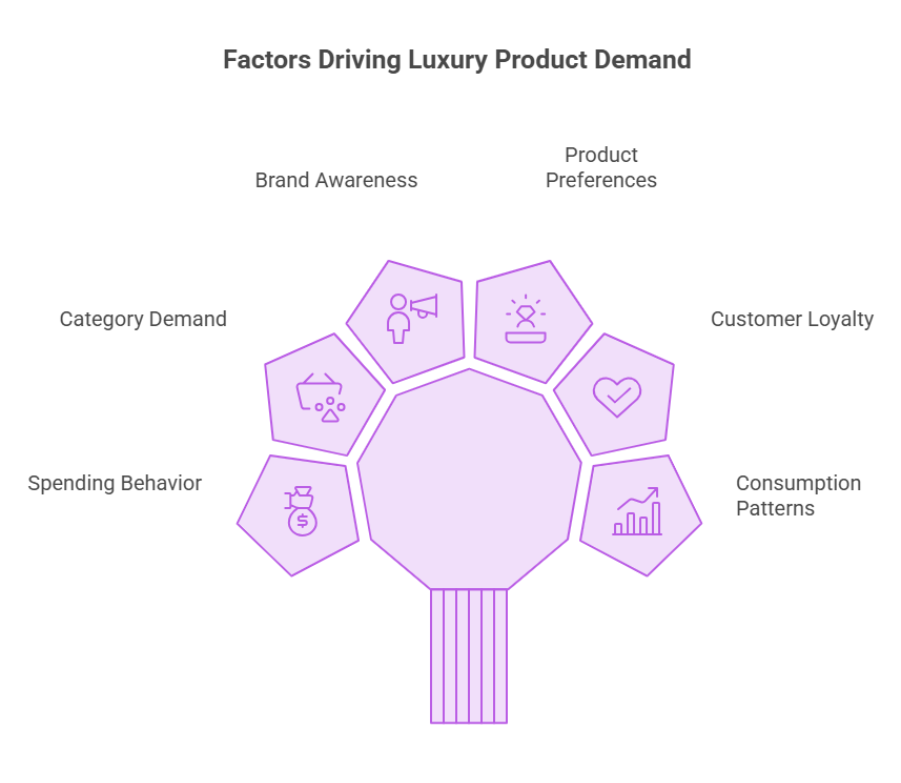
This analysis helps determine whether a market possesses the depth of demand required to support long-term brand growth.
Choosing the Right Market Entry Model
Selecting the right market-entry model can be just as important as selecting the market itself. Different markets may require different approaches based on customer behavior, operational complexity, and investment appetite. Major entry models evaluated by Nexdigm are:
- Flagship boutiques: Establish a premium brand presence through exclusive stores that deliver immersive experiences and strengthen customer engagement.
- Shop-in-shop formats: Operate within established retail stores to increase brand visibility while minimizing investment and operational requirements.
- Franchise partnerships: Expand into new markets through local partners who manage operations while adhering to brand standards.
- Joint ventures: Collaborate with local businesses to share investments, market expertise, operational responsibilities, and growth opportunities.
- Distributor-led models: Leverage local distributors to manage product distribution, market access, and customer reach efficiently.
- Omnichannel retail strategies: Integrate physical stores and digital channels to deliver seamless customer experiences across multiple touchpoints.
Through its luxury retail feasibility study consulting services, Nexdigm helps organizations determine which approach best aligns with their growth objectives and market conditions.
The Nexdigm Advantage in Luxury Retail Expansion
Luxury retail requires a specialized approach that combines consumer intelligence, market research, competitive assessment, and commercial analysis. Nexdigm brings these capabilities together through an integrated framework designed to help luxury brands:
- Identify high-potential markets
- Understand affluent consumer behavior
- Evaluate competitive positioning
- Select suitable entry models
- Assess commercial feasibility
- Develop sustainable expansion strategies
Rather than focusing solely on market attractiveness, Nexdigm helps businesses evaluate whether a market can truly support long-term luxury retail success.
Benefits of Partnering with Nexdigm
Organizations leveraging Nexdigm’s luxury retail feasibility study consulting services can benefit from a structured, insight-driven approach that combines consumer intelligence, market analysis, competitive benchmarking, and commercial evaluation to support confident luxury retail expansion decisions. Businesses leveraging Nexdigm’s luxury retail feasibility study consulting services can benefit from:
- Identification of high-value consumer clusters
- Better understanding of luxury demand drivers
- Stronger market-entry decision-making
- Evaluation of optimal expansion models
- Enhanced profitability and investment planning
- Reduced market-entry risk
Converting Luxury Insights to Sustainable Growth
Successful luxury expansion depends on more than opening stores in affluent locations. It requires a comprehensive understanding of customer behavior, market dynamics, competitive pressures, and financial performance. Nexdigm helps brands transform these insights into actionable strategies that support sustainable growth and long-term market success.
Nexdigm’s Case
In a recent engagement, Nexdigm supported a luxury retail client in identifying high-value consumer clusters and evaluating the right market entry model. Real-time insights increased customer segment accuracy by 38%, improved store location prioritization by 26%, enhanced revenue potential assessment by 22%, and accelerated entry planning by 35%.
Nexdigm’s luxury retail feasibility approach enabled the client to identify premium market opportunities, optimize expansion choices, and develop a commercially viable roadmap for sustainable growth.
To take the next step, simply visit our Request a Consultation page and share your requirements with us.
Harsh Mittal
+91-8422857704