

Luxury retail pricing benchmarking reports play a critical role in helping premium brands evaluate their competitive positioning, pricing strategies, and value perception in an increasingly sophisticated market. As luxury consumers prioritize exclusivity and brand heritage alongside price, effective pricing analysis enables businesses to compare price architectures, and optimize profitability without diluting brand equity.
Comprehensive luxury retail pricing benchmarking reports, competitive pricing intelligence, and market-based pricing analysis provide actionable insights into pricing trends, and cross-brand comparisons, supporting informed strategic decisions and sustainable growth in the global luxury retail industry.
The global luxury goods market is projected to exceed US$500 billion by 2030, while over 70% of luxury consumers consider brand exclusivity and perceived value when making purchase decisions, reinforcing the importance of luxury retail pricing benchmarking reports and data-driven pricing analysis.
Strategic Luxury Pricing Analysis for Premium Market Positioning and Growth
Strategic luxury pricing analysis helps brands strengthen premium positioning, protect exclusivity, and identify profitable growth opportunities through informed benchmarking, customer insights, and competitive market intelligence across segments. Its major strategies include:
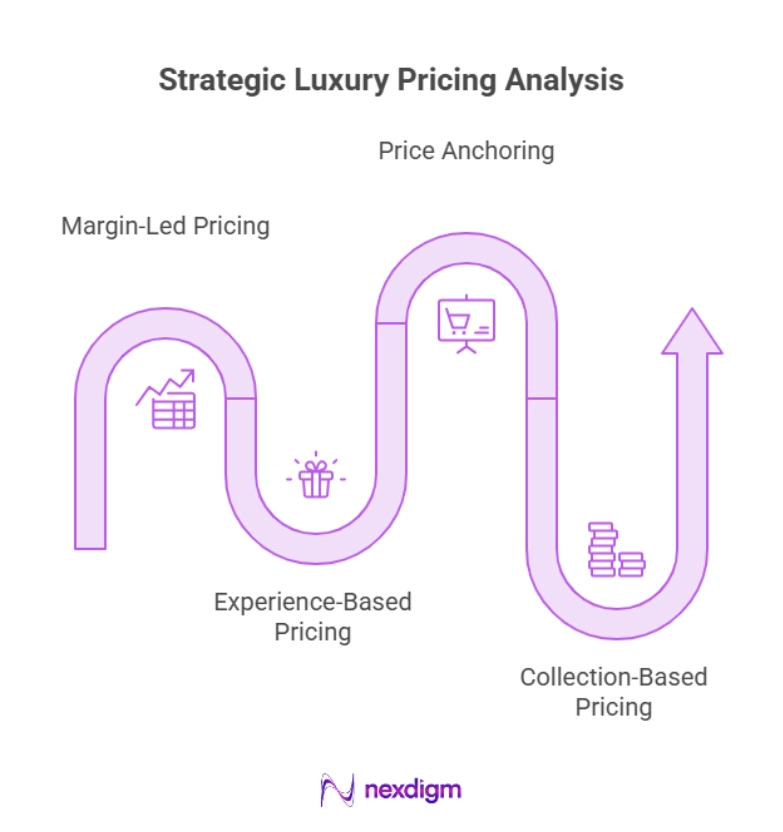
- Margin-Led Pricing Strategies: Building prices around target margins, cost structures, service investments, and demand elasticity to support profitability while preserving premium positioning and customer willingness to pay consistently.
- Experience-Based Pricing Strategies: Reflecting concierge service, personalization, private access, and after-sales care within pricing to reinforce differentiation, elevate perceived value, and justify sustained premiums across customer segments globally.
- Price Anchoring Strategies: Using flagship products and high reference prices to frame surrounding collections as attainable, strengthening perceived value, encouraging trade-ups, and maintaining a prestigious brand image globally.
- Collection-Based Pricing Strategies: Differentiating pricing across permanent collections, seasonal launches, and limited releases to reflect design complexity, rarity, demand, and strategic importance within the luxury portfolio over time.
Nexdigm’s Pricing Analysis Support for Luxury Retail Brands
Nexdigm’s pricing analysis solutions help luxury retail brands strengthen market positioning, protect exclusivity, and improve profitability through data-driven insights. Our expertise spans luxury retail pricing benchmarking, competitive pricing analysis, price optimization, consumer value assessment, and market intelligence. By evaluating brand perception, demand, competitor movements, and regional price structures, Nexdigm supports informed pricing strategies that enhance perceived value and sustainable growth.
Nexdigm’s Integrated Architecture for Luxury Retail Pricing Decisions
Nexdigm’s integrated architecture combines market intelligence, customer insights, competitive benchmarking, price governance, and performance monitoring to help luxury brands make confident, value-led pricing decisions across global markets and channels effectively. Its key elements focus on:
- Exclusivity Value Index: Quantifies the pricing impact of scarcity, craftsmanship, heritage, personalization, and brand prestige, helping luxury retailers establish defensible premiums across products, collections, and customer segments globally.
- Consumer Affinity Mapping: Analyzes purchasing motivations, loyalty patterns, lifestyle preferences, and willingness to pay, enabling brands to align pricing decisions with distinct luxury customer expectations across key markets.
- Luxury Peer Benchmarking: Benchmarks comparable products, collections, services, and brand positions to identify pricing gaps, premium opportunities, competitive risks, and differentiated value propositions across the luxury retail landscape.
- Market Sensitivity Simulation: Models how customers, competitors, margins, and sales volumes may respond to proposed price changes, enabling informed scenario planning and reducing implementation risks across luxury portfolios globally.
Nexdigm’s Case
Nexdigm supported a consumer goods company in benchmarking prices across 150 products operating in highly competitive markets. Through structured pricing analysis, the team identified a 12% pricing gap, improved pricing accuracy by 18%, and enabled a 9% increase in profit margins within six months, demonstrating measurable commercial impact.
To take the next step, simply visit our Request a Consultation page and share your requirements with us.
Harsh Mittal
+91-8422857704