
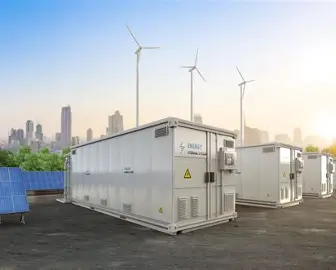
Malaysia’s Battery Energy Storage for Microgrids Market is witnessing strong growth, driven by renewable energy expansion, grid modernization, industrial electrification, and increasing demand for resilient power systems. Battery Energy Storage Systems (BESS) play a critical role in microgrids by enabling renewable energy integration, improving grid stability, reducing peak demand, and providing backup power. With installed power-generation capacity exceeding 42 GW, a population of over 35 million, and growing investments in digital infrastructure, demand for battery-backed microgrids is increasing across industrial parks, data centers, commercial facilities, islands, and remote communities. Rising solar energy deployment and sustainability initiatives are further supporting market expansion.
Key Market Drivers for Malaysia’s Battery Energy Storage for Microgrids Market
Renewable Energy Expansion Accelerates Storage Demand
Malaysia is accelerating renewable energy deployment under the National Energy Transition Roadmap (NETR), targeting 31% renewable energy capacity by 2025 and 40% by 2035. The country has already installed more than 3 GW of solar capacity, creating growing demand for battery storage systems that can improve renewable energy utilization and provide stable power supply. Solar-plus-storage microgrids are increasingly being deployed across commercial and industrial facilities seeking lower energy costs and improved sustainability performance.
Data Center Expansion and Industrial Growth Create Significant Opportunities
Malaysia has emerged as one of Southeast Asia’s fastest-growing data center markets, attracting more than USD 30 billion in announced investments, particularly in Johor and Kuala Lumpur. Data centers, semiconductor facilities, electronics manufacturers, and industrial parks require highly reliable power systems and backup capabilities. Battery-backed microgrids provide energy resilience, peak-demand management, and uninterrupted operations, making them increasingly attractive across these sectors.
Energy Security and Grid Resilience Strengthen Market Growth
Growing electricity demand, coupled with the need for improved grid stability, is driving investments in distributed energy resources. Battery storage systems integrated with microgrids offer an effective solution for improving energy security, reducing dependence on diesel generation, and supporting critical infrastructure. Commercial buildings, healthcare facilities, logistics centers, and industrial operators are increasingly adopting BESS-enabled microgrids to strengthen operational reliability.
Government Initiatives Supporting Malaysia’s Battery Energy Storage for Microgrids Market
The Malaysian government continues to support battery energy storage deployment through the National Energy Transition Roadmap (NETR) and broader sustainability programs. Investments exceeding MYR 95 billion are being directed toward renewable energy, electricity infrastructure, industrial modernization, and energy-efficiency initiatives. The government’s commitment to achieving net-zero emissions by 2050 is encouraging adoption of renewable energy, smart-grid technologies, and battery storage systems. Ongoing support for distributed energy resources, grid resilience projects, and renewable energy integration is creating favorable conditions for BESS deployment across commercial, industrial, and utility-scale applications.
Competitive Landscape of Malaysia’s Battery Energy Storage for Microgrids Market
Malaysia’s Battery Energy Storage for Microgrids Market is becoming increasingly competitive as international battery manufacturers, renewable energy developers, and technology providers expand their presence. Competition is focused on battery efficiency, storage duration, lifecycle performance, thermal management, energy-management software, and microgrid integration capabilities. Major companies including Tesla Energy, BYD, Huawei Digital Power, Sungrow, Fluence, Hitachi Energy, Schneider Electric, ABB, and regional renewable energy developers are actively pursuing opportunities in solar-plus-storage projects, industrial microgrids, and commercial energy-storage deployments. Growing demand from data centers, industrial facilities, and renewable-energy projects continues to drive technological innovation and market expansion.
Major Challenges Facing Malaysia’s Battery Energy Storage for Microgrids Market
High Capital Investment Requirements
Battery energy storage systems require significant upfront investment despite ongoing declines in battery costs. Financing structures and project economics remain important considerations for industrial, commercial, and utility customers.
Technical Integration and Regulatory Challenges
Successful deployment of battery-backed microgrids requires advanced energy-management platforms, smart-grid compatibility, and integration with renewable energy systems. Evolving regulatory frameworks and grid-connection requirements may influence project development timelines.
Future Outlook
Malaysia’s Battery Energy Storage for Microgrids Market is expected to witness strong growth through 2035, supported by installed power-generation capacity exceeding 42 GW, renewable-energy targets of 40% by 2035, and more than USD 30 billion in announced data center investments across Johor and Kuala Lumpur. Rising deployment of solar energy beyond 3 GW of installed capacity, expansion of industrial parks, and increasing electrification of high-tech manufacturing facilities will accelerate demand for battery-backed microgrids. In addition, investments exceeding MYR 95 billion under the National Energy Transition Roadmap (NETR), growing adoption of AI-enabled energy-management systems, and rising demand for resilient power infrastructure from data centers, semiconductor facilities, and commercial complexes are expected to create significant opportunities for lithium-ion battery storage, solar-plus-storage microgrids, and distributed energy solutions across Malaysia’s evolving energy ecosystem.
Consultants at Nexdigm, in their latest publication “Malaysia Battery Energy Storage for Microgrids Market Outlook to 2035” analyse the sector By Battery Chemistry Technology (Lithium Iron Phosphate (LFP), Nickel Manganese Cobalt (NMC) and Lithium Titanate (LTO)), By Connection Topology (Grid-Connected Microgrids and Islanded/Off-Grid Microgrids) and By Regional Focus (Peninsular Malaysia Regions, Sabah and Labuan Territories and Sarawak Rural Interior).
Nexdigm suggests that businesses in Malaysia’s Battery Energy Storage for Microgrids Industry prioritize lithium-ion battery systems, solar-plus-storage microgrids, AI-enabled energy-management platforms, and data-center-focused energy resilience solutions to capitalize on the country’s 42 GW+ power capacity, USD 30 billion+ data center investments, renewable-energy expansion targets, and growing demand for reliable, sustainable, and decentralized power infrastructure across industrial, commercial, and utility applications.
To take the next step, simply visit our Request a Consultation page and share your requirements with us.
Harsh Mittal
+91-8422857704