
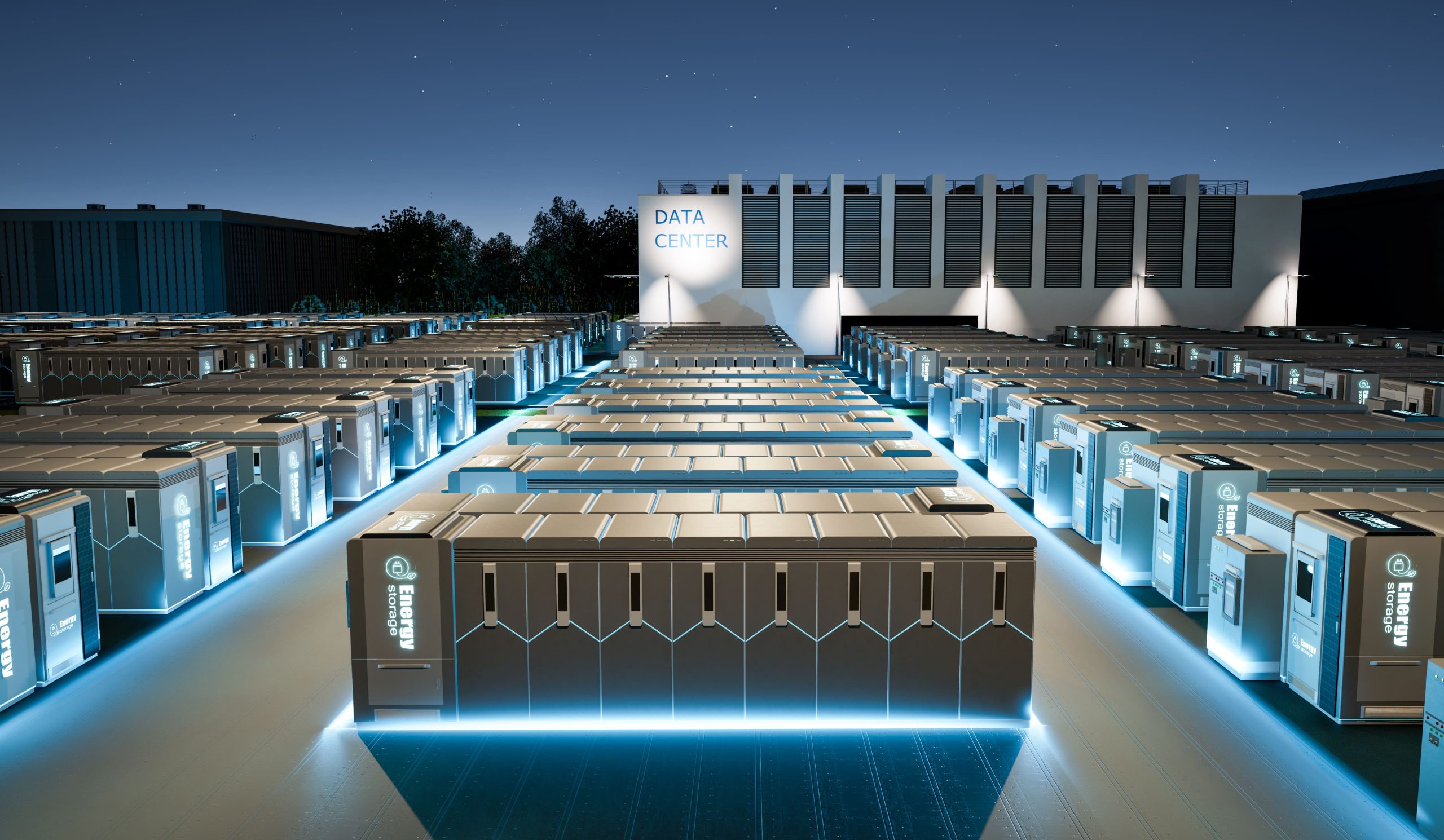
Malaysia’s Battery Energy Storage System (BESS) market is moving from concept to commercial relevance much faster than it was even a few years ago. In 2026, battery storage is no longer being discussed only as a future grid technology. It is starting to become a practical requirement for a power system that now has to accommodate more solar, rising industrial electricity demand, and tighter reliability expectations. The shift is especially visible as Malaysia balances its renewable energy ambitions with the realities of grid stability and investment costs. Early utility-led projects have already begun to prove that storage is not just a technical add-on. It is becoming one of the more important tools for making the energy transition workable on the ground.
What’s Driving the BESS Market in Malaysia?
Solar Expansion Is Creating a Real Need for Storage
One of the clearest reasons behind BESS adoption in Malaysia is the steady buildout of solar power. Solar capacity has grown meaningfully over the last few years through utility-scale projects, rooftop systems, and corporate clean energy procurement. That sounds positive, but it also creates a practical problem: solar generation peaks during the day, while electricity demand often stays high well into the evening. That mismatch is exactly where battery systems become valuable. They can store excess daytime electricity and release it later when the grid needs support. In practice, this helps reduce curtailment, improves load balancing, and gives utilities more flexibility. Without storage, Malaysia can continue adding solar, but integrating larger volumes smoothly becomes far more difficult.
Data Centers and Industrial Loads Are Changing Power Demand
Malaysia’s rise as a regional digital and manufacturing hub is adding a second layer of urgency to battery deployment. New data center developments, particularly in Johor, are reshaping electricity demand patterns in ways that traditional grid planning did not fully anticipate. These facilities require extremely stable power and have little tolerance for outages or voltage fluctuations. For industrial users, battery systems also make financial sense in some cases. A factory with high peak demand charges, for example, may use BESS to reduce grid dependence during expensive periods. That does not mean every commercial user will adopt batteries overnight, because economics still matter. But as electricity use becomes more concentrated in high-value sectors, storage starts to look less like an optional upgrade and more like an operational hedge.
Utilities Need Faster and More Flexible Grid Support
Conventional power systems were not built for the kind of responsiveness modern grids now require. Gas and coal plants can provide reliability, but they are not always the fastest or most efficient tools for handling sudden fluctuations. Batteries are different. They can respond in seconds. That speed matters. A well-deployed BESS can help with frequency control, reserve capacity, voltage support, and short-duration peak shaving. Malaysia’s utility players have already started testing this value in real conditions. The broader takeaway is simple: storage solves several grid problems at once, which is why interest in the segment is broadening beyond pilot-stage experimentation.
Government-Led Initiatives
Government policy has not fully caught up with the pace of battery technology, but the direction is clearly favorable. Malaysia’s National Energy Transition Roadmap and long-term renewable energy targets have created a stronger foundation for grid flexibility solutions, even if storage-specific regulation is still evolving. What matters most is that policymakers increasingly recognize that adding renewable capacity alone is not enough. A solar-heavy grid without flexibility can become unstable and expensive to manage. That is where BESS starts to fit naturally into the conversation. Incentives may still be uneven, and market mechanisms are not yet fully mature, but the policy mood has shifted from curiosity to necessity.
Market Competition
The Malaysian BESS market is still fairly concentrated at this stage, with utilities and large energy developers taking the lead. Tenaga Nasional Berhad (TNB) and Sarawak Energy are among the early movers, largely because battery deployment at scale still requires strong balance sheets, technical expertise, and close coordination with grid operators. Technology suppliers, EPC firms, inverter manufacturers, and battery integrators are gradually entering the space as project visibility improves. Over time, the market is likely to become more competitive, especially once commercial and industrial users begin procuring systems beyond demonstration projects. For now, though, this remains a market where first movers have a clear advantage.
Commercial Viability and Regulatory Clarity
A common challenge in Malaysia’s BESS market is that the technology case is often stronger than the business case. Batteries can clearly improve grid performance, but monetizing that value is not always straightforward. Developers still need clearer frameworks around ancillary services, peak demand savings, and storage participation in electricity markets. Capital cost is another sticking point. Battery prices have declined globally, but utility-scale projects still require substantial upfront investment. That means project economics can become highly sensitive to financing conditions, utilization rates, and policy certainty. In short, the demand is real, but the commercial model still needs refinement.
Future Outlook
Malaysia’s BESS market has a credible path toward meaningful expansion by 2035, especially as solar penetration deepens and industrial power quality becomes more important. Utility-scale installations will likely remain the largest segment in the near term, but the commercial and industrial opportunity could become equally important over time, particularly in manufacturing corridors and data center clusters. The bigger story is not just about batteries themselves. It is about what they enable: cleaner electricity, more flexible networks, and fewer compromises between renewable ambition and grid reliability. That is why BESS in Malaysia should not be viewed as a niche technology anymore. It is increasingly becoming part of the country’s power infrastructure conversation in a serious way.
Consultants at Nexdigm, in their latest publication “Malaysia Battery Energy Storage System (BESS) Market Outlook to 2035”, analyzed the market by Battery Type (Lithium-ion, Sodium-ion, Flow Batteries, Others), By Application (Utility-Scale, Commercial & Industrial, Renewable Integration, Backup Power), and By End User (Utilities, Data Centers, Manufacturing Facilities, Commercial Buildings). Nexdigm believes that businesses should prioritize utility collaborations, solar-plus-storage deployment models, and high-load industrial applications, while preparing for future ancillary service opportunities and grid flexibility requirements as Malaysia’s energy transition gathers pace.
To take the next step, simply visit our Request a Consultation page and share your requirements with us.
Harsh Mittal
+91-8422857704