
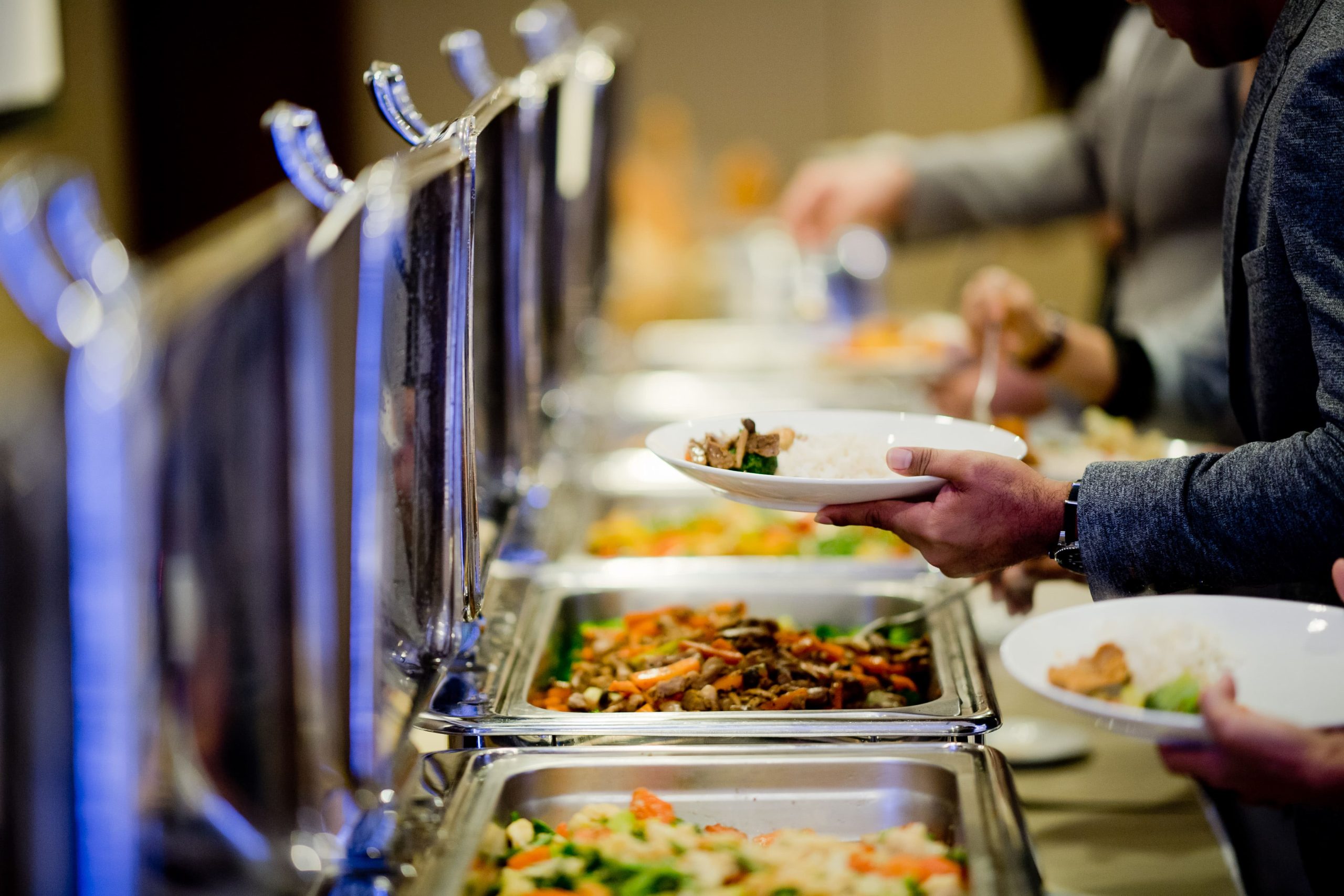
The Malaysia catering market is benefiting from the broader expansion of the national foodservice sector, rising corporate activity, and a sustained rebound in tourism and events. As of 2026, Malaysia’s foodservice industry surpassed USD 20 billion in revenue, supported by strong domestic consumption and the recovery of international travel, with tourist arrivals crossing 26 million. Corporate dining, institutional catering, and large-format event services are seeing renewed demand, particularly in Klang Valley, Penang, and Johor. The growing preference for outsourced food services among offices, factories, hospitals, and education campuses is further strengthening the catering ecosystem.
What’s Driving the Catering Market in Malaysia?
Expansion of Corporate Offices and Industrial Parks
Malaysia’s continued development of industrial corridors and business districts is driving demand for contract catering across manufacturing plants, logistics hubs, and office parks. Multinational companies operating in Selangor, Johor, and Penang increasingly outsource daily meal services to professional caterers to ensure compliance with food safety standards and consistent service quality. This trend is creating stable, long-term contracts for catering operators and improving revenue visibility.
Growth in Events, MICE, and Hospitality Demand
The rebound of corporate events, exhibitions, weddings, and destination functions is boosting demand for large-scale catering services. Convention centres, hotels, and event venues in Kuala Lumpur and Penang are witnessing higher booking volumes, translating into recurring catering contracts. Demand is shifting toward customizable menus, premium presentation, and on-site service teams that can handle high guest volumes efficiently.
Rising Institutional Catering Across Healthcare and Education
Hospitals, universities, and boarding schools are expanding outsourced foodservice arrangements to improve nutrition standards and operational efficiency. Healthcare institutions are increasingly emphasizing specialized meal plans for patients, while universities and private colleges are scaling cafeteria operations to serve growing student populations. These institutional contracts provide predictable volumes and encourage caterers to invest in centralized kitchens and cold-chain logistics.
Government-Led Initiatives Supporting Foodservice Growth
Malaysia’s focus on strengthening food safety standards and halal certification frameworks continues to professionalize the catering industry. Regulatory emphasis on hygiene compliance and traceability is pushing caterers to modernize kitchens, adopt standardized processes, and implement digital inventory systems. Government support for SMEs in food processing and logistics is also helping smaller caterers scale operations and enter institutional contracts.
Market Competition and Service Differentiation
The Malaysia catering market is moderately fragmented, with organized catering firms competing alongside regional players and specialized event caterers. Differentiation is increasingly based on menu innovation, halal assurance, sustainability practices, and service reliability. Operators offering healthier menu options, plant-based alternatives, and customizable dietary plans are gaining traction with corporate and institutional clients. Technology adoption, including digital ordering platforms and demand forecasting, is becoming a competitive advantage.
Cost Pressures and Workforce Constraints
Catering operators face margin pressure due to rising food input costs, logistics expenses, and labor shortages in kitchen and service roles. Dependence on imported ingredients for premium menus exposes operators to currency volatility. At the same time, workforce turnover in foodservice roles increases training costs and operational risks, particularly for large-scale event catering.
Future Outlook
The Malaysia catering market is expected to record steady growth through 2035, supported by corporate outsourcing, institutional contracts, and the sustained recovery of tourism-driven events. Centralized production kitchens, semi-automated food preparation, and stronger cold-chain infrastructure will improve scalability and cost control. Demand for healthier menus, halal-certified premium offerings, and sustainable packaging is likely to shape service portfolios. By 2035, the market is expected to become more organized, with greater penetration of long-term catering contracts across corporate, healthcare, education, and hospitality segments.
Consultants at Nexdigm, in their latest publication “Malaysia Catering Market Outlook to 2035”, analyzed the market by Service Type (Corporate Catering, Event Catering, Institutional Catering, Airline and Transport Catering), By End User (Corporate Offices, Healthcare, Education, Hospitality, Industrial Facilities), and By Contract Model (Long-Term Contracts, Project-Based Events, Subscription Meal Plans). Nexdigm believes that businesses should prioritize centralized kitchen investments, halal-compliant premium menus, and digital order management systems, while building resilient supplier networks to manage cost volatility and service consistency.
To take the next step, simply visit our Request a Consultation page and share your requirements with us.
Harsh Mittal
+91-8422857704