
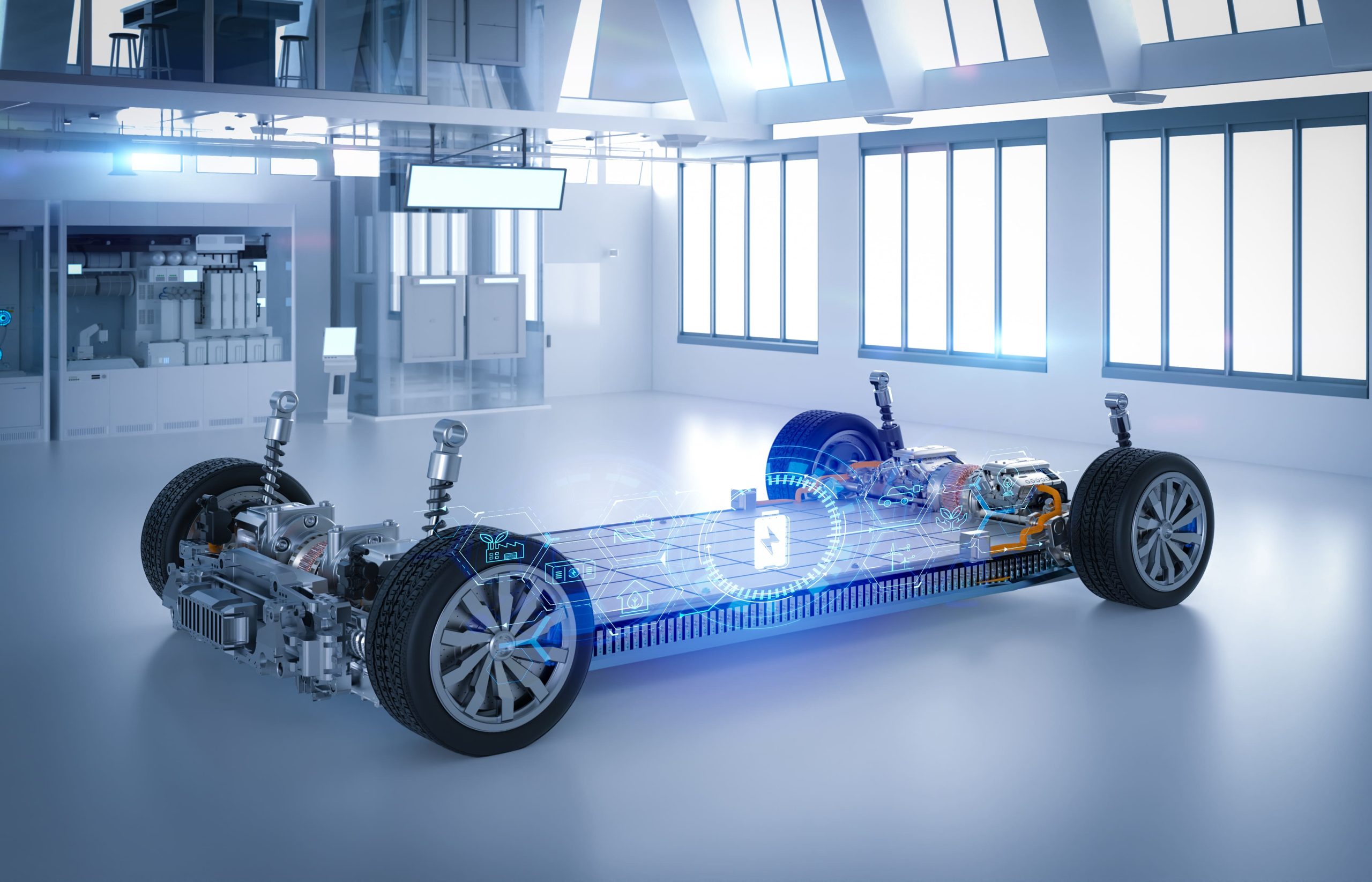
Malaysia’s EV battery market is entering a far more serious phase than it was even two or three years ago. The country may not dominate battery minerals or cell production the way some larger regional players do, but that does not mean it is sitting on the sidelines. In fact, Malaysia is quietly becoming relevant in the parts of the battery value chain where precision manufacturing, electronics capability, and industrial reliability matter most. As of 2025, EV adoption in Malaysia picked up meaningfully, helped by wider model launches, tax incentives, and stronger consumer interest in lower running costs. That shift matters because battery demand does not emerge in isolation. It follows vehicle assembly, charging deployment, supplier confidence, and policy clarity. Malaysia now has enough of those pieces in motion to make this market worth watching through 2035.
What’s Driving the EV Battery Market in Malaysia?
EV Sales Are Finally Translating into Real Battery Demand
For years, EV discussions in Southeast Asia were heavy on announcements and light on actual volume. Malaysia is starting to move past that stage. More battery electric models are available across different price points, and buyers in urban centers such as Kuala Lumpur, Penang, and Johor are showing stronger willingness to consider EVs for daily use. In practice, this creates more than just car sales. It creates pull for battery packs, battery management systems, diagnostics, and aftersales support. Once volumes begin to build, suppliers stop treating the market as a future story and start treating it as an operating one.
Malaysia’s Electronics Strength Gives It an Edge
One thing Malaysia already does well is manufacturing that demands consistency. The country has a long-established base in semiconductors, industrial electronics, testing, and automation. That matters because EV batteries are not only about chemistry. They are also about thermal control, sensors, power electronics, module integration, and software-linked performance. A battery pack assembled badly is a warranty problem waiting to happen. Malaysia’s advantage is that it can plug into the higher-precision parts of the battery supply chain more naturally than many emerging EV markets can.
Battery Components and Midstream Investment Are Picking Up
The bigger opportunity for Malaysia is not necessarily becoming a giant cell producer overnight. A more realistic route lies in components, separators, pack assembly, materials processing, and eventually recycling. That may sound less glamorous than a gigafactory headline, but commercially it can be far more durable. New industrial investments tied to battery-related materials and manufacturing are already helping Malaysia deepen its role in the regional supply chain. On the ground, this is often how industrial leadership is built – not through one dramatic announcement, but through a series of supplier commitments that gradually make the country harder to ignore.
Government-Led Initiatives Supporting Battery Ecosystem Development
Public policy has played a meaningful role in moving the market forward. Malaysia’s National Energy Transition Roadmap, together with EV-linked incentives and investment promotion efforts, has helped reduce uncertainty for manufacturers and suppliers. Agencies such as MIDA and MARii have also been active in pushing localization and industrial participation. That said, policy support alone does not guarantee a battery industry. Investors usually want to see continuity, not just enthusiasm. The good news is that Malaysia has been relatively consistent in signaling that electrification is part of its industrial future, not just a short-term headline.
Market Competition
Competition in Malaysia’s EV battery market is still taking shape, and for now it is less about domestic battery champions and more about who can establish the strongest foothold early. Chinese EV brands, regional assemblers, electronics manufacturers, and component specialists are all part of the picture. Some firms will likely focus on supply contracts with automakers, while others may build around pack assembly, charging-linked battery systems, or fleet applications. It is still a young market, which means there is room to enter – but not much room for vague ambition. The winners will probably be the ones that solve practical manufacturing and cost problems, not the ones with the loudest press releases.
Limited Upstream Raw Material Advantage
Malaysia’s clearest limitation is upstream access. Unlike Indonesia, it does not sit on the same scale of battery mineral advantage, particularly in nickel. That matters because raw material security shapes cost, bargaining power, and long-term manufacturing competitiveness. A common challenge is that countries without mineral depth often end up depending heavily on imported inputs, which can leave margins exposed and supply chains vulnerable. Malaysia can still succeed, but it will need to do so by being better at high-value processing, engineering, assembly, and battery recycling rather than trying to imitate a resource-led model.
Future Outlook
By 2035, Malaysia is likely to play a more meaningful role in Southeast Asia’s EV battery supply chain than many currently assume. The strongest opportunities will likely sit in battery pack assembly, advanced components, thermal systems, electronics integration, and end-of-life battery handling. Cell manufacturing may emerge selectively, but that will depend on economics more than ambition. The more realistic and probably smarter path is for Malaysia to become a trusted manufacturing base for the parts of the battery chain that demand quality, not just scale.
Consultants at Nexdigm, in their latest publication “Malaysia EV Battery Market Outlook to 2035”, analyzed the market by Battery Type (Lithium-ion, LFP, NMC, Solid-State Emerging Technologies), By Vehicle Type (Passenger EVs, Commercial EVs, Two-Wheelers, Buses), and By Value Chain Stage (Battery Components, Pack Assembly, Cell Manufacturing, Recycling). Nexdigm believes that businesses should prioritize battery pack localization, advanced component manufacturing, recycling partnerships, and OEM-linked supply chain integration, while capitalizing on Malaysia’s electronics manufacturing strengths and regional EV production demand as long-term growth drivers.
To take the next step, simply visit our Request a Consultation page and share your requirements with us.
Harsh Mittal
+91-8422857704