
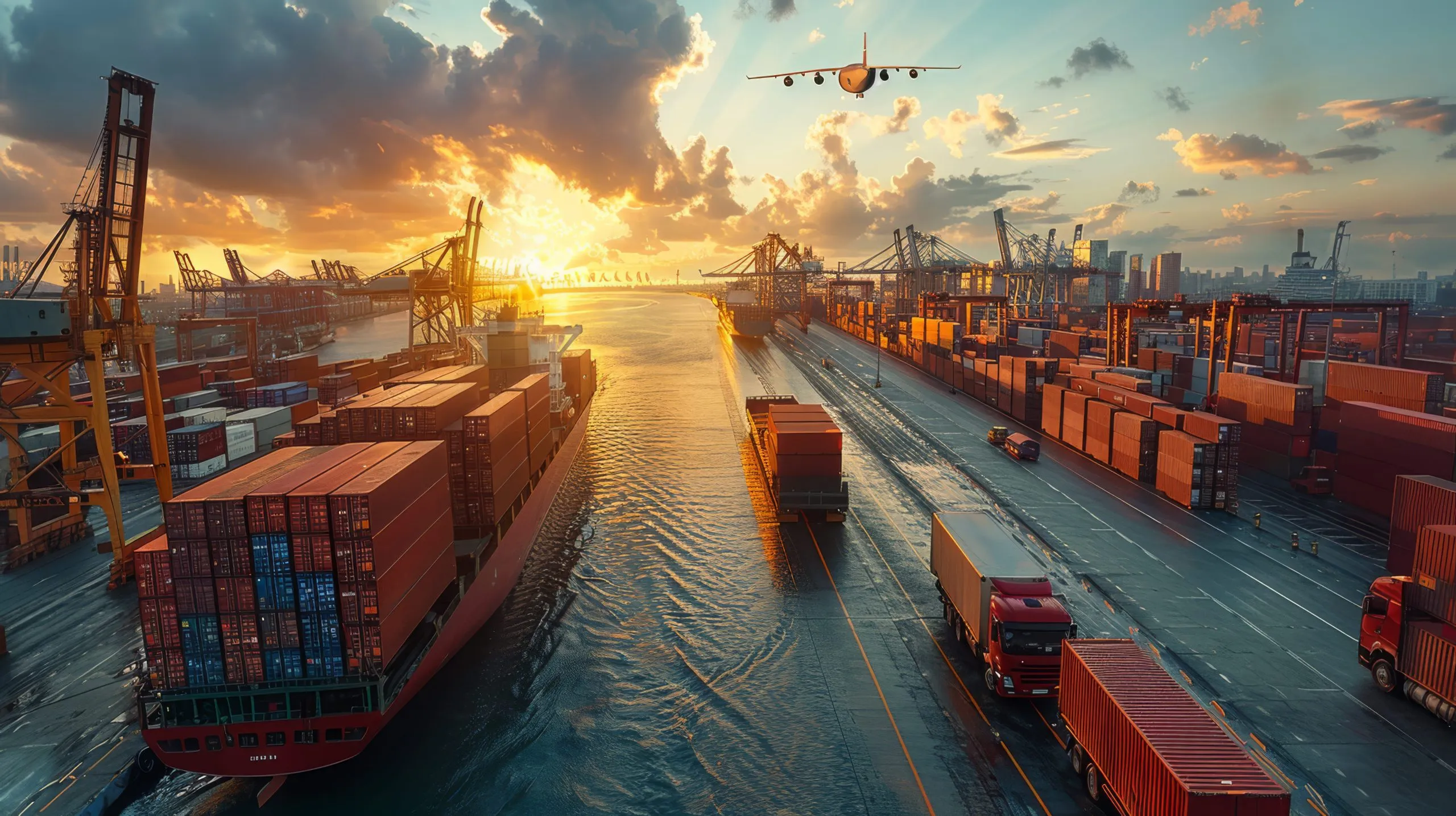
Malaysia freight forwarding has quietly evolved into a backbone of the country’s trade economy. Sitting along the Strait of Malacca gives it a natural edge, but geography alone does not explain the current momentum. By 2025, Malaysian ports were already handling tens of millions of containers annually, with Port Klang and Tanjung Pelepas acting as key relay points for regional cargo. What stands out today is how freight forwarders are adapting, not just moving goods but managing increasingly complex supply chains shaped by e-commerce, regional manufacturing shifts, and tighter delivery timelines.
What’s Driving the Freight Forwarding Market in Malaysia?
Strong Trade Flows and Regional Connectivity
Malaysia remains deeply tied to global trade cycles, particularly through electronics and industrial exports. Demand for forwarding services tends to mirror factory output in Penang and Johor, where manufacturers rely on predictable shipping schedules. Trade lanes connecting China, Singapore, and Europe continue to dominate volumes. In practice, forwarders who understand customs nuances across ASEAN borders tend to win repeat business, since even small documentation errors can delay shipments for days.
E-commerce and Time-Sensitive Deliveries
Online retail has changed expectations across the board. Businesses no longer accept week-long delivery windows when competitors can deliver in two or three days. This shift has pushed freight forwarders to rethink operations, especially in air cargo and last-mile coordination. Cross-border parcels between Malaysia, Indonesia, and Thailand have become more frequent, and not always in large volumes. Smaller, fragmented shipments now make up a growing share of cargo, which complicates consolidation but opens up new service opportunities for agile operators.
Infrastructure and Multimodal Improvements
On the ground, logistics efficiency often comes down to infrastructure. Malaysia has invested steadily in port upgrades, road networks, and rail links, though progress varies by region. Port Klang’s expansion has eased some congestion, but bottlenecks still surface during peak export cycles. Rail connectivity under broader regional initiatives is starting to matter more, particularly for inland cargo movement. Freight forwarders that can combine sea, rail, and road transport effectively are in a better position to offer cost and time advantages.
Government-Led Initiatives
Malaysia’s approach to logistics reform has leaned heavily on digitization. The National Single Window for trade documentation has reduced paperwork, though users still report occasional system inefficiencies. Customs clearance times have improved overall, which makes a noticeable difference for time-sensitive shipments like electronics or pharmaceuticals. There is also a push toward automation in warehousing and cargo handling, supported by policies encouraging Industry 4.0 adoption. That said, policy execution can feel uneven. Larger firms adapt quickly, but smaller forwarders often struggle with the cost of upgrading systems. This creates a gap where digital capability becomes a competitive advantage rather than a standard feature.
Market Competition
Competition in Malaysia’s freight forwarding space is layered. Global players such as DHL Global Forwarding, Kuehne + Nagel, DB Schenker, and Nippon Express bring scale, technology, and established international networks. They tend to dominate high-value or complex shipments where reliability matters more than cost. Local companies, on the other hand, often compete on flexibility and pricing. Many have long-standing relationships with regional manufacturers and a better grasp of local port operations. It is not unusual for businesses to split their logistics contracts, using international firms for global routes and local players for domestic or short-haul movements. Over time, digital freight platforms are starting to blur these lines, offering smaller firms tools that were once limited to larger operators.
High Dependence on External Trade
Malaysia’s freight forwarding sector rises and falls with global demand. When export orders slow, logistics volumes drop almost immediately. This dependence creates volatility, particularly during economic downturns or geopolitical disruptions. Freight rates can swing sharply, making it difficult for forwarders to plan capacity or pricing strategies. Fuel costs add another layer of uncertainty. Even minor increases can squeeze margins, especially for smaller operators working on thin spreads. Port congestion during peak seasons remains a recurring issue as well, leading to delays that ripple across supply chains.
Future Outlook
Looking ahead, Malaysia’s freight forwarding market will likely become more technology-driven, though not uniformly so. Larger firms are already experimenting with AI-based route planning and predictive analytics, while blockchain applications for shipment tracking are gaining attention. These tools promise efficiency, but adoption will depend on cost and practicality rather than hype. E-commerce will continue to reshape shipment patterns, with more frequent but smaller consignments becoming the norm. This may push forwarders to invest in better consolidation strategies and regional distribution hubs. Sustainability is another factor gradually entering decision-making. Some clients now ask for carbon tracking or greener transport options, though widespread adoption remains limited.
Consultants at Nexdigm, in their report “Malaysia Freight Forwarding Market Outlook to 2035,” segment the industry by Mode of Transport, End-User Industry, and Service Type. Their view leans toward companies that can combine digital tools with operational reliability. In a market where delays are costly and expectations keep tightening, execution matters more than ambition.
To take the next step, simply visit our Request a Consultation page and share your requirements with us.
Harsh Mittal
+91-8422857704