
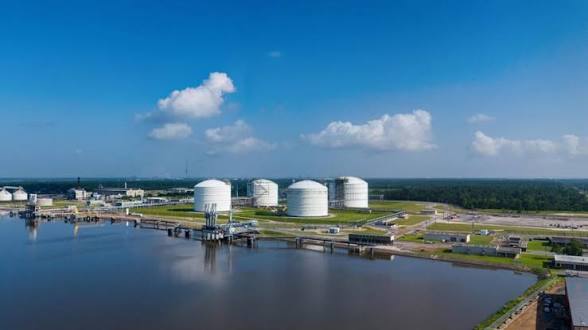
Malaysia’s LNG infrastructure industry sits at the heart of the country’s energy ecosystem. As electricity demand rises and industries expand, reliable natural gas supplies have become increasingly important for economic growth. Malaysia is uniquely positioned as both a major LNG exporter and an active LNG importer, providing flexibility in managing domestic energy requirements. With approximately 31.5 million tonnes per annum (MTPA) of LNG liquefaction capacity and growing regasification infrastructure, the country continues to strengthen its role in Southeast Asia’s energy landscape. Ongoing investments in terminals, storage facilities, and transmission networks are creating new opportunities for infrastructure developers, energy companies, and investors.
Market Driver Advancing the Malaysia LNG Infrastructure Industry
Rising Energy Consumption Across Malaysia’s Industrial and Power Sectors
Malaysia’s expanding manufacturing, petrochemical, and power generation industries are increasing their reliance on natural gas as a cleaner and more efficient fuel source. Gas-fired power plants continue to play a major role in the country’s electricity mix, helping meet the needs of growing urban and industrial centers. As domestic gas fields mature, LNG imports are becoming increasingly important for maintaining a stable energy supply. Malaysia imported approximately 3.5 million tonnes of LNG to support domestic demand, highlighting the growing importance of regasification terminals and supporting infrastructure.
Malaysia’s Strategic Position as a Regional LNG Hub
One of Malaysia’s biggest advantages is its location along key global shipping routes connecting the Middle East, Asia, and other major energy markets. The country remains among the world’s leading LNG-exporting nations, supported by world-class LNG facilities in Bintulu, Sarawak. Malaysia’s ability to simultaneously export LNG while importing supplies for domestic consumption creates a flexible and resilient gas ecosystem. This strategic positioning continues to attract global energy companies, infrastructure developers, shipping firms, and technology providers seeking long-term opportunities in the region.
Expanding LNG Terminals and Regasification Capacity
The development of major facilities such as the Melaka LNG Regasification Terminal and the Pengerang LNG Terminal has significantly improved Malaysia’s energy security. The Pengerang terminal alone offers regasification capacity of approximately 3.5 MTPA, helping ensure a steady supply of natural gas for industries and power producers. Additional investments in floating storage and regasification units (FSRUs), storage facilities, and pipeline connectivity are expected to further strengthen supply reliability while supporting future energy demand growth.
Government Initiatives Supporting the Malaysia LNG Infrastructure Industry
The Malaysian government continues to view natural gas as a critical component of national energy security. Through strategic energy plans and infrastructure investment programs, authorities are supporting the expansion of LNG terminals, gas pipelines, and storage facilities. PETRONAS remains a key driver of infrastructure development, while ongoing public-private partnerships are helping accelerate project execution. These initiatives are reinforcing Malaysia’s ambition to remain a leading LNG trading, export, and distribution hub in Southeast Asia.
Competitive Landscape of Malaysia LNG Infrastructure Sector
The market is characterized by the presence of established energy companies and infrastructure developers. Key participants include PETRONAS, PETRONAS Gas Berhad, Dialog Group Berhad, MISC Berhad, Gas Malaysia, and several international engineering firms. Competition increasingly revolves around terminal capacity expansion, storage solutions, LNG logistics services, and operational efficiency. Strategic collaborations and technology partnerships continue to shape the evolving competitive environment.
Challenges Facing Malaysia LNG Infrastructure Industry Growth
High Capital Requirements for Large-Scale LNG Projects
Building LNG terminals, storage facilities, and transmission infrastructure requires substantial investment. Long project development cycles and fluctuating energy market conditions can create financial risks for infrastructure developers and investors.
Adapting to an Evolving Energy Landscape
While LNG demand remains strong, the growth of renewable energy and evolving sustainability goals may influence long-term energy planning. Industry participants must balance infrastructure expansion with changing consumption patterns and environmental considerations to ensure future project viability.
Future Outlook
The outlook for Malaysia’s LNG infrastructure industry remains highly encouraging. Growing energy demand, industrial expansion, and the need for secure fuel supplies are expected to support continued investments across the LNG value chain. New regasification projects, enhanced storage capabilities, and expanded pipeline networks will strengthen the country’s ability to manage both domestic and international gas flows. With its strong export base, strategic geographical location, and well-developed LNG ecosystem, Malaysia is well positioned to remain one of Southeast Asia’s most influential LNG infrastructure markets in the years ahead.
Consultants at Nexdigm, in their latest publication “Malaysia LNG Infrastructure Market“ analyze the sector By Infrastructure Type (Liquefaction Facilities, Regasification Terminals and Floating LNG Assets), By Infrastructure Ownership Model (National Oil Company Owned, Joint Venture Partnerships and Third-Party Access Schemes) and By Technological Maturity (Brownfield Expansion Projects, Greenfield Construction and Digital Twin Integrated Assets).
Nexdigm suggests that businesses in “Malaysia LNG Infrastructure Industry” focusses on oilfield, desalination, construction, and industrial applications, strengthen local warehousing, develop application-specific grades, improve technical support, and build resilient sourcing networks to serve expanding energy, water, and manufacturing demand.
To take the next step, simply visit our Request a Consultation page and share your requirements with us.
Harsh Mittal
+91-8422857704