
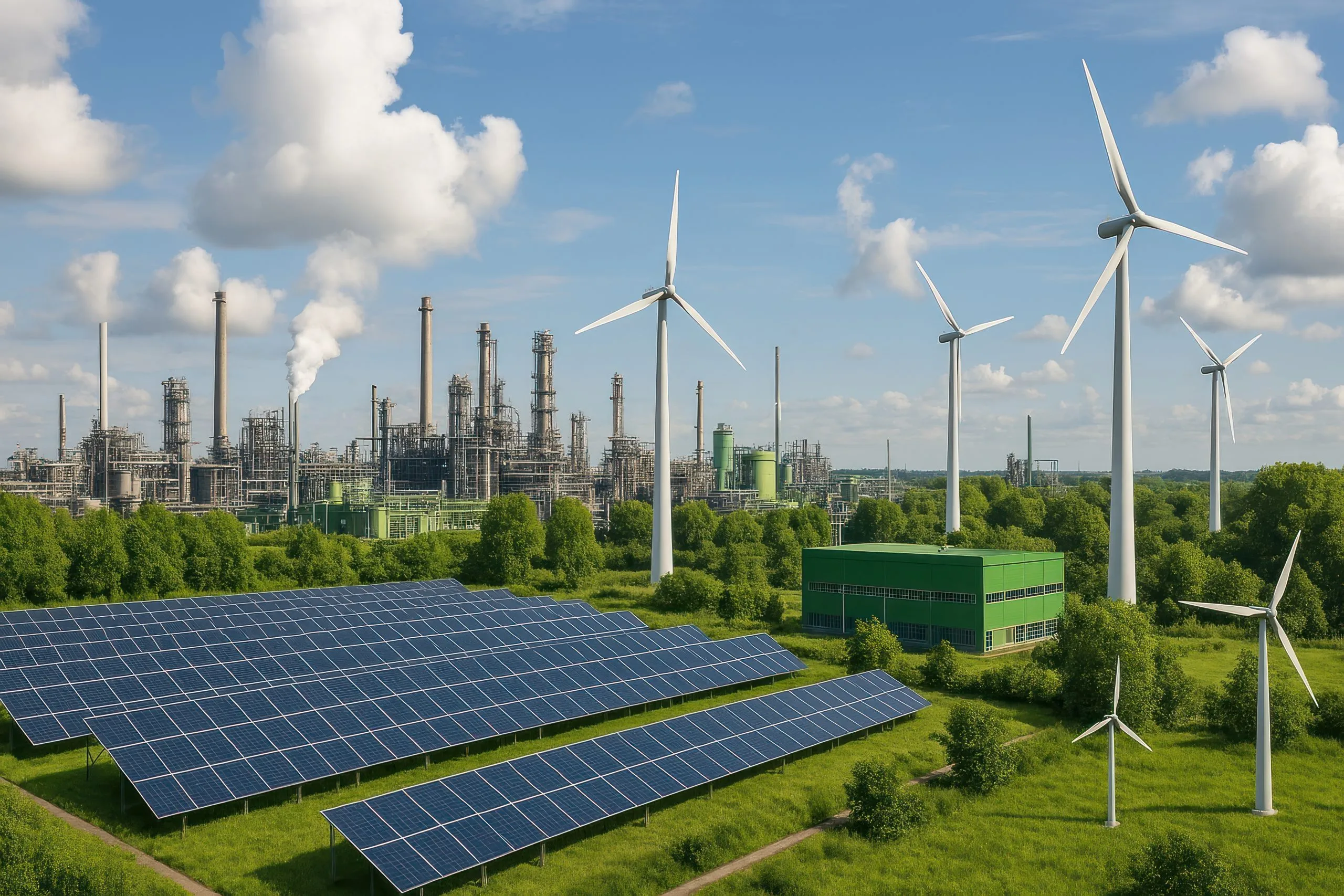
Malaysia’s renewable energy market is set to expand significantly through the next decade as the country accelerates its clean energy transition. Currently, renewable sources form a modest share of the power mix, with hydro, solar, and bioenergy leading development. Policymakers have outlined long‑term goals to boost renewables’ contribution to national capacity and reduce dependence on fossil fuels, positioning Malaysia as an emerging renewable energy market in Southeast Asia. Projections indicate substantial capacity additions and structural shifts by 2035.
Critical Factors Driving Growth in Malaysia Renewable Energy Market
Rising Energy Demand and Diversification
Malaysia’s overall electricity demand continues to grow as industrial activity and urbanization expand. Renewable energy provides a pathway to diversify the energy mix away from heavy reliance on coal and gas, enhancing resilience while lowering greenhouse gas emissions. Utility‑scale solar and distributed PV systems are among the fastest‑growing segments due to declining technology costs and grid integration improvements.
Large‑Scale Policy Frameworks and Investment Signals
Government frameworks such as the National Energy Transition Roadmap (NETR) and Malaysia Renewable Energy Roadmap (MyRER) have established clear targets and pathways for renewable deployment to 2035. These policies help steer public and private capital toward renewable investments by defining capacity goals and market mechanisms that support solar, bioenergy, and hydro projects.
Corporate and Consumer Demand for Clean Power
Corporate procurement schemes and green tariff options are encouraging larger commercial and industrial users to adopt renewable energy. These mechanisms enable direct renewable procurement through power purchase agreements and renewable energy certificates, strengthening off‑taker demand and stimulating private sector investment into renewables.
Government Policies and Initiatives Boosting Renewable Energy Growth in Malaysia
Malaysia has outlined progressive renewable energy targets, aiming to increase the share of renewables in installed capacity to around 40% by 2035. Policies under NETR and MyRER emphasize a structured growth path with mechanisms such as competitive bidding for large‑scale solar and support for corporate renewable procurement. These initiatives augment investors’ confidence in long‑term market expansion.
Overview of Key Players and Market Competition in Malaysia Renewable Energy Sector
The Malaysian renewable energy market comprises local developers, independent power producers and state utilities that are scaling solar and hydro capacity. Competitive bidding programmers like the Large‑Scale Solar (LSS) auctions have attracted new entrants, while specialized schemes for rooftop PV and corporate procurement expand participation beyond traditional utilities. As the market grows, technology providers for storage and grid integration are also gaining relevance.
Key Challenges Hindering the Growth of Malaysia Renewable Energy Market
Grid Integration and Infrastructure Limitations
Integrating a higher share of variable renewable energy (VRE), especially solar, into existing grid infrastructure poses technical and regulatory challenges. The national grid must be upgraded to accommodate intermittent generation and ensure stability across regions, particularly in less interconnected areas.
Financing and Policy Consistency
Securing long‑term financing for renewable projects requires stable policy frameworks and predictable revenue streams. Changes or delays of incentive programmers can affect investor confidence, while financing terms for large‑scale clean energy projects remain influenced by broader macroeconomic conditions.
Future Outlook
Looking toward 2035, Malaysia’s renewable energy market is projected to grow robustly, driven by national capacity targets and rising private sector demand. Installed renewable capacity is forecast to increase substantially, with projections suggesting nearly 30 GW by 2035 as renewables expand their share of the generation mix. Solar and hydropower will continue to be dominant contributors, supported by expanding corporate procurement and storage integration. If policy delivery remains consistent, Malaysia could approach its 40 % renewable share objective, enhance energy security while contribute to long‑term decarbonization goals.
Consultants at Nexdigm, in their latest publication “Malaysia Renewable Energy Market Outlook to 2035,” analyze the sector by System Type (Solar Energy Systems, Wind Energy Systems, Biomass Energy Systems, Geothermal Energy Systems), By Platform Type (Utility-Scale Solar Installations, Residential Solar Installations, Wind Turbine Platforms), and By Fitment Type (On-grid Renewable Systems, Off-grid Renewable Systems, Hybrid Renewable Systems). Nexdigm suggests that businesses should understand and adapt to the evolving market dynamics to capitalize on emerging opportunities within the renewable energy sector. This includes staying informed about government policies, technological advancements, and consumer demand trends. By aligning their strategies with these factors, businesses can ensure they remain competitive and resilient in a rapidly transforming energy landscape.
To take the next step, simply visit our Request a Consultation page and share your requirements with us.
Harsh Mittal
+91-8422857704