
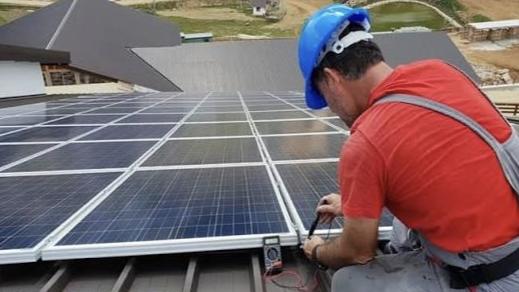
Malaysia has quietly become one of the world’s most important solar manufacturing hubs, creating strong demand for solar cell metallization paste, a critical material used to form conductive contacts in photovoltaic cells. As solar manufacturers continue to expand production capacities and adopt higher-efficiency technologies, the need for advanced silver and aluminum-based metallization pastes is increasing. Malaysia remains a major exporter of photovoltaic products, with solar-related exports exceeding RM41 billion, highlighting the country’s strategic role in the global solar supply chain.
Market Drivers Advancing the Malaysia’s Solar Cell Metallization Paste Industry
Rising Solar Manufacturing Capacity Across Malaysia
Malaysia is home to manufacturing facilities operated by leading global solar companies such as First Solar, Jinko Solar, JA Solar, and Hanwha Q Cells. The country continues to attract investment due to its established electronics ecosystem, skilled workforce, and export-oriented infrastructure. As solar cell and module production grows, manufacturers require larger volumes of metallization paste to ensure efficient electrical conductivity and energy conversion. Since metallization paste directly influences solar cell performance, producers are increasingly seeking higher-quality formulations that support advanced cell architectures.
Expanding Domestic Solar Deployment
Malaysia’s solar sector is not only export-driven but is also witnessing robust local adoption. The country’s installed solar capacity surpassed 5.7 GW, with more than 1.4 GW added in a single year. This growth is creating a positive feedback loop across the solar value chain. Increased project installations encourage manufacturers to expand capacity, which in turn boosts demand for metallization materials used in solar cell production.
Shift Toward High-Efficiency Solar Technologies
The global solar industry is rapidly transitioning toward high-efficiency cell technologies such as TOPCon and heterojunction (HJT) cells. These technologies require specialized metallization pastes capable of improving conductivity while reducing silver consumption. Malaysian manufacturers are increasingly aligning their production lines with these emerging technologies to remain competitive in international markets. As a result, suppliers of advanced metallization paste products are expected to benefit from greater adoption opportunities and long-term demand growth.
Government Initiatives Supporting the Malaysia’s Solar Cell Metallization Paste Industry
Malaysia’s renewable energy roadmap supports continued solar industry expansion through capacity targets, investment incentives, and large-scale solar programs. The government aims to increase renewable energy’s share within the national power mix and continues to encourage clean energy investments through initiatives overseen by agencies such as SEDA Malaysia. These policies indirectly benefit the solar cell metallization paste market by encouraging new manufacturing investments and technology upgrades across the solar value chain.
Competitive Landscape of Malaysia’s Solar Cell Metallization Paste Industry
The market features a mix of global specialty material manufacturers and regional suppliers serving photovoltaic producers. Competition centers on product efficiency, silver reduction capabilities, reliability, and compatibility with next-generation solar cell technologies. Companies that can offer high-performance conductive pastes while helping manufacturers lower production costs are expected to gain a stronger foothold in Malaysia’s evolving solar manufacturing landscape.
Challenges Facing Malaysia’s Solar Cell Metallization Paste Sector
Volatility in Silver Prices
Silver is a key raw material used in solar cell metallization paste production. Changes in global silver prices can significantly affect manufacturing costs and profit margins. This creates challenges for both paste suppliers and solar cell manufacturers seeking cost stability.
Dependence on Global Supply Chains
Although Malaysia is a major solar manufacturing center, many raw materials and specialty chemicals are sourced internationally. Supply chain disruptions, geopolitical uncertainties, or trade restrictions can impact material availability and production schedules.
Future Outlook
The future of Malaysia’s solar cell metallization paste market appears highly promising. As the country strengthens its position as a global photovoltaic manufacturing hub and continues expanding domestic solar deployment, demand for advanced conductive materials is expected to rise steadily. The adoption of next-generation solar cell technologies will further create opportunities for innovation in metallization paste formulations. With solar capacity growth, supportive renewable energy policies, and ongoing investment from international manufacturers, Malaysia is well-positioned to remain an important market for solar cell metallization paste suppliers seeking long-term growth opportunities in Southeast Asia.
Consultants at Nexdigm, in their latest publication “Malaysia Solar Cell Metallization Paste Market“ analyze the sector By Metallization Paste Chemistry (Front-side Contact Paste, Rear-side Contact Paste and Fine-line Screen Printing Paste), By Application Technology (PERC Solar Cell Modules, TopCon Cell Architectures and Heterojunction Cells) and By Supply Chain Channel (Direct Manufacturer Supply and Chemical Distributor Networks).
Nexdigm suggests that businesses in “Malaysia Solar Cell Metallization Paste Industry” focusses on oilfield, desalination, construction, and industrial applications, strengthen local warehousing, develop application-specific grades, improve technical support, and build resilient sourcing networks to serve expanding energy, water, and manufacturing demand.
To take the next step, simply visit our Request a Consultation page and share your requirements with us.
Harsh Mittal
+91-8422857704