

A factory system can have idle capacity overall and still lack the right capacity for a particular product, specification or delivery window. Capacity demand is therefore a question of usable supply, not just installed nameplate.
In August 2026, U.S. manufacturing capacity utilization was 75.7%, 2.5 percentage points below its long-run average. Manufacturing output also fell 0.3% that month after seven consecutive monthly increases. Taken together, those figures point to available headroom in the aggregate, but they do not establish that every product line has surplus capacity. A bottleneck in a specialized process, region or supplier tier can constrain customers even when the broad utilization rate is low.
Calculate the gap in sellable output
Start with demand in physical units and convert it to required production capacity:
Required nameplate capacity = forecast sellable output ÷ (target utilization × yield).
Then deduct capacity that is unavailable because of planned maintenance, downtime, labor, input shortages, quality losses or equipment constraints. This adjustment matters: installed equipment that cannot run the required product mix is not effective capacity.
A Manufacturing capacity demand analysis capacity-demand model separates:
- Current throughput: what plants are producing now, by product and line.
- Committed demand: orders, backlog and customer production schedules.
- Available supply: qualified capacity after yield, uptime and allocation.
- Expansion need: the residual gap after debottlenecking, shifts, outsourcing or imports.
The capacity question is not always “Should we build?” A second shift, yield improvement, outsourced process or equipment upgrade may close the gap faster and with less capital.
Distinguish cyclical slack from structural constraint
Low utilization can reflect weak demand, an inventory correction or temporary shutdowns. It can also coexist with a shortage of a specific grade or an inability to meet customer lead times. Validate the cause using order backlogs, production plans, lead times, import availability and customer loss data.
UNIDO reported that global manufacturing production grew 1.5% in Q2 2026, while manufacturing exports rose 6.1%. The difference matters: trade flows can rise faster than local output, potentially indicating that some markets rely on imports to meet demand. A capacity expansion case should test whether customers will buy local output at the required price and specification, rather than assume all import volume is contestable.
Put expansion behind decision gates
For each candidate product or location, compare options across capital, time, risk and supply assurance. Model utilization ramp-up and downside demand, including the point at which a new line becomes economic. If the demand case depends on a small number of buyers, secure volume commitments or qualify the product before releasing full capital.
Framework: Capacity Gap-to-Investment Screen
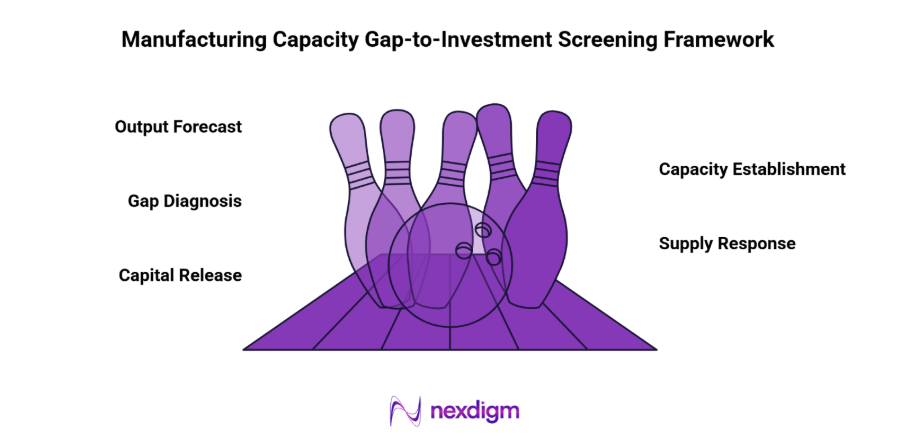
- Forecast required output
Build demand by product, customer, specification and delivery period. - Establish effective capacity
Adjust nameplate output for yield, downtime, maintenance, labor and input constraints. - Diagnose the gap
Separate broad underutilization from bottlenecks in product mix, location or qualification. - Compare supply responses
Test debottlenecking, extra shifts, outsourcing, imports and new capacity against one another. - Gate capital release
Set utilization, customer commitment, margin and schedule thresholds before expansion.
Nexdigm Case Study
Nexdigm modelled capacity requirements for eight product lines across two plants, adjusting for yield, downtime and committed orders. Our analysis found a near-term gap in two lines but surplus in three others; we recommended debottlenecking first and staging a new line against customer commitments.
To take the next step, simply visit our Request a Consultation page and share your requirements with us.
Harsh Mittal
+91-8422857704