
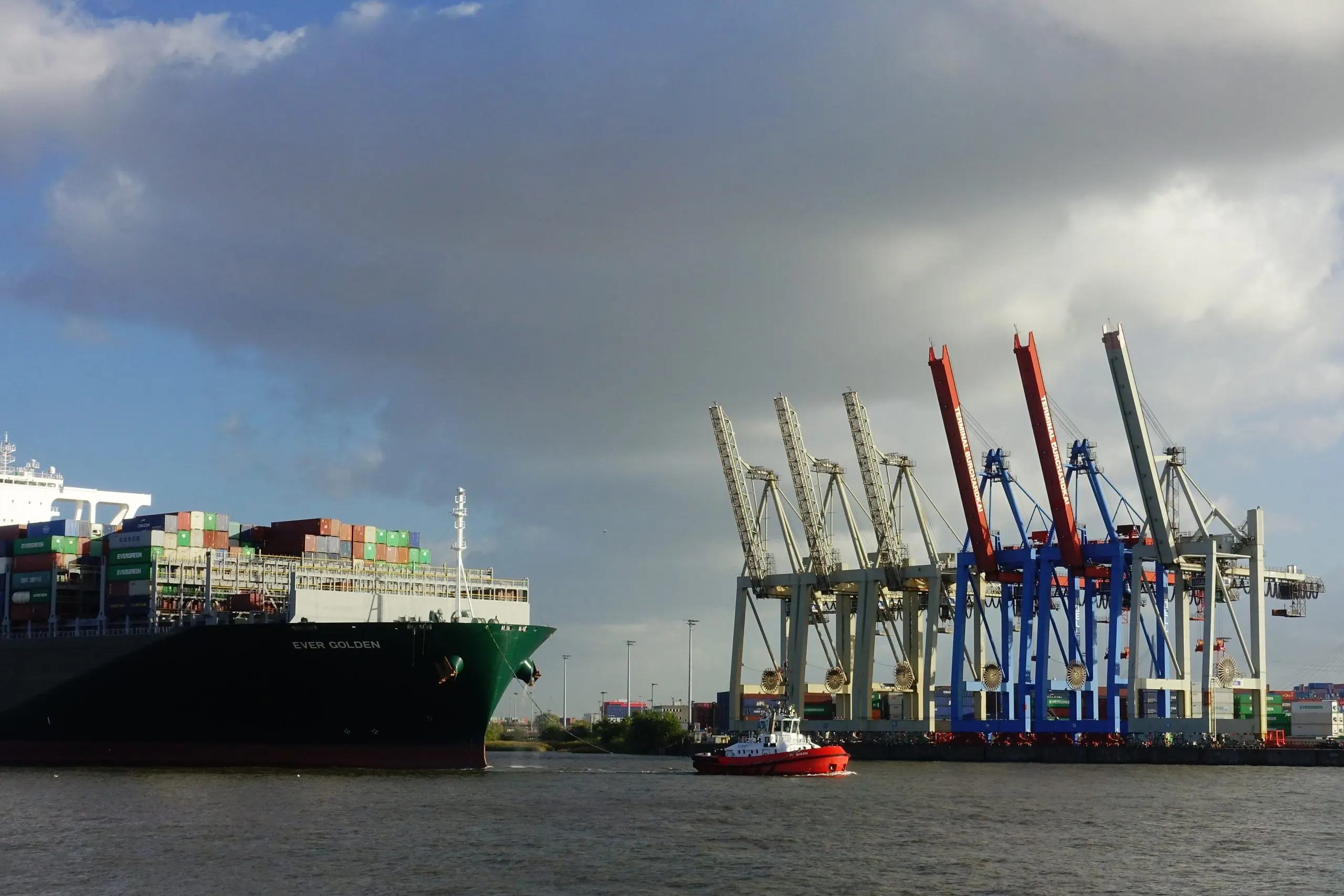
A maritime shipping benchmarking analysis provides a structured approach to evaluating vessel performance, cargo throughput, and operational efficiency across global trade networks. By integrating competitive intelligence, shipping companies can compare their performance metrics such as voyage times, fuel efficiency, and port turnaround against industry peers.
These insights help identify operational gaps, adopt best practices, optimize fleet deployment, and improve overall reliability. Leveraging benchmarking and competitive intelligence enables shipping operators to reduce costs, enhance service quality, and maintain a competitive edge in increasingly complex and high-volume maritime trade environments.
Reports show the scale and performance challenges in maritime shipping benchmarking analysis. More than 80 % of global merchandise trade by volume is carried by sea, with over 180 million TEUs of containerized cargo moving annually through major ports, making shipping efficiency critical to global supply chains. Benchmark metrics such as vessel time in port a core indicator of operational efficiency are tracked across hundreds of ports, enabling comparative performance insights and identification of workflow improvement opportunities.
Understanding Global Maritime Shipping Performance Through Benchmarking and Competitive Intelligence
Maritime shipping performance through benchmarking and competitive intelligence involves comparing vessel efficiency, cargo throughput, and port turnaround against industry peers to identify gaps, adopt best practices, and enhance global trade operations:
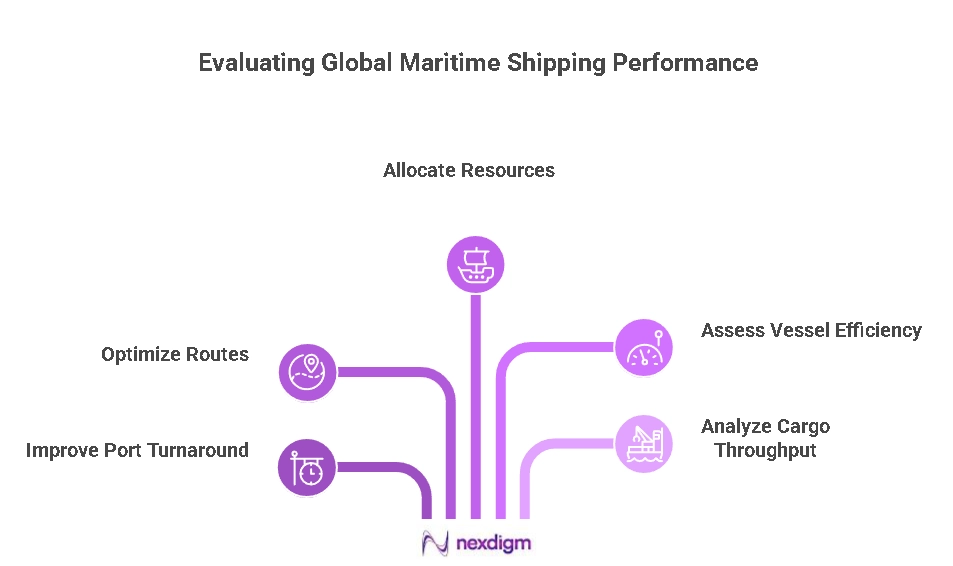
- Port Turnaround and Berth Utilization – Compare docking times and berth occupancy with leading ports to enhance vessel scheduling and reduce delays.
- Route and Schedule Optimization – Use competitive intelligence to redesign shipping routes, minimize transit times, and increase on-time delivery performance.
- Fleet Deployment and Resource Allocation – Align vessel assignment and crew scheduling based on performance benchmarking and competitor insights to maximize utilization.
- Vessel Efficiency Assessment – Evaluate fuel consumption, speed, and operational reliability against competitors to optimize fleet performance and reduce operational costs.
- Cargo Throughput Analysis – Benchmark container and bulk cargo handling across ports to identify efficiency gaps and improve trade volume management.
Nexdigm Strategic Advisory for Maritime Decision-Makers in Shipping Performance
Nexdigm’s Strategic Advisory for Maritime Decision-Makers helps shipping companies enhance fleet performance, operational efficiency, and cost-effectiveness. By combining maritime shipping benchmarking analysis, competitive intelligence, and data-driven insights, Nexdigm identifies performance gaps, optimizes routes, improves port turnaround, and maximizes vessel utilization. The advisory provides actionable recommendations enabling decision-makers to improve delivery reliability, reduce operational expenses, and maintain a competitive edge in global maritime trade networks.
Ways Nexdigm Optimize Global Shipping Routes and Schedules to Reduce Transit Times and Operational Delays
Nexdigm optimizes shipping routes and schedules by analyzing historical voyage data, port performance, and competitor practices, applying predictive analytics and AI to minimize transit times, reduce delays, and improve fleet efficiency.
- Historical Voyage Data Analysis – Examine past shipping routes, transit times, and delays to identify inefficiencies and inform optimized scheduling strategies.
- Port Performance Benchmarking – Compare port turnaround times and operational efficiency against competitors to minimize waiting periods and enhance overall fleet utilization.
- AI-Based Scheduling Optimization – Leverage artificial intelligence to dynamically allocate vessels and adjust schedules for reduced delays and improved delivery reliability.
- Fleet Utilization Alignment – Coordinate vessel deployment with route optimization to maximize capacity usage and reduce idle time.
- Continuous Monitoring and Adjustment – Track real-time vessel performance and transit metrics to implement timely corrections and sustain efficiency improvements.
Nexdigm’s case:
Nexdigm collaborated with a global shipping operator to apply its route and schedule optimization framework by combining historical voyage data, competitive benchmarking, and predictive analytics. Over six months, average transit times on key trade lanes were reduced by 18 %, vessel waiting time at ports dropped 22 %, and overall schedule reliability improved by 15 %, leading to significant fuel savings and better fleet utilization.
To take the next step, simply visit our Request a Consultation page and share your requirements with us.
Harsh Mittal
+91-8422857704