

Medical device pricing can vary substantially across markets because products with similar clinical purposes may differ in specifications, technology, manufacturing complexity, regulatory requirements, procurement volumes, and distribution structures. The global medical devices market is projected to generate approximately $576.8 billion in revenue in 2026, with the market expected to grow at a 5.54% CAGR through 2031.
The supplier environment is also extensive. The FDA reported 29,178 registered medical-device establishments in FY2025, including 13,328 domestic and 15,850 foreign establishments. This creates a broad basis for comparison, but a large supplier universe does not automatically make pricing transparent or comparable.
Medical-device costs can also reflect factors beyond the product itself, including logistics, service arrangements, minimum order quantities, purchasing volumes, contractual terms, and market-specific distribution structures. Medical device cost benchmarking can help manufacturers and healthcare organizations separate genuine product-cost differences from commercial or procurement factors that may be influencing the final price.
Device Prices Cannot Be Compared Without Normalizing Specifications
Two devices may serve a similar clinical purpose while differing in materials, technology, dimensions, performance, accessories, packaging, certifications, or intended use. Comparing headline prices without accounting for these differences can produce misleading conclusions. A meaningful benchmark therefore needs to establish like-for-like specifications before assessing whether one product is genuinely more expensive or whether its additional features explain the price difference.
What Really Drives the Difference in Device Costs?
Similar medical devices can carry different prices for reasons that are not immediately visible in a product comparison. There are various conditions that can all contribute to the final cost. They are:
- Technology & Complexity: Advanced components, specialized manufacturing processes, or additional functionality can increase production costs and create meaningful price differences between otherwise comparable devices.
- Supplier Economics: Manufacturing scale, sourcing networks, geographic footprint, production efficiency, and distribution structures can influence how suppliers price comparable medical devices across markets.
Understanding these drivers helps separate genuine product-cost differences from pricing variations created by supplier, market, or procurement conditions.
How Nexdigm Identifies the Drivers Behind Device Cost Differences
Nexdigm can bring together healthcare expertise, market intelligence, supplier research, and procurement analysis to understand what is influencing medical-device costs. Rather than comparing prices in isolation, our experts can:
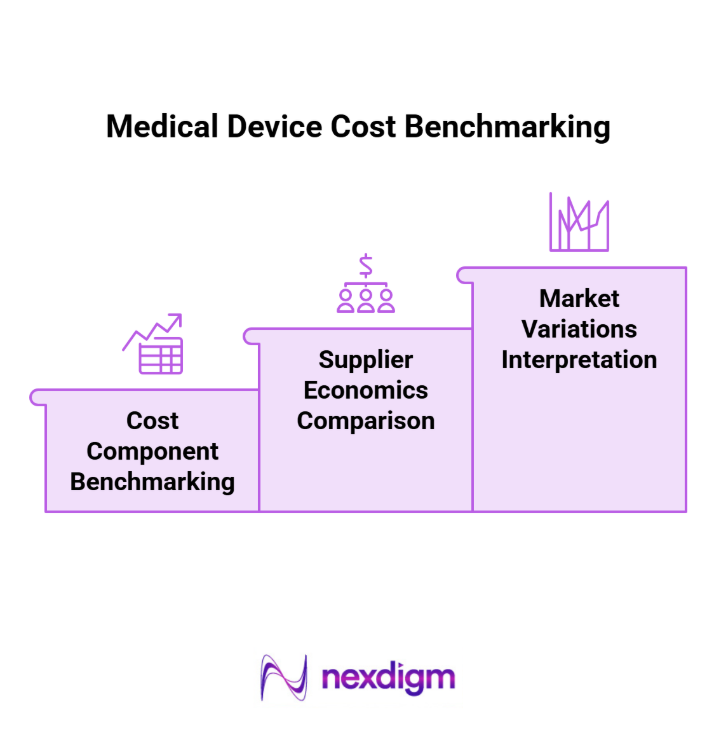
- Benchmark Cost Components: Assess product specifications, manufacturing factors, logistics, supplier margins, and procurement terms to understand the elements contributing to observed prices.
- Compare Supplier Economics: Evaluate differences in manufacturing scale, sourcing models, geographic footprint, distribution structures, and market positioning across relevant suppliers.
- Interpret Market Variations: Examine regional pricing differences alongside competition, regulatory requirements, purchasing conditions, and local market dynamics.
This approach helps Nexdigm provide a clearer explanation of why device prices differ and whether those differences represent genuine cost variation or potential procurement opportunities.
Why Businesses Partner With Nexdigm for Cost Benchmarking
Medical-device cost benchmarking becomes more valuable when pricing intelligence is connected with product, supplier, and procurement realities. Businesses can partner with Nexdigm to gain:
- Broader Market View: Combine product, supplier, pricing, and market intelligence to understand cost differences beyond individual supplier quotations.
- Decision-Relevant Comparisons: Translate complex pricing and specification data into comparable insights that support sourcing, negotiation, and supplier decisions.
- Healthcare-Specific Expertise: Apply sector knowledge to interpret technical, regulatory, commercial, and procurement factors that can influence medical-device economics.
This enables businesses to use medical device cost benchmarking not simply to compare prices, but to understand the economics behind them and identify where better procurement decisions can create value.
Nexdigm’s Initiative Towards Strengthening Pricing Confidence
Nexdigm can help procurement teams move from fragmented pricing information to a structured, evidence-based view of medical-device costs. By combining market intelligence, supplier research, product comparisons, and procurement expertise, our experts can:
- Establish Relevant Benchmarks: Compare device prices against comparable products, specifications, suppliers, and market conditions to establish meaningful reference points.
- Validate Pricing Differences: Examine whether price variations are supported by differences in technology, specifications, supplier economics, geography, or procurement terms.
- Strengthen Commercial Discussions: Provide procurement teams with structured insights that can support supplier negotiations, quotation reviews, and pricing challenges.
- Identify Where Action Is Needed: Highlight products or supplier relationships where pricing appears less competitive and may warrant deeper commercial evaluation.
This enables Nexdigm to provide more than a benchmark figure. It helps businesses understand the context behind the price and use that insight with greater confidence in procurement decisions.
Nexdigm’s Case
Nexdigm supported a medical-device manufacturer in reviewing 58 product-price combinations across six procurement categories. The analysis benchmarked 31 comparable supplier offerings, identified 14 products requiring deeper price validation, and highlighted sourcing categories with potential commercial optimization, helping the procurement team focus negotiations on the areas with the strongest pricing opportunity.
To take the next step, simply visit our Request a Consultation page and share your requirements with us.
Harsh Mittal
+91-8422857704