

A mortgage pricing competitiveness study helps lenders evaluate how interest rates, borrower risk, funding costs, fees, and competitor offers influence mortgage demand across markets. Through comprehensive Pricing Analysis Services, financial institutions can compare fixed and variable rates, loan-to-value segments, customer profiles, refinancing trends, promotional incentives, and regional affordability.
These insights identify pricing gaps, margin pressures, conversion opportunities, and portfolio risks during volatile rate cycles. Effective mortgage pricing analysis supports rate optimization, customer segmentation, product positioning, scenario planning, and profitability management, enabling lenders to remain competitive, protect net interest margins, improve borrower acquisition, and sustain resilient growth across changing economic conditions.
An illustrative 10% improvement in mortgage pricing accuracy can strengthen lender performance. Pricing Analysis Services assess competitor rates, borrower risk, funding costs, fees, affordability, and market demand, helping institutions improve conversions, protect interest margins, optimize portfolios, and navigate rate volatility.
Pricing Analysis for Mortgage Affordability, Risk, and Profitability
Mortgage pricing analysis balances borrower affordability, credit risk, funding costs, competitive rates, and lender margins to improve loan accessibility, strengthen portfolio quality, support conversions, and sustain profitability across markets. Some core benefits of it are:
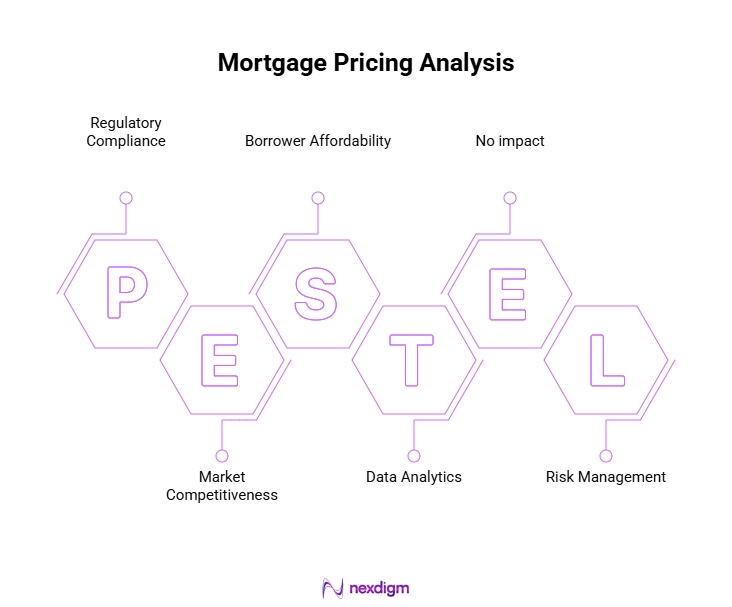
- Borrower Affordability Assessment: Evaluate income, repayment capacity, debt obligations, property values, and loan terms. Benefits include accessible pricing, improved eligibility, stronger conversions, and reduced borrower stress.
- Credit Risk-Based Pricing: Align mortgage rates and fees with credit scores, loan-to-value ratios, repayment history, and default probability. Benefits include accurate risk premiums and stronger portfolio quality.
- Funding Cost and Margin Analysis: Assess deposit costs, wholesale funding rates, operating expenses, capital requirements, and servicing costs. Benefits include protected interest margins, sustainable rates, and improved profitability.
- Competitive Mortgage Benchmarking: Compare lender rates, fees, incentives, loan structures, and approval conditions across markets. Benefits include stronger positioning, faster pricing responses, improved acquisition, and reduced customer attrition.
- Portfolio Performance Monitoring: Track approvals, conversions, prepayments, delinquencies, interest margins, and customer behavior. Benefits include timely pricing adjustments, controlled risk, improved retention, and sustainable portfolio growth.
Nexdigm’s Role in Balancing Mortgage Affordability and Lender Profitability
Nexdigm’s Pricing Analysis Services help mortgage lenders balance borrower affordability with sustainable profitability through mortgage pricing competitiveness studies, mortgage pricing analysis, interest rate benchmarking, risk-based pricing, loan portfolio pricing optimization, and competitive pricing intelligence. By evaluating borrower profiles, funding costs, market interest rates, competitor offerings, credit risk, and profitability metrics, Nexdigm enables lenders to optimize pricing strategies, improve loan conversions, protect net interest margins, and strengthen long-term portfolio performance.
Nexdigm’s Strategic Roadmap for Competitive Mortgage Pricing
Nexdigm’s roadmap combines borrower affordability, funding costs, credit risk, competitor rates, and portfolio economics to develop competitive mortgage pricing, protect margins, improve conversions, and support sustainable lending growth. Data Driven steps followed by Nexdigm’s experts are:
Step 1: Assess Borrower and Market Segments
Analyze borrower income, credit profiles, property values, loan purposes, and regional demand to define relevant pricing segments and affordability thresholds.
Step 2: Benchmark Competitor Mortgage Offers
Compare interest rates, fees, incentives, approval conditions, loan structures, and service features to identify market gaps and strengthen competitive positioning.
Step 3: Evaluate Funding Costs and Risk
Assess deposit costs, wholesale funding, capital requirements, servicing expenses, credit risk, and prepayment exposure to establish sustainable mortgage pricing boundaries.
Step 4: Model Pricing and Profitability Scenarios
Test alternative rates, fees, terms, and incentives against conversion, demand, risk, revenue, and margin outcomes to select balanced pricing strategies.
Step 5: Monitor Performance and Refine Pricing
Track application volumes, approvals, conversions, delinquencies, prepayments, competitor movements, and interest margins to continuously refine pricing and sustain portfolio performance.
Nexdigm’s Case
Nexdigm helped a mortgage lender refine competitive pricing across borrower segments. The initiative increased application conversions by 12%, improved net interest margins by 9%, and reduced pricing turnaround time by 18%, strengthening profitability and responsiveness.
To take the next step, simply visit our Request a Consultation page and share your requirements with us.
Harsh Mittal
+91-8422857704