
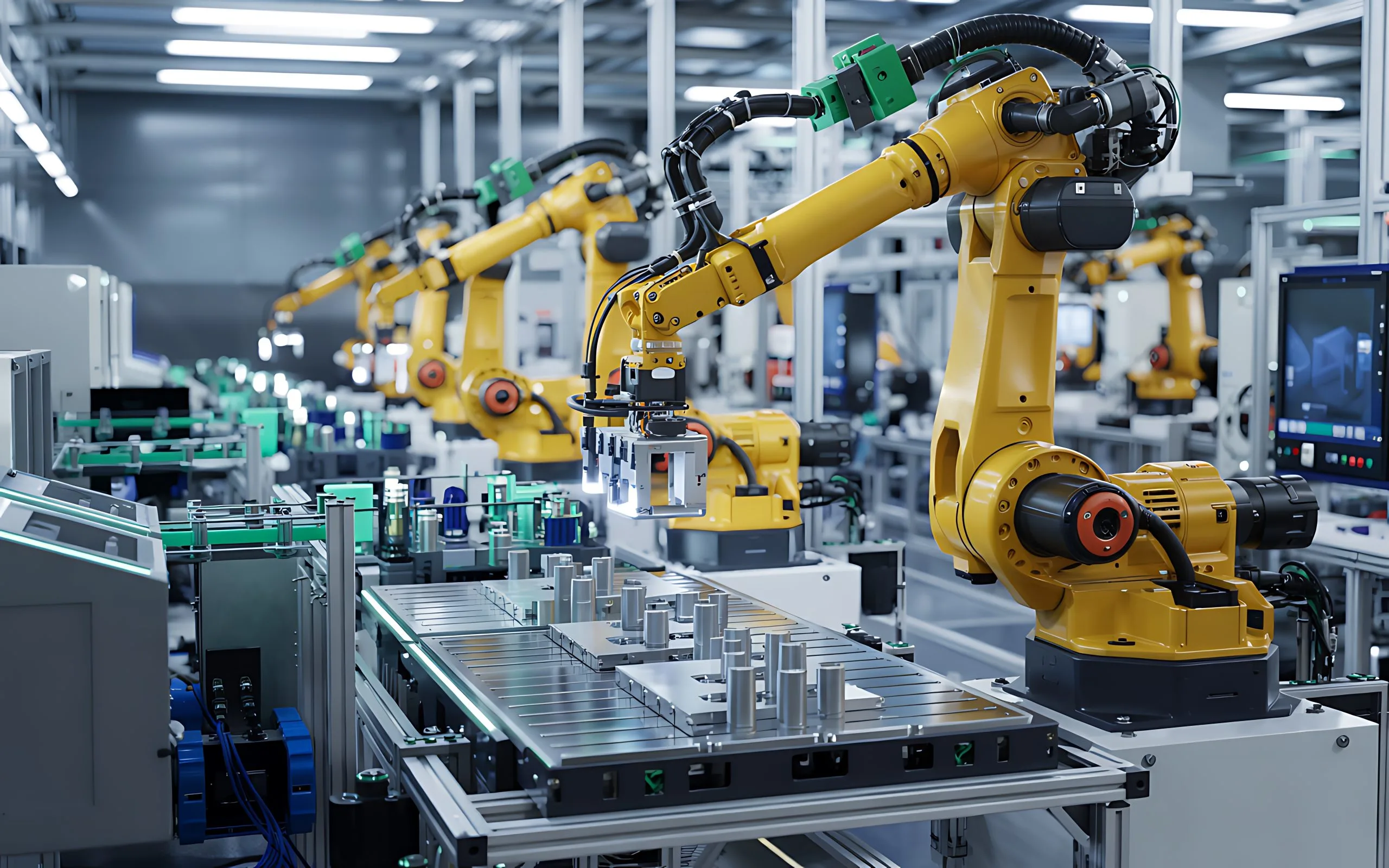
The industrial automation market in Nigeria is poised for steady growth through 2035 as manufacturers and sectors such as oil & gas, telecommunications, food & beverage, and consumer goods increasingly adopt automation technologies to enhance productivity and reduce operational costs. Driven by the need to improve efficiency, address skill shortages, and compete within global value chains, automation solutions—ranging from programmable logic controllers (PLCs) to robotics and machine‑to‑machine (M2M) systems—are moving from pilot projects toward broader deployment. Despite infrastructure and investment constraints, the long‑term trend points to greater digitization of industrial processes across the nation.
Key Drivers Fueling the Growth of Nigeria’s Industrial Automation Market
Rising Demand for Operational Efficiency
Nigeria’s industrial base has historically faced challenges with labor productivity, inconsistent power supply, and process reliability. Automation offers repeatable precision, reduced waste, and faster throughput. Firms in sectors such as food processing and pharmaceuticals have begun integrating sensors, PLCs, and distributed control systems (DCS) to streamline workflows. For example, automated process control can reduce downtime by up to 20–30% compared with manual control, while predictive maintenance enabled by real‑time monitoring helps avoid unplanned outages.
Workforce Skill Gaps and Safety Considerations
The Nigerian industrial labor force often lacks advanced technical skills required for modern manufacturing. Automation shifts routine and hazardous tasks from human operators to machines, improving on‑site safety and reducing the risk of human error. Robotics adoption in assembly and inspection helps maintain consistent quality. In mining and oil & gas facilities, automation systems manage complex operations that are otherwise difficult to supervise manually, improving compliance with safety regulations.
Cost Optimization and Competitive Pressures
Global competition pressures Nigerian manufacturers to optimize costs and adopt Industry 4.0 technologies. Automation can lower operating expenses by reducing energy usage, material waste, and labor overhead. Early adopters of supervisory control and data acquisition (SCADA) and manufacturing execution systems (MES) report on improved resource utilization and shorter cycle times. As regional competitors in South Africa and North Africa invest in automation, Nigerian firms are incentivized to follow suit to maintain market share.
Government Policies and Initiatives Supporting Industrial Automation in Nigeria
The Nigerian government has shown support for digital transformation through policies that promote industrialization and technology adoption. Initiatives under the National Development Plan emphasize infrastructure improvement and digital skills training. Regulatory support for public‑private partnerships and incentives for technology deployment—such as tax relief on imported automation equipment—aim to lower barriers for manufacturing upgrades.
Key Players and Competitive Dynamics in Nigeria’s Industrial Automation Market
The market comprises global and regional automation vendors supplying hardware and software solutions. Major multinationals offer integrated systems, while local service providers deliver customization, training, and after‑sales support. Strategic partnerships between international suppliers and Nigerian integrators are expanding solution availability and tailoring offerings to local industrial needs.
Key Challenges Hindering the Growth of Industrial Automation in Nigeria
Infrastructure and Power Limitations
Reliable electrical power and broadband connectivity remain inconsistent in many industrial zones. Automation systems depend on stable power and network infrastructure; frequent outages increase implementation difficulty and operating costs.
High Upfront Investment
Initial capital expenditure for advanced automation technologies can be prohibitive for small and medium enterprises (SMEs). Limited access to financing constrains adoption, particularly for robotics and advanced analytics platforms, slowing broader market penetration.
Future Outlook
Through 2035, Nigeria’s industrial automation market is expected to expand gradually as infrastructure improves and digital skills proliferate. Adoption will accelerate in sectors with clear returns on investment, including oil & gas, agro‑processing, and consumer goods manufacturing. Incremental deployment of automation components, combined with local capacity building and supportive policy frameworks, should enable more factories to transition from legacy manual operations to data‑driven automated processes. Strategic investments, both public and private, will be essential to sustain this growth trajectory and help Nigeria increase its competitiveness in regional and global manufacturing landscapes.
Consultants at Nexdigm, in their latest publication “Nigeria Industrial Automation Market Outlook to 2035,” analyze the sector by System Type (Manufacturing Execution Systems (MES), Programmable Logic Controllers (PLC), Supervisory Control and Data Acquisition (SCADA), Industrial Robots), By Platform Type (Cloud-based Platforms, Edge Computing Platforms, On-premise Platforms), and By Fitment Type (Retrofitted Solutions, New Installations, Hybrid Fitment Solutions). Nexdigm suggests that businesses should prioritize adopting advanced industrial automation technologies to enhance operational efficiency, reduce costs, and improve safety standards. By integrating automation into their processes, companies can overcome the challenges of skill shortages, unreliable power supply, and rising global competition.
To take the next step, simply visit our Request a Consultation page and share your requirements with us.
Harsh Mittal
+91-8422857704