
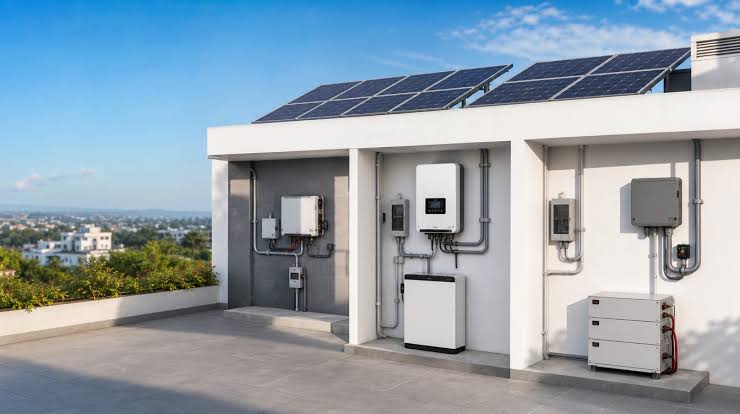
For millions of Nigerians, access to reliable electricity remains a daily challenge. Frequent grid outages and limited rural electrification have encouraged households and businesses to seek alternative power sources. This is where Nigeria’s off-grid solar energy industry is making a meaningful difference. According to the World Bank, more than 90 million Nigerians lack access to electricity, making the country one of the world’s largest energy-access markets. Off-grid solar solutions, including solar home systems and mini-grids, are helping bridge this gap while creating opportunities for economic growth, education, healthcare improvement, and sustainable development.
Market Drivers Advancing the Nigeria’s Off-Grid Solar Energy Industry
Energy Access Gap Creating Strong Demand for Solar Solutions
A significant share of Nigeria’s population still lives in areas with limited or unreliable power access. Extending conventional grid infrastructure to remote communities can be expensive and time-intensive. As a result, off-grid solar systems have emerged as a practical and cost-effective solution. Solar-powered mini-grids are increasingly supplying electricity to villages, schools, healthcare centers, and agricultural operations. For many communities, solar energy is not simply an alternative source of power but the first dependable source of electricity they have ever experienced.
Rising Cost of Conventional Power Encouraging Solar Adoption
Many Nigerian homes and businesses rely on diesel or petrol generators to manage frequent power interruptions. However, increasing fuel and maintenance expenses have pushed consumers toward cleaner and more affordable alternatives. Modern solar systems paired with battery storage allow users to reduce energy costs while improving power reliability. The growing availability of flexible financing models and pay-as-you-go schemes is further enabling adoption among middle- and lower-income households that previously found solar technology unaffordable.
Investment Flow Accelerating Nigeria’s Renewable Energy Expansion
Nigeria continues to attract substantial investment from global development organizations, impact investors, and private renewable energy companies. The country’s large underserved population presents a significant market opportunity for solar developers and technology providers. Partnerships among financial institutions, solar companies, and energy agencies are improving access to funding and expanding distribution networks. This investment momentum is helping bring solar products to both urban and rural consumers across the country.
Government Initiatives Supporting the Nigeria’s Off-Grid Solar Energy Industry
Government-backed initiatives have played a crucial role in expanding renewable energy access. Programs such as the Nigeria Electrification Project (NEP) and activities led by the Rural Electrification Agency (REA) are helping accelerate mini-grid and standalone solar deployments. These efforts are supported by international development partners and funding institutions that aim to improve electricity access, stimulate rural economies, and encourage private-sector participation in Nigeria’s renewable energy sector.
Competitive Landscape of Nigeria’s Off-Grid Solar Energy Industry
Nigeria’s off-grid solar market features a mix of international energy companies, local solar providers, mini-grid developers, and technology innovators. Leading participants include Lumos, d.light, Arnergy, Greenlight Planet, Husk Power Systems, and Rensource Energy. Competition is centered on product quality, financing flexibility, distribution reach, and customer service. Strategic partnerships with telecom operators and financial institutions continue to strengthen market penetration and support customer acquisition efforts nationwide.
Challenges Impacting Nigeria’s Off-Grid Solar Energy Industry
Affordability and Access to Financing
Although solar technology costs have declined significantly, upfront investment remains a challenge for many households and small businesses. Access to consumer financing and affordable credit remains essential for broader market expansion. Currency fluctuations can also increase equipment costs and affect project viability.
Supply Chain and Technical Infrastructure Constraints
The industry continues to face logistical challenges, particularly in remote regions where transportation networks are less developed. Dependence on imported solar components can create supply-chain uncertainties and pricing pressures. In addition, greater investment in technical training is needed to support installation, maintenance, and long-term system performance.
Future Outlook
The future of Nigeria’s off-grid solar energy market appears highly promising as demand for reliable electricity continues to rise. Government electrification efforts, increasing private-sector investment, and ongoing technological advancements are expected to drive further market growth. Improvements in battery storage, smart metering, and digital payment systems will make solar solutions even more accessible and efficient. As Nigeria works toward expanding energy access and reducing dependence on fossil-fuel-based generators, off-grid solar energy is expected to become an increasingly important part of the country’s energy landscape, improving lives and empowering communities across the nation.
Consultants at Nexdigm, in their latest publication “Nigeria Off-Grid Solar Energy Market to 2035” analyze the sector By Solar Technology Solution (Pico-Solar Lanterns, Entry-Level Lighting Kits and Multi-Appliance Tier 3 Systems), By End User Demographic (Rural Residential Households and Micro-Enterprise and SMEs) and By Geographic Region (Northwest Zone, Northeast Zone and Southwest Zone).
Nexdigm suggests that businesses in “Nigeria Off-Grid Solar EnergyIndustry” focusses on oilfield, desalination, construction, and industrial applications, strengthen local warehousing, develop application-specific grades, improve technical support, and build resilient sourcing networks to serve expanding energy, water, and manufacturing demand.
To take the next step, simply visit our Request a Consultation page and share your requirements with us.
Harsh Mittal
+91-8422857704