

Comparing NPA (Non-Performing Assets) ratios across banks is a crucial aspect of evaluating credit risk management, particularly in volatile markets. By analyzing NPA ratios, banks can assess the effectiveness of their lending practices and identify potential areas of vulnerability. Competitive intelligence provides NPA ratio comparison with valuable insights into how competitors are navigating credit risks and managing their loan portfolios. This allows banks to refine their strategies, enhance risk mitigation efforts, and maintain a competitive edge in an ever-changing market environment.
The average NPA ratio for Indian banks stood at approximately 5.5%, with public sector banks reporting higher ratios, around 6.7%, compared to private sector banks at 3.2%.
Globally, banks in emerging markets saw NPA ratios spike by up to 2% during periods of economic volatility, while in developed markets, the average NPA ratio remained lower, typically under 1%. Effective credit risk management practices have been linked to a 15-20% reduction in NPAs for banks adopting robust risk assessment models.
The Role of Competitive Intelligence in NPA Ratio Comparison
Competitive intelligence in NPA ratio comparison helps banks analyze competitors’ credit risk management, identify industry trends, and adjust their strategies. It enables informed decision-making to minimize risk and improve financial stability:
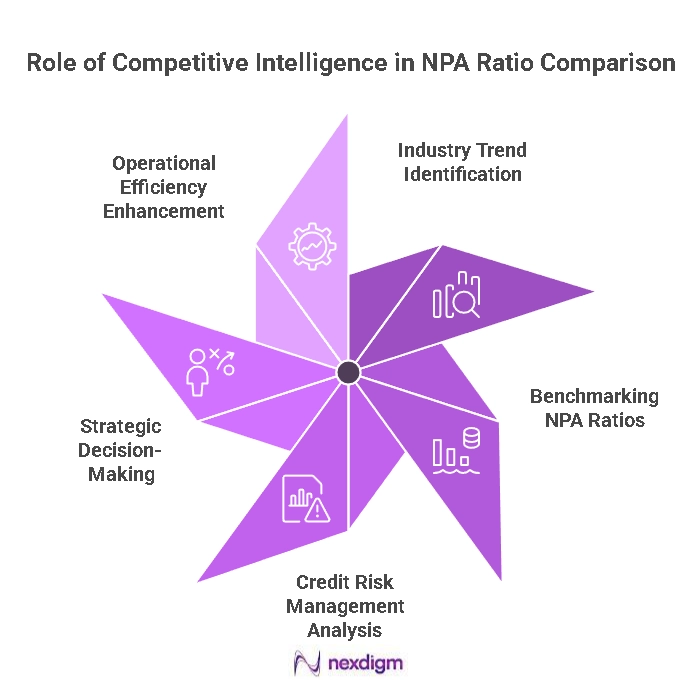
- Identifying Industry Trends through NPA Comparison: Analyzing NPA ratios helps track emerging trends, offering insights into the economic health and risk exposure of competitors.
- Benchmarking NPA Ratios for Risk Assessment: Competitive intelligence tools enable banks to benchmark their NPA ratios against industry leaders, highlighting areas for improvement.
- Analyzing Competitor Credit Risk Management Practices: Comparing NPA ratios reveals competitors’ risk management approaches, allowing banks to refine their own credit risk strategies.
- Using NPA Data for Strategic Decision-Making: By evaluating competitors’ NPA ratios, banks can make informed decisions on loan pricing, provisioning, and portfolio diversification.
- Enhancing Operational Efficiency with NPA Insights: Competitive intelligence helps banks optimize credit processes by identifying operational inefficiencies and adjusting strategies based on competitors’ performance.
Leveraging Nexdigm’s Data Analytics for Credit Risk Insights
Nexdigm’s data analytics solutions provide banks with deep insights into credit risk by analyzing large datasets, identifying trends, and detecting potential vulnerabilities in loan portfolios. By leveraging advanced analytics, banks can predict future credit defaults, optimize risk management strategies, and improve decision-making. This helps minimize NPAs, enhance portfolio performance, and strengthen financial stability, particularly in volatile market conditions.
NPA Solutions by Nexdigm for Improved Risk Management
Nexdigm offers tailored NPA solutions that help banks identify, monitor, and mitigate credit risk. Through advanced analytics and strategic insights, they improve risk management, reduce NPAs, and enhance overall portfolio health.
- Identifying NPA Triggers with Data Analytics: Nexdigm uses advanced data analytics to pinpoint early warning signs of potential NPAs, improving risk detection.
- Optimizing Credit Risk with Predictive Models: Predictive analytics models help banks forecast credit defaults, enabling proactive risk mitigation strategies for better NPA management.
- Tailored NPA Risk Mitigation Strategies: Nexdigm develops customized strategies to address specific NPA issues, improving asset quality and minimizing financial risk.
- Improving Loan Monitoring and Recovery: Nexdigm enhances loan monitoring systems and provides recovery solutions to effectively manage and reduce existing NPAs.
- Strategic Advisory for NPA Reduction: Nexdigm provides expert advisory services to refine credit policies and reduce NPAs while ensuring profitable lending operations.
Nexdigm’s case:
Nexdigm partnered with a mid‑sized bank to strengthen credit risk management and competitive positioning. By deploying benchmarking analytics and competitive intelligence tools, the bank improved its credit risk assessment accuracy by about 18% and reduced non‑performing assets by roughly 12%, while also accelerating transaction service turnaround times by around 15%, enhancing portfolio quality and resilience in a volatile market.
To take the next step, simply visit our Request a Consultation page and share your requirements with us.
Harsh Mittal
+91-8422857704