

Oil and gas trade is being reshaped by supply disruptions, changing demand, inventory movements, and shifting trade routes. The IEA’s October 2026 report puts global oil supply at 102.3 million barrels per day in September, up 2.5 million barrels per day month-on-month, while global oil demand is forecast to decline by 2.6 million barrels per day in 2026. Global observed oil inventories were also 509 million barrels below end-February levels. Meanwhile, global gasoil and diesel exports averaged 4.7 million barrels per day during the first nine months of 2026, 10% below the previous year.
These movements show why oil and gas import export data can reveal much more than traded volumes. Examining origins, destinations, suppliers, buyers, pricing, and shipment activity can help businesses understand changing demand, supply dependencies, market access, and competitive positions.
Trade Movements Can Signal Changing Market Conditions
Import and export movements can provide early indicators of market change. Rising imports may reflect stronger consumption, lower domestic production, inventory rebuilding, or supply shortages. Similarly, declining exports may indicate production constraints or changing domestic requirements. Comparing volumes with pricing, supplier participation, and market conditions helps distinguish structural changes from temporary movements.
Supply and Access Are Closely Connected
Energy trade depends not only on available production but also on infrastructure, transportation routes, refining capacity, and the ability of suppliers to reach buyers. In September, Gulf crude exports increased by 4.4 million barrels per day to 13.9 million barrels per day, while refined-product flows remained more constrained.
- Supply Signals: Export volumes and supplier shares can reveal changing availability and emerging sources.
- Access Signals: Routes, infrastructure, buyers, and pricing show how easily additional supply can reach a market.
Together, supply and access signals provide a more complete view of energy market dynamics, helping businesses identify reliable sourcing opportunities, evaluate market reach, and anticipate shifts in trade competitiveness.
Nexdigm’s Approach to Offering Oil and Gas Import-Export Intelligence Expertise
Understanding energy trade requires more than tracking volumes. Nexdigm combines trade intelligence with energy-sector research, market intelligence, pricing analysis, competitive intelligence, company research, and supply-chain assessment to help businesses with:
- Market Visibility: Nexdigm connects import and export movements with demand, supply availability, pricing, and market conditions to identify meaningful shifts.
- Decision Support: Findings are translated into practical priorities for market entry, supplier diversification, procurement, export development, and strategic planning.
This approach helps businesses move from observing energy trade movements to understanding where markets are heading and where commercial action may create value.
Why Oil and Gas Import-Export Data Needs Interpretation
Trade records can show what moved across borders, but they do not automatically explain why those movements occurred. An increase in imports could indicate demand growth, supply disruption, inventory rebuilding, or declining domestic production.
Experts at Nexdigm can interpret these movements in the oil and gas import export data, alongside production, infrastructure, pricing, logistics, company activity, and competitive conditions. This broader view helps businesses determine potential market opportunities.
Nexdigm’s Trade Intelligence Assessment Approach
Nexdigm’s assessment goes beyond compiling import-export figures. It examines the following areas that influence oil and gas trade. By connecting these areas, businesses can understand both the movement of energy products and the commercial factors driving those movements:
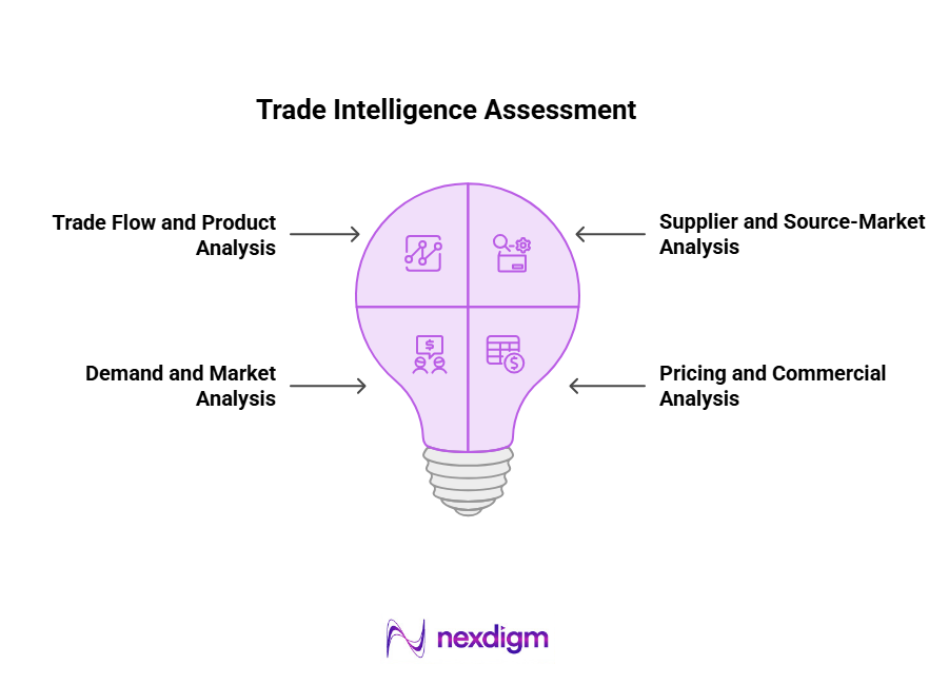
- Trade Flow and Product Analysis: Nexdigm examines crude oil, refined petroleum products, natural gas, LNG, and other relevant energy products across import and export markets. The analysis covers trade values, shipment activity, and product-level movements to identify where trade is increasing, declining, or changing direction.
- Demand and Market Analysis: Import activity can provide signals about changing market requirements. Nexdigm assesses import growth, buyer participation, domestic production, consumption patterns, and import dependence to understand whether a market is experiencing stronger demand or simply responding to temporary supply conditions.
- Supplier and Source-Market Analysis: Nexdigm maps exporters, producing countries, supplier shares, shipment activity, and sourcing relationships to identify established and emerging supply sources. This can reveal supplier concentration and potential opportunities for sourcing diversification.
- Pricing and Commercial Analysis: Indicative trade values can be compared across products, suppliers, origins, destinations, and periods to identify pricing differences and changes in trade economics. Combined with market and supplier intelligence, this can help businesses understand potential procurement advantages and pricing pressures.
Overall, Nexdigm’s assessment connects what is being traded, where it is moving, who is participating, how pricing is changing, and why these movements matter, creating a more complete view of the energy market.
Benefits of Nexdigm’s Trade Intelligence Assessment
Nexdigm’s strategic assessment can help businesses in the following areas:
- Map Supply Opportunities: Identify emerging exporters, alternative origins, and potential suppliers.
- Benchmark Pricing: Compare indicative trade values across suppliers, products, and markets.
- Understand Competition: Track supplier shares, company participation, buyers, and changing competitive positions.
These benefits help businesses understand the shift from simply monitoring oil and gas import-export data to using it as a structured source of market intelligence and strategic decision support.
Nexdigm’s Case
Nexdigm’s trade intelligence approach helped a manufacturer identify market shifts, contributing to 19% export-volume growth, 27% higher distributor orders, and 12% fewer inventory gaps. The analysis supported faster demand forecasting, stronger sourcing decisions, and more informed international market planning.
To take the next step, simply visit our Request a Consultation page and share your requirements with us.
Harsh Mittal
+91-8422857704