

Oil shipments can reveal changes in global supply, demand, sourcing relationships, and competitive positioning well before these shifts become obvious in broader market indicators. The U.S. Energy Information Administration expects U.S. crude oil production to average approximately 13.7 million barrels per day in 2026, while OPEC’s latest outlook places global oil demand at around 106 million barrels per day.
The U.S. also continues to be a major exporter of crude and petroleum products, linking its production growth to international supply markets. These developments demonstrate why shipment-level information matters.
Oil trade intelligence can connect shipment activity with origins, destinations, suppliers, buyers, pricing, routes, and market conditions to reveal where trade relationships are changing and where strategic opportunities may emerge.
Shipment Patterns Can Reveal Changing Supply Relationships
Shipment data provides a more detailed view of trade than annual import and export totals. Changes in shipment frequency, cargo volumes, origins, destinations, or supplier participation can indicate that buyers are adjusting sourcing strategies or that suppliers are redirecting products toward more attractive markets. Examining these patterns over time can help distinguish temporary movements from meaningful changes in supply relationships.
Competitive Positioning Can Shift with Trade Flows
Oil markets can become more competitive when new suppliers enter a destination, established exporters increase their presence, or buyers diversify their sourcing. Comparing shipment activity across companies, origins, products, and destinations can reveal who is gaining market share and where competitive pressure is increasing.
- Supplier Signals: Track shipment volumes, origins, frequency, and supplier participation to identify emerging or strengthening sources.
- Buyer Signals: Analyze destination markets and purchasing activity to understand changing demand and sourcing preferences.
Nexdigm’s Oil Trade Intelligence Services in Assessing Trade Flows
Nexdigm brings together trade intelligence, energy-sector research, market intelligence, competitive analysis, pricing assessment, company research, and supply-chain intelligence to turn shipment information into commercially relevant insights.
Our oil trade intelligence can examine crude and refined products, suppliers, buyers, origins, destinations, shipment activity, volumes, values, pricing, and trade routes.
Rather than treating shipment records as isolated transactions, experts at Nexdigm can connect them with production, refinery activity, infrastructure, market demand, company strategies, and competitive conditions.
This helps businesses understand not simply where oil is moving, but why trade patterns are changing and what those changes could mean for sourcing, market entry, and competitive positioning.
Why Shipment Data Needs Commercial Interpretation
Shipment records show what moved and where, but understanding the business meaning requires additional context. Nexdigm can interpret these movements by connecting shipment information with wider market and commercial signals to:
- Understand the Driver: Assess demand, supply disruptions, inventory movements, and sourcing changes to explain why shipment patterns are shifting.
- Add Market Context: Connect shipments with pricing, infrastructure, production, company activity, and competitive conditions to interpret their significance.
- Identify the Implication: Use these insights to distinguish temporary movements from structural trade shifts and emerging commercial opportunities.
By connecting shipment activity with the factors behind it, Nexdigm can help businesses turn transaction-level data into meaningful oil-market intelligence and strategic insight.
Nexdigm’s Oil Trade Intelligence Assessment
Nexdigm’s assessment focuses on the commercial factors that explain changing oil trade movements. By examining these areas together, businesses can understand where trade is shifting, what is driving the change, and what it means for sourcing and market strategy:
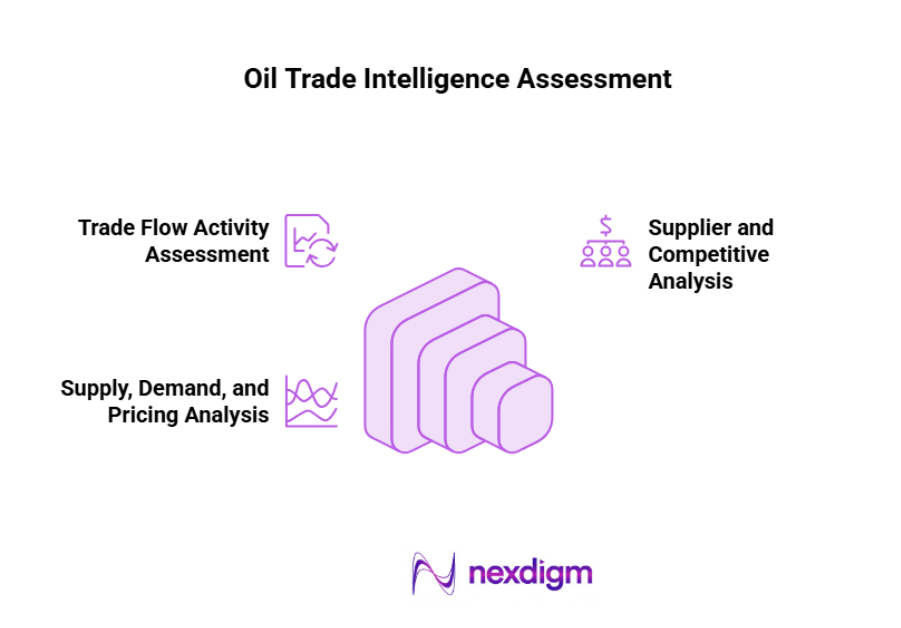
- Trade Flow and Shipment Activity: The assessment examines crude and refined-product movements, shipment volumes, origins, destinations, shipment frequency, trade values, suppliers, and buyers to identify changing trade patterns and emerging relationships.
- Supply, Demand, and Pricing: Nexdigm evaluates production, refinery capacity, import dependence, consumption, buyer requirements, indicative pricing, and market conditions to understand the factors influencing shipment activity.
- Supplier and Competitive Positioning: The assessment compares supplier shares, company participation, buyer relationships, product mix, origin markets, destination markets, and competitive activity to identify changing market positions and sourcing dynamics.
Together, these areas provide a connected view of trade movements, market drivers, competitive positioning, and access conditions, allowing businesses to move beyond shipment-level observations.
Benefits of Nexdigm’s Oil Trade Intelligence Assessment
By connecting shipment activity with market, supplier, pricing, and infrastructure signals, Nexdigm’s assessment helps businesses to:
- Identify Market Shifts: Detect changes in trade flows, demand, supply availability, and sourcing relationships.
- Find Emerging Suppliers: Identify new or strengthening suppliers across origins and destination markets.
- Improve Sourcing Decisions: Compare alternative suppliers, origins, routes, pricing, and supply conditions.
- Identify Market Opportunities: Find markets where demand, supply gaps, or changing trade relationships may create commercial potential.
- Assess Pricing Dynamics: Compare indicative trade values across products, suppliers, origins, and destinations.
Overall, the assessment helps businesses move from tracking oil shipments to understanding their commercial significance, enabling more informed decisions around sourcing, competition, market expansion, and supply-chain resilience.
Nexdigm’s Case
Nexdigm supported an energy-sector client by analyzing 6 regions and trade, pricing, supply, infrastructure, and competitive indicators. The assessment identified 10 priority markets, 14 potential supply sources, and 3 high-priority trade corridors, helping the client strengthen sourcing decisions and prioritize international expansion opportunities.
To take the next step, simply visit our Request a Consultation page and share your requirements with us.
Harsh Mittal
+91-8422857704