

Omnichannel retail pricing analysis consulting helps retailers align online and offline prices without ignoring the different costs, customer expectations, and competitive pressures within each channel. Through practical Pricing Strategy Analysis, businesses can compare marketplace fees, store expenses, delivery costs, promotions, local demand, and price sensitivity.
This creates clearer pricing guardrails, reduces customer confusion, and protects margins while preserving channel flexibility. It also supports consistent product value, smoother promotions, stronger trust, and better commercial decisions across websites, marketplaces, mobile apps, and physical stores in changing retail environments worldwide with greater confidence.
Research shows omnichannel shoppers represent about 73% of retail customers, while recent pricing simulations found that recognizing cross-channel price sensitivity could increase profits by up to 4.1%. These figures highlight the value of coordinated pricing across digital and physical channels.
Strategic Omnichannel Pricing Analysis for Online and Offline Alignment
Strategic pricing analysis helps retailers coordinate digital and store pricing, reduce customer confusion, improve channel economics, and build a more consistent, profitable, and responsive retail experience across markets. Its major benefits for the retail industry are:
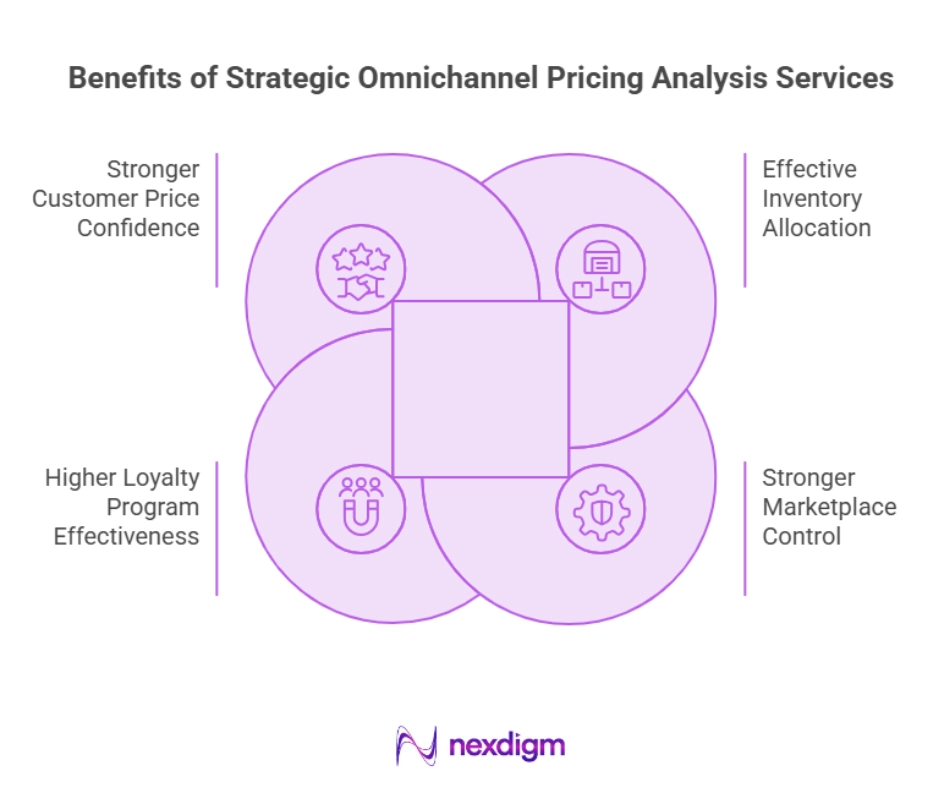
- Effective Inventory Allocation: Channel-level pricing insights help retailers direct stock toward the locations and platforms where demand, margin potential, and sell-through opportunities are strongest across the network.
- Stronger Marketplace Control: Retailers can better manage third-party marketplace prices, seller discounts, fees, and promotions, reduce channel inconsistency and protect brand positioning across external digital platforms.
- Higher Loyalty Program Effectiveness: Coordinated pricing and reward structures ensure loyalty benefits remain relevant across channels, improving redemption, repeat purchases, customer engagement, and overall program profitability.
- Stronger Customer Price Confidence: Consistent pricing rules reduce uncertainty when customers compare channels, strengthen trust, improve purchase confidence, and support smoother movement between online research and in-store transactions.
Nexdigm’s Advisory Role in Omnichannel Pricing Governance and Consistency
Nexdigm assists retailers strengthen pricing control through Omnichannel Pricing Analysis, Pricing Strategy Analysis, Cross-Channel Price Alignment, and Retail Pricing Governance. By integrating competitor intelligence, channel economics, promotion data, customer behavior, and margin analytics, Nexdigm establishes clear pricing rules, approval processes, and performance measures that improve consistency, reduce price conflicts, protect profitability, and support seamless customer experiences across stores, websites, apps, and marketplaces.
Nexdigm’s Pricing Analysis Service Model for Unified Retail Channels
Nexdigm’s integrated model helps retailers coordinate prices across stores, websites, apps, and marketplaces by aligning customer expectations, channel economics, operational realities, and governance for consistent, profitable omnichannel performance. Its key steps are:
- Map Cross-Channel Price Variations: Identifying price, discount, delivery, and promotion differences across channels to understand where inconsistencies affect customer trust, competitive positioning, and overall retail profitability most significantly today.
- Separate Justified and Unjustified Gaps: Distinguishing legitimate price differences caused by fulfilment, service, location, or channel costs from avoidable inconsistencies that create confusion, complaints, and unnecessary margin leakage for customers.
- Align Customer Value Across Touchpoints: Defining a consistent value proposition across stores and digital platforms while allowing relevant differences in convenience, availability, service, delivery, and customer experience by channel.
- Establish Channel-Specific Pricing Boundaries: Creation of permitted price ranges, discount limits, promotion rules, and exception criteria that preserve channel flexibility while maintaining brand consistency and protecting overall retail margins effectively.
Nexdigm’s Case
An omnichannel retailer engaged with Nexdigm to address pricing inconsistencies across stores, websites, and marketplaces. The analysis reduced cross-channel price conflicts by 24%, improved net margins by 7%, lowered pricing-related customer complaints, and shortened promotion synchronization time by 30%, strengthening customer trust and commercial performance across retail touchpoints.
To take the next step, simply visit our Request a Consultation page and share your requirements with us.
Harsh Mittal
+91-8422857704