

Organic farming competitive pricing consulting helps producers and agribusinesses align premium prices with rising consumer demand, certification value, production costs, and competitive market conditions. Through comprehensive Pricing Analysis Services, companies can assess customer willingness to pay, organic premiums, competitor prices, regional demand, channel margins, product quality, and supply constraints.
These insights support value-based pricing, portfolio positioning, market segmentation, promotional planning, and revenue optimization across organic grains, fruits, vegetables, dairy, and packaged foods. Effective pricing strategies help businesses justify premiums, maintain affordability, protect margins, strengthen brand differentiation, expand adoption, and achieve sustainable growth in increasingly competitive organic markets.
An illustrative 12% improvement in organic pricing accuracy can enhance commercial performance. Pricing Analysis Services evaluate consumer willingness to pay, competitor pricing, certification premiums, production costs, and channel margins, helping organic businesses strengthen price realization, protect profitability, and accelerate sustainable market growth.
Pricing Analysis for Certified Organic Product Differentiation
Pricing analysis helps certified organic businesses quantify certification value, consumer preferences, product quality, competitive premiums, and production costs to differentiate offerings, strengthen positioning, protect margins, and support sustainable growth. Some core benefits of it are:
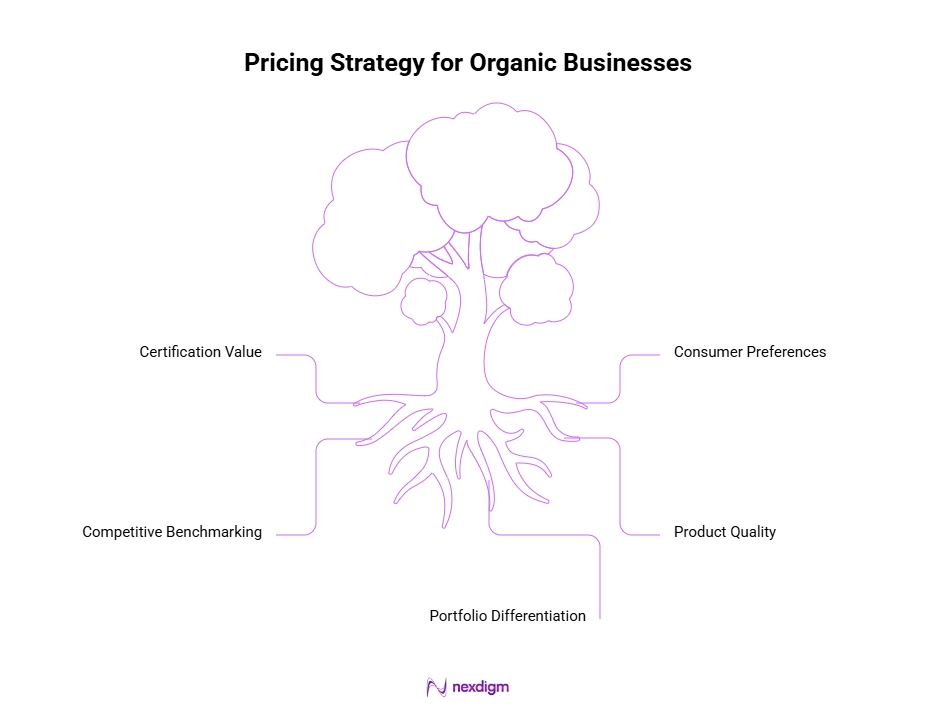
- Organic Certification Value Assessment: Evaluate certification standards, compliance investments, traceability, and verified farming practices. Benefits include stronger premium justification, improved consumer trust, clearer differentiation, and enhanced brand credibility.
- Consumer Willingness-to-Pay Analysis: Measure customer preferences, health priorities, environmental awareness, income levels, and purchase intent. Benefits include accurate premium thresholds, improved adoption, stronger targeting, and reduced pricing uncertainty.
- Competitive Organic Price Benchmarking: Compare certified products against organic and conventional alternatives across brands, formats, and channels. Benefits include sharper positioning, informed price adjustments, reduced substitution risk, and improved competitiveness.
- Product Quality and Value Pricing: Link prices with freshness, nutrition, sourcing, sustainability, taste, and production integrity. Benefits include clearer value communication, premium acceptance, stronger loyalty, and improved price realization.
- Portfolio and Channel Differentiation: Align prices across product categories, pack sizes, retail formats, e-commerce, and specialty channels. Benefits include optimized portfolios, consistent positioning, stronger channel margins, and wider market reach.
Nexdigm’s Expertise in Certified Organic Product Pricing and Differentiation
Nexdigm’s Pricing Analysis Services support certified organic brands through organic product pricing analysis, competitive price benchmarking, premium pricing strategy, consumer willingness-to-pay analysis, value-based pricing, and market pricing intelligence. By assessing certification value, production costs, consumer preferences, competitor positioning, and channel economics, Nexdigm helps businesses justify organic premiums, strengthen differentiation, improve price realization, protect margins, and achieve sustainable market growth.
Nexdigm’s Certified Organic Pricing and Differentiation Blueprint
Nexdigm’s blueprint combines certification value, consumer demand, competitive intelligence, production costs, and channel economics to establish differentiated organic prices, justify premiums, strengthen positioning, protect margins, and support sustainable growth. Data Driven types followed by Nexdigm’s experts are:
Type 1: Certification Value-Based Pricing
Prices reflect certification costs, traceability, compliance standards, verified sourcing, and sustainable practices, helping businesses justify premiums and strengthen consumer trust.
Type 2: Consumer Willingness-to-Pay Pricing
Pricing is aligned with health preferences, environmental awareness, income levels, and purchase intent to identify acceptable premiums and improve organic product adoption.
Type 3: Competitive Organic Benchmarking
Certified organic products are compared across brands, formats, channels, and conventional alternatives to reveal pricing gaps, positioning opportunities, and market differentiation potential.
Type 4: Product Value Differentiation Pricing
Prices reflect freshness, nutrition, quality, origin, sustainability, and production integrity, supporting premium positioning, clearer value communication, and stronger customer loyalty.
Type 5: Channel and Portfolio Pricing
Prices are tailored across retail, e-commerce, specialty stores, product categories, and pack sizes to improve portfolio consistency, channel margins, and market reach.
Nexdigm’s Case
Nexdigm helped an organic food company refine certification-based pricing. The initiative increased price realization by 13%, improved premium-product adoption by 10%, and strengthened gross margins by 8%, supporting clearer differentiation, stronger consumer trust, and sustainable growth.
To take the next step, simply visit our Request a Consultation page and share your requirements with us.
Harsh Mittal
+91-8422857704