

Retail packaging procurement covers a range of materials and services, including corrugated cartons, paper bags, flexible films, labels, protective inserts, and printed packaging. Their cost drivers differ. Paper-based packaging is influenced by fibre, conversion, energy, and transport costs, while flexible packaging may also depend on polymer prices, barrier properties, printing, and material combinations.
Retailers need to identify which components are driving expenditure and whether the increase reflects market conditions, supplier pricing, packaging design, or purchasing practices.
Trace Material Costs
Packaging prices are influenced by both raw materials and conversion. A decline in an input price does not necessarily translate immediately into lower supplier quotations because contracts, inventories, processing costs, and price-adjustment mechanisms can delay the effect.
Retailers should track material specifications, unit weights, dimensions, printing requirements, and price revisions over time. This makes it easier to determine whether a supplier’s increase reflects a genuine input-cost change or a change in the packaging being purchased.
Regulation can also affect sourcing decisions. The European Union’s Packaging and Packaging Waste Regulation began applying in August 2026, establishing a common framework covering packaging composition, waste prevention, and recyclability. For retailers serving that market, compliance requirements may influence material selection, supplier documentation, and packaging redesign costs.
Compare Vendors on Equivalent Specifications
A carton priced lower per unit may use a different board grade, weight, or construction. Likewise, two flexible packaging quotations may differ in barrier performance, thickness, print coverage, or minimum production quantity.
For packaging procurement spend analysis retail sector, comparisons should therefore use standardised technical specifications and landed costs. Freight, storage, damage rates, minimum order quantities, obsolete printed inventory, and delivery reliability should be considered alongside the quoted price.
Identify the Sources of Growth
Packaging expenditure can rise because of higher sales volumes, more shipments, product redesign, smaller order batches, or increased material use per unit. Ecommerce growth may also change the mix between primary packaging and protective shipping materials.
Retailers should separate volume effects from price effects and investigate changes in material consumption per product or shipment. This can reveal opportunities to reduce unnecessary packaging without compromising product protection, presentation, or applicable requirements.
Retail Packaging Spend Analysis Framework
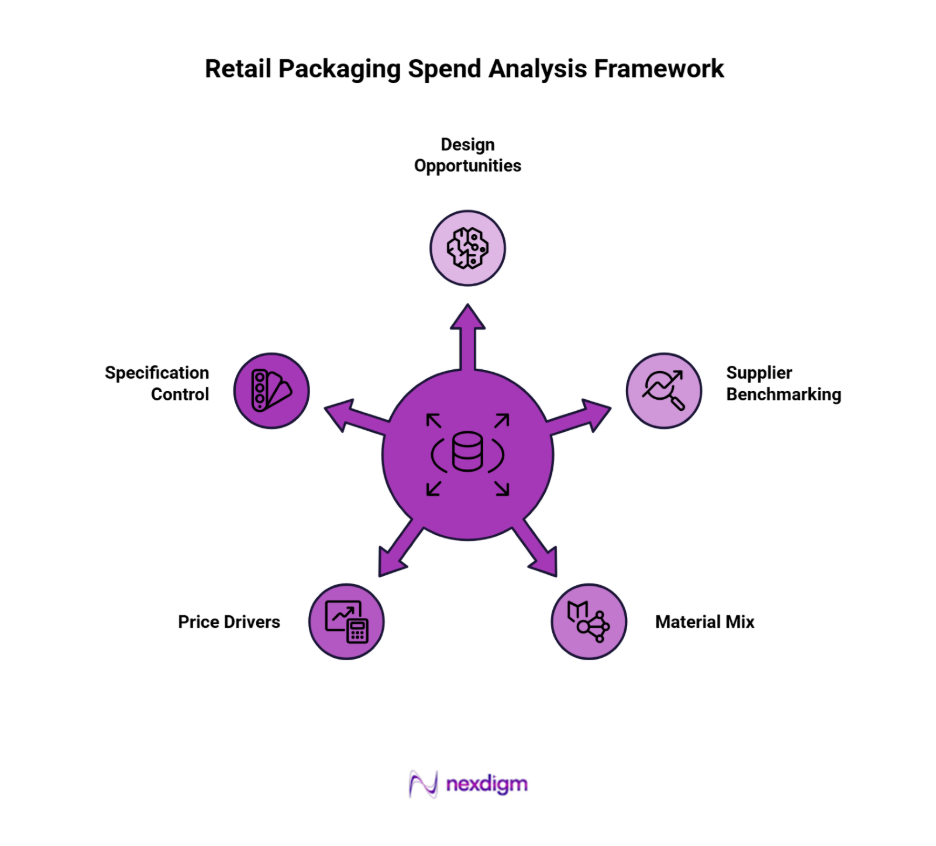
- Material Mix: Segment spend by packaging type, material grade, dimensions, weight, printing, and intended use to identify which categories contribute most to expenditure.
- Price Drivers: Track relevant raw-material indicators, supplier price revisions, conversion charges, freight, and contract terms to explain cost changes over time.
- Specification Control: Compare suppliers using equivalent strength, thickness, barrier performance, print quality, and packaging dimensions to prevent false savings from inferior specifications.
- Supplier Benchmarking: Assess minimum order quantities, lead times, production locations, tooling charges, quality consistency, and delivery reliability alongside unit prices.
- Design Opportunities: Evaluate material reduction, standardised formats, improved order planning, and compliant alternatives while testing their effects on protection, logistics, and total cost.
Reduce Spend Without Creating Waste
Packaging optimisation should be evaluated across the full distribution process. A lighter package may reduce material and transport costs, but damage or returns can erase those savings. Supplier changes should therefore be supported by sample testing, operational trials, and clear quality criteria.
Nexdigm’s Case Study
A retailer reviewed ₹8 crore in annual packaging spend across cartons, bags, and protective materials. Standardising specifications and consolidating orders identified a potential 5% reduction in addressable costs, equivalent to ₹40 lakh annually. Packaging strength and damage rates remained validation criteria before wider implementation.
To take the next step, simply visit our Request a Consultation page and share your requirements with us.
Harsh Mittal
+91-8422857704