

In high-volume, low-margin markets, parcel delivery players face intense pressure to balance speed, cost, and service quality. Understanding how competitors manage operations, optimize routes, and control expenses is crucial for maintaining profitability. Conducting a parcel delivery competitor study provides actionable insights into rivals’ network efficiency, labor deployment, technology adoption, and cost structures.
Leveraging competitive intelligence enables businesses to benchmark performance, identify operational gaps, and implement strategies to improve throughput, reduce costs, and gain an edge in competitive parcel logistics markets.
In India, the courier, express, and parcel (CEP) market generated about USD 47.5 billion in revenue in 2025 and is projected to grow at nearly 18% CAGR through 2033, reflecting rapid volume expansion and deepening competitive intensity. E‑commerce shipments, especially express and hyperlocal deliveries, are driving this growth, while major players continue to refine services, pricing, and network strategies to protect margins in high‑volume, low‑margin segments.
Strategic Insights for Profitability in Low-Margin Parcel Markets
Strategic Insights for Profitability in Low-Margin Parcel Markets involves analyzing competitor operations, cost structures, network efficiency, and service strategies to identify opportunities for improving margins, reducing expenses, and enhancing overall profitability.
- Cost Structure Analysis: Examines competitor parcel delivery costs, including labor, fuel, and handling, to identify opportunities for margin improvement.
- Network Efficiency Benchmarking: Compares competitor warehouse and delivery network utilization to optimize routes, reduce transit time, and lower operational expenses.
- Fleet and Labor Productivity: Evaluates how rivals deploy vehicles and workforce to maximize throughput and minimize costs in high-volume operations.
- Technology and Automation Insights: Assesses competitor adoption of route-planning software, sorting automation, and tracking systems to improve efficiency and reduce errors.
- Service Level and Delivery Accuracy: Benchmarks on-time delivery, customer satisfaction, and order accuracy across competitors to identify operational gaps.
Nexdigm’s Analysis on Cost Structure and Operational Efficiency
Nexdigm’s Analysis on Cost Structure and Operational Efficiency helps parcel delivery businesses operating in high-volume, low-margin markets identify cost drivers, inefficiencies, and optimization opportunities. The service evaluates labor deployment, fleet utilization, route planning, fuel, and handling expenses, benchmarking against competitors. By uncovering areas for operational improvement, Nexdigm enables businesses to reduce costs, enhance throughput, and maintain profitability while sustaining service quality.
Nexdigm’s Operational Risk Management Solutions for High-Volume Delivery Networks
Nexdigm’s Operational Risk Management Solutions for High-Volume Delivery Networks identify bottlenecks, inefficiencies, and potential disruptions in parcel operations, helping businesses mitigate risks, optimize processes, and ensure reliable, cost-effective high-volume deliveries:
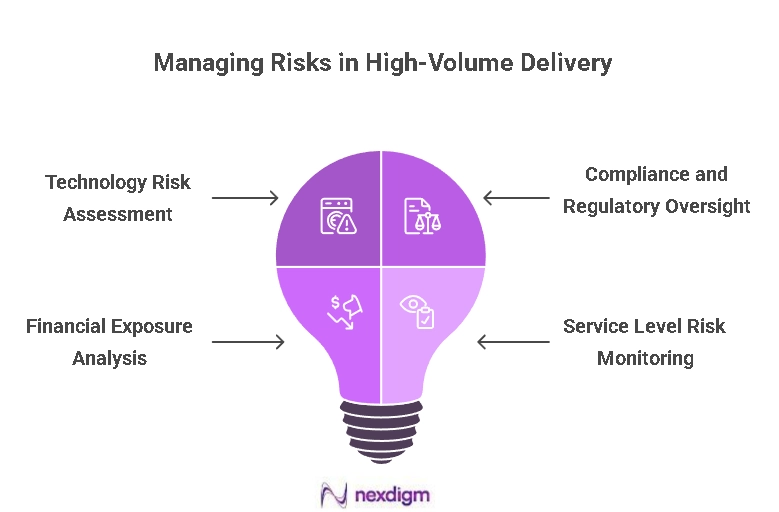
- Technology Risk Assessment: Reviews tracking systems, automation, and IT infrastructure to minimize failures and maintain operational continuity.
- Compliance and Regulatory Oversight: Ensures adherence to safety, labor, and transportation regulations, reducing legal and operational risks.
- Financial Exposure Analysis: Evaluates cost overruns, fuel, and labor expenditure risks to protect profitability in low-margin delivery networks.
- Service Level Risk Monitoring: Tracks on-time delivery, order accuracy, and customer satisfaction to prevent performance-related disruptions.
Nexdigm’s case:
Nexdigm supported a leading parcel delivery provider facing frequent service delays and cost overruns in a 20‑city high‑volume network handling over 1.2 million parcels monthly. By implementing operational risk assessments and process optimization, Nexdigm identified key bottlenecks and inefficiencies. Improvements led to a 14% reduction in on‑time delivery failures and a 9% decrease in operational cost variances, enhancing overall reliability and network resilience.
To take the next step, simply visit our Request a Consultation page and share your requirements with us.
Harsh Mittal
+91-8422857704