

India’s pesticide industry is expanding its manufacturing and export presence, increasing the importance of competitive procurement practices. According to the Department of Chemicals and Petrochemicals, technical-grade pesticide production reached 287,000 tonnes in FY2024–25, compared with 280,000 tonnes in the previous year.
Installed capacity stood at 438,000 tonnes, while exports reached 591,000 tonnes and imports totalled 76,000 tonnes. These figures reflect a market with substantial domestic manufacturing and international sourcing activity. For pesticide manufacturers, formulators, distributors, and agricultural input companies, procurement decisions involve more than product prices.
Supplier reliability, technical specifications, regulatory documentation, and commercial conditions also influence purchasing outcomes. Pesticides procurement research and benchmarking helps businesses compare these factors and identify opportunities to strengthen procurement competitiveness.
Understanding the Commercial Complexity of Pesticide Procurement
Pesticide procurement involves multiple product categories, including insecticides, herbicides, fungicides, and specialized formulations. Their costs can vary according to active ingredient composition, technical-grade sourcing, formulation requirements, order quantities, and supplier capabilities. Import dependence, manufacturing capacity, quality specifications, and regulatory obligations can further influence supplier competitiveness. Assessing these variables helps procurement teams understand price differences and evaluate vendors against specific product and business requirements.
Considerations That Shape Pesticide Procurement Decisions
Businesses can evaluate three fundamental dimensions before finalizing procurement arrangements:
- Product and Specification Alignment: Compare active ingredient concentration, formulation type, product quality, packaging, and technical specifications to ensure suppliers meet required standards.
- Supplier Dependability: Examine manufacturing capacity, product availability, delivery consistency, quality documentation, and regulatory credentials to assess supplier suitability.
- Commercial Competitiveness: Review quoted prices, order quantities, payment conditions, discounts, credit periods, and contractual terms to understand the overall purchasing proposition.
Considering these dimensions together helps businesses evaluate procurement value beyond the initial quoted price.
How Nexdigm Maps Procurement Costs Across Pesticide Categories
Our experts bring together chemical industry research and commercial analysis to help organizations understand cost differences across pesticide procurement categories. Our pesticides procurement research and benchmarking focuses on:
- Category-wise Price Comparison: Compare supplier quotations across selected insecticides, herbicides, fungicides, and other pesticide categories, considering product specifications, purchase volumes, and sourcing markets.
- Cost Component Examination: Assess active ingredient costs, formulation expenses, packaging, logistics, and other relevant commercial components to understand differences in overall procurement expenditure.
- Market Price Positioning: Evaluate supplier quotations against available market intelligence to identify pricing deviations, competitive alternatives, and categories that may require further commercial assessment.
This analysis gives procurement teams a clearer view of where costs vary and which categories warrant closer attention.
Insights into Nexdigm’s Pesticides Procurement Research and Benchmarking Services
Our experts offer procurement intelligence to help businesses evaluate pesticide categories, compare supplier pricing, and understand vendor capabilities. Our pesticides procurement research and benchmarking services cover product cost analysis, supplier landscape assessment, manufacturing capacity evaluation, quality and regulatory documentation reviews, and commercial term comparisons. These insights help organizations identify sourcing alternatives, assess procurement gaps, and make informed purchasing decisions.
Nexdigm’s Benchmarking Insights Shaping Pesticide Procurement Decisions
Our pesticides procurement research and benchmarking services help businesses examine procurement considerations beyond supplier quotations and product costs. Our experts focus on four areas:
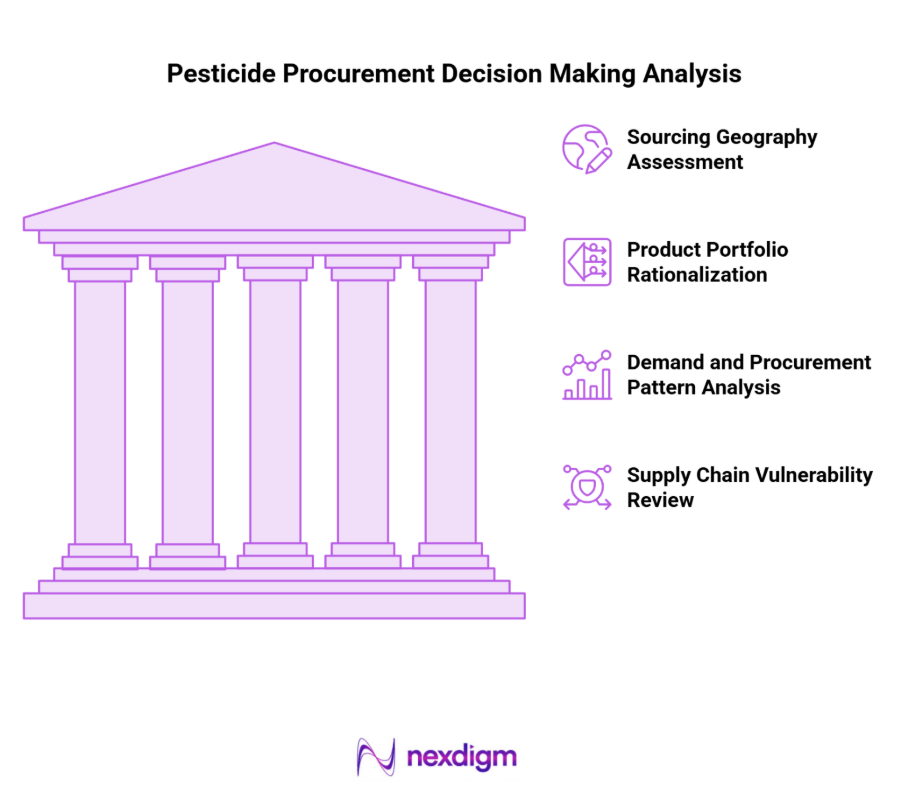
- Sourcing Geography Assessment: Examine regional manufacturing clusters, import origins, and geographic sourcing dependencies to identify potential alternatives and concentration concerns.
- Product Portfolio Rationalization: Assess overlaps across pesticide categories and formulations to help businesses identify opportunities to streamline sourcing requirements and vendor portfolios.
- Demand and Procurement Pattern Analysis: Study purchasing trends, seasonal demand fluctuations, and category-level procurement patterns to support better purchasing schedules and volume planning.
- Supply Chain Vulnerability Review: Examine exposure to raw material disruptions, import dependencies, transportation constraints, and supplier-related bottlenecks to identify areas requiring procurement attention.
These insights help organizations align sourcing priorities with market conditions, manage procurement exposure, and build more resilient purchasing strategies.
Nexdigm’s Case
A crop protection products distributor engaged Nexdigm to evaluate procurement practices and sourcing opportunities across selected Indian markets. The research assessed 34 suppliers across insecticide, herbicide, and fungicide categories. The assessment found that 26% of suppliers had significant regional sourcing dependencies, while 21% showed limited flexibility in accommodating seasonal demand variations. Based on the findings, the distributor shortlisted 9 suppliers for further procurement and commercial evaluation.
To take the next step, simply visit our Request a Consultation page and share your requirements with us.
Harsh Mittal
+91-8422857704