

Lifecycle management is a crucial strategy for pharmaceutical companies looking to extend revenue beyond patent expiry. Once a product’s patent expires, generic competitors often enter the market, reducing revenue. However, through strategic lifecycle management, companies can introduce new formulations, indications, or delivery methods, keeping the product relevant.
Lifecycles of blockbuster drugs can be extended by 5–10 years through effective lifecycle management strategies. In the U.S., patents for biologic drugs, when extended with improvements, can result in up to a 20–30% increase in market share post-expiry. Humira, a top-selling drug, maintained strong sales by introducing new formulations and expanding indications. The global pharma product lifecycle management market is expected to grow at a CAGR of 11%, reaching $10.5 billion by 2026.
Pharma product lifecycle analysis plays a key role in this process, providing insights into market trends, competitor actions, and evolving customer needs. By using competitive intelligence, companies can proactively manage their product portfolio, ensuring sustained profitability even after patents expire.
Forecasting Post-Patent Market Trends with Competitive Intelligence
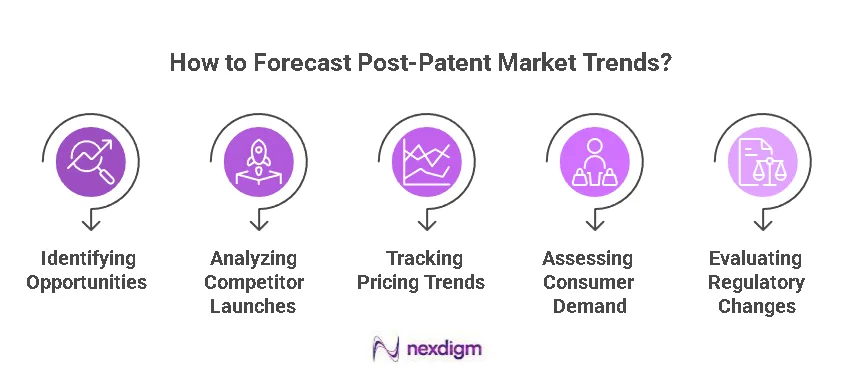
Forecasting post-patent market trends with competitive intelligence involves analyzing competitor activities, market demand, and regulatory shifts. This helps pharmaceutical companies anticipate market changes, adjust strategies, and extend product revenue post-expiry:
-
Identifying Opportunities for New Formulations and Indications
By monitoring competitor developments, companies can identify opportunities to innovate, introducing new formulations or indications to extend product lifecycles.
-
Analyzing Competitor Launches and Market Entry Strategies
Competitive intelligence tracks competitor launches, helping companies anticipate generic entries and strategize product differentiation after patent expiry.
-
Tracking Pricing Trends and Market Share Shifts
Monitoring competitor pricing and market share helps forecast post-patent pricing dynamics, enabling companies to adjust their strategies accordingly.
-
Assessing Consumer Demand and Behavior Post-Patent Expiry
Analyzing shifts in consumer preferences and demand post-expiry helps companies tailor marketing and product strategies for sustained revenue.
-
Evaluating Regulatory Changes Affecting Market Dynamics
Competitive intelligence identifies regulatory shifts that may influence post-patent market entry, helping companies adjust strategies to maintain market presence.
Optimizing Product Lifecycles with Nexdigm’s Market Insights
Nexdigm helps pharmaceutical companies optimize product lifecycles by providing in-depth market insights and competitive intelligence. By analyzing market trends, consumer behavior, and competitor strategies, Nexdigm helps identify opportunities for lifecycle extension, such as new formulations, indications, or delivery methods. These insights enable companies to adjust their strategies, mitigate the impact of patent expiry, and continue driving revenue growth by maintaining product relevance and market competitiveness throughout its lifecycle.
Nexdigm’s Approach to Identifying Opportunities for Lifecycle Extension
Nexdigm identifies opportunities for lifecycle extension by analyzing market trends, competitor actions, and regulatory changes. Their approach helps companies innovate, introduce new product versions, and extend revenue post-patent expiry through strategic insights.
-
Analyzing Market Trends for Lifecycle Extension Opportunities
Nexdigm tracks market shifts and evolving consumer needs to identify areas for product innovation and lifecycle extension strategies.
-
Competitive Benchmarking to Identify Gaps and Opportunities
By evaluating competitor offerings, Nexdigm helps uncover market gaps where lifecycle extension can enhance product differentiation and revenue.
-
Regulatory Insight for Post-Patent Product Innovation
Nexdigm tracks regulatory changes, helping companies adjust their product strategies to comply with new standards and extend lifecycles.
-
Identifying New Indications or Formulations for Lifespan Extension
Nexdigm helps identify potential new uses, formulations, or delivery methods to extend a product’s lifecycle and increase market share.
Nexdigm’s case:
In a lifecycle strategy engagement with a mid‑sized pharmaceutical firm, Nexdigm’s market insights and competitor analysis helped identify high‑value formulation updates and new indication opportunities. As a result, the client extended product relevance post‑patent expiry and achieved a 22% increase in revenue retention compared with forecasted generic erosion, while reducing time‑to‑market for enhanced formulations by 30% through targeted strategy execution.
To take the next step, simply visit our Request a Consultation page and share your requirements with us.
Harsh Mittal
+91-8422857704