
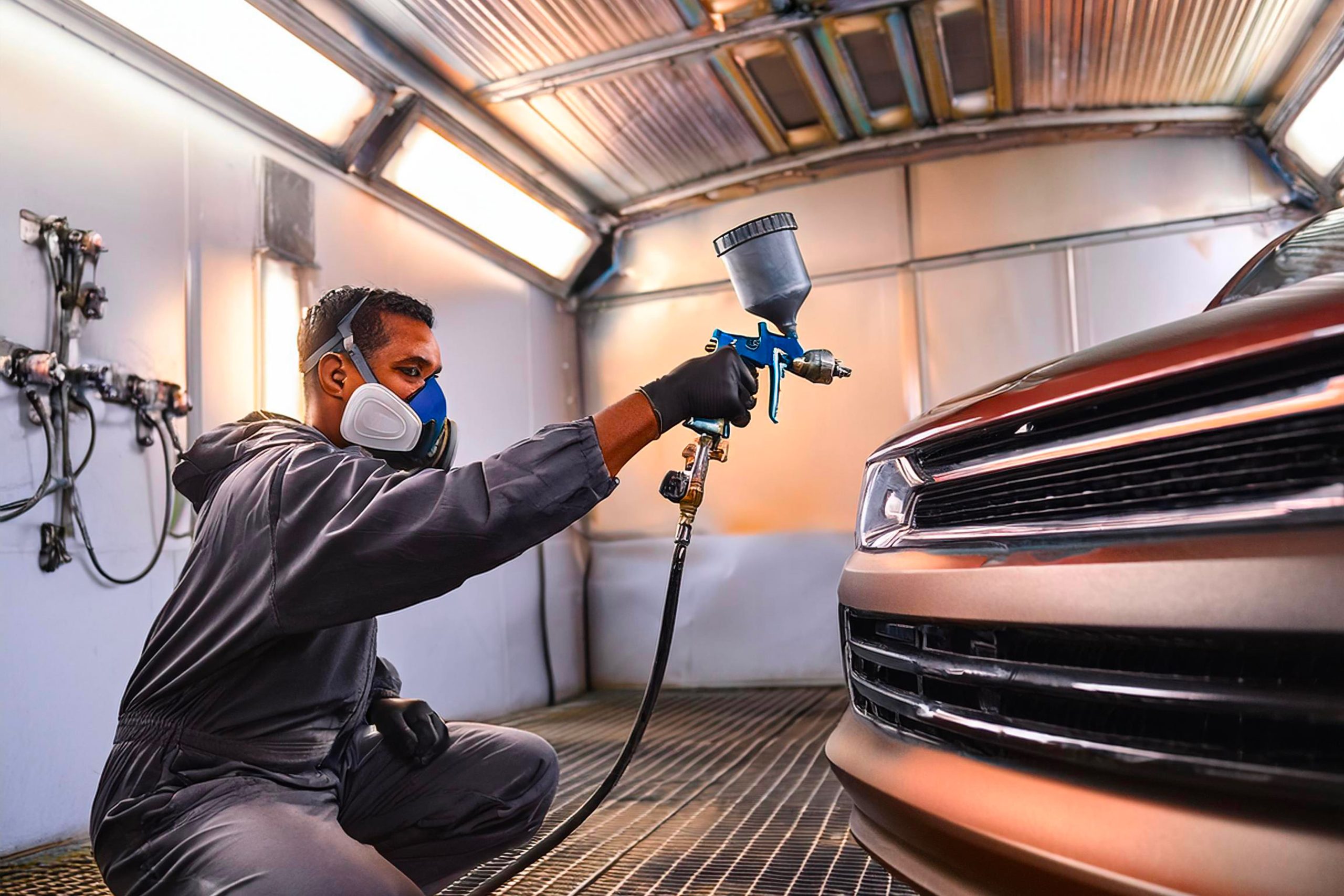
The Philippines automotive painting equipment market is quietly evolving, shaped by changes in vehicle ownership, repair practices, and local manufacturing ambitions. While it may not grab headlines like EV production or battery supply chains, painting and finishing remain critical to both OEM assembly and aftermarket repair. As of 2026, most advanced equipment used in the country still comes from overseas suppliers, particularly for spray booths, curing systems, and automated paint application technologies. On the ground, workshops and assembly units operate across a wide spectrum. Large OEM-linked facilities tend to use modern, enclosed paint booths with controlled environments, while smaller body shops often rely on basic spray setups with limited ventilation. This contrast highlights both the opportunity and the gap. With vehicle volumes rising and customer expectations becoming more demanding, the need for better equipment is no longer optional. It is becoming a competitive requirement.
What’s Driving the Automotive Painting Equipment Market in the Philippines?
Expansion of Vehicle Assembly and Local Production
The push to strengthen domestic automotive production has started to influence demand for industrial-grade painting systems. Programs such as the Comprehensive Automotive Resurgence Strategy have encouraged select manufacturers to localize parts of their assembly operations. While progress has been uneven, even modest gains in local production translate into higher demand for coating lines, pretreatment systems, and finishing equipment. In practice, suppliers serving OEMs are looking for consistency and speed rather than just cost savings. A poorly finished panel can disrupt an entire production line. That is why even mid-sized facilities are gradually moving toward semi-automated systems that reduce manual variability.
Growing Vehicle Parc and Refinish Demand
Walk into any busy district in Metro Manila and the importance of the refinish segment becomes obvious. Traffic density, tight parking spaces, and frequent minor collisions keep body shops occupied year-round. This steady flow of repair work sustains demand for spray guns, sanding tools, and drying systems. What is changing is the expectation around quality. Car owners are less tolerant of uneven finishes or mismatched shades. Insurance companies are also pushing accredited workshops to meet certain standards. As a result, many repair centers are upgrading to enclosed spray booths and better air filtration systems, even if it stretches their budgets.
Shift Toward Better Finish Quality and Efficiency
There is also a subtle shift in how workshops think about productivity. Traditional repainting methods often involve longer drying times and higher paint wastage. Newer technologies such as HVLP spray guns and infrared curing systems offer faster turnaround and more precise application. For a busy workshop, saving even a few hours per job can make a noticeable difference in monthly revenue. That said, adoption is not always straightforward. Equipment costs remain a barrier, and training technicians to use advanced systems correctly takes time. Some operators invest in new tools but continue using old techniques, which limits the benefits.
Government-Led Initiatives Supporting Industrial Upgradation
Government support for the automotive sector has provided a mixed but meaningful push. The continuation of programs like CARS has helped maintain interest in local assembly, even if large-scale expansion has been slower than initially planned. At the same time, policies supporting electric vehicles are beginning to influence how manufacturers think about materials and coatings. EV components often require different surface treatments, especially for lightweight materials. This creates a niche demand for more specialized painting equipment. While still early, suppliers who understand these requirements could find new opportunities over the next few years.
Market Competition
Competition in this market largely revolves around imported brands. Companies such as 3M, PPG Industries, Axalta, and Kansai Paint have built strong relationships with distributors and repair networks. Their advantage lies not just in product quality but also in training and after-sales support. Local distributors play a crucial role here. Many workshops depend on them for installation, maintenance, and even informal technical advice. In a market where downtime can directly affect income, reliability often matters more than brand image alone.
High Import Dependency and Informal Workshop Structure
A common challenge is the heavy reliance on imported equipment combined with a largely informal repair segment. High-end systems come with significant upfront costs, and smaller workshops often cannot justify the investment. Instead, they continue using basic tools that are cheaper but less efficient and sometimes less compliant with safety standards. This creates a fragmented market. On one end, there are well-equipped facilities offering near-OEM quality finishes. On the other, a large number of small operators compete primarily on price. Bridging this gap will not be easy, especially without access to affordable financing or structured training programs.
Future Outlook
Looking ahead, the market will likely grow in a gradual, uneven manner rather than through rapid transformation. Larger workshops and OEM-linked facilities are expected to adopt more advanced systems, including automated paint application and energy-efficient booths. These upgrades will be driven by the need for consistency, faster turnaround times, and compliance with environmental standards. The refinish segment may take longer to formalize, but some consolidation is already visible. Insurance-linked repair networks and franchise body shops are setting higher benchmarks, which smaller players may eventually need to follow. Over time, this could lead to wider adoption of standardized equipment and processes.
Consultants at Nexdigm, in their latest publication “Philippines Automotive Painting Equipment Market Outlook to 2030,” note that companies should focus on practical solutions rather than high-end technology alone. Equipment that balances cost, efficiency, and ease of use will likely find better acceptance, particularly in the fragmented aftermarket space.
To take the next step, simply visit our Request a Consultation page and share your requirements with us.
Harsh Mittal
+91-8422857704