
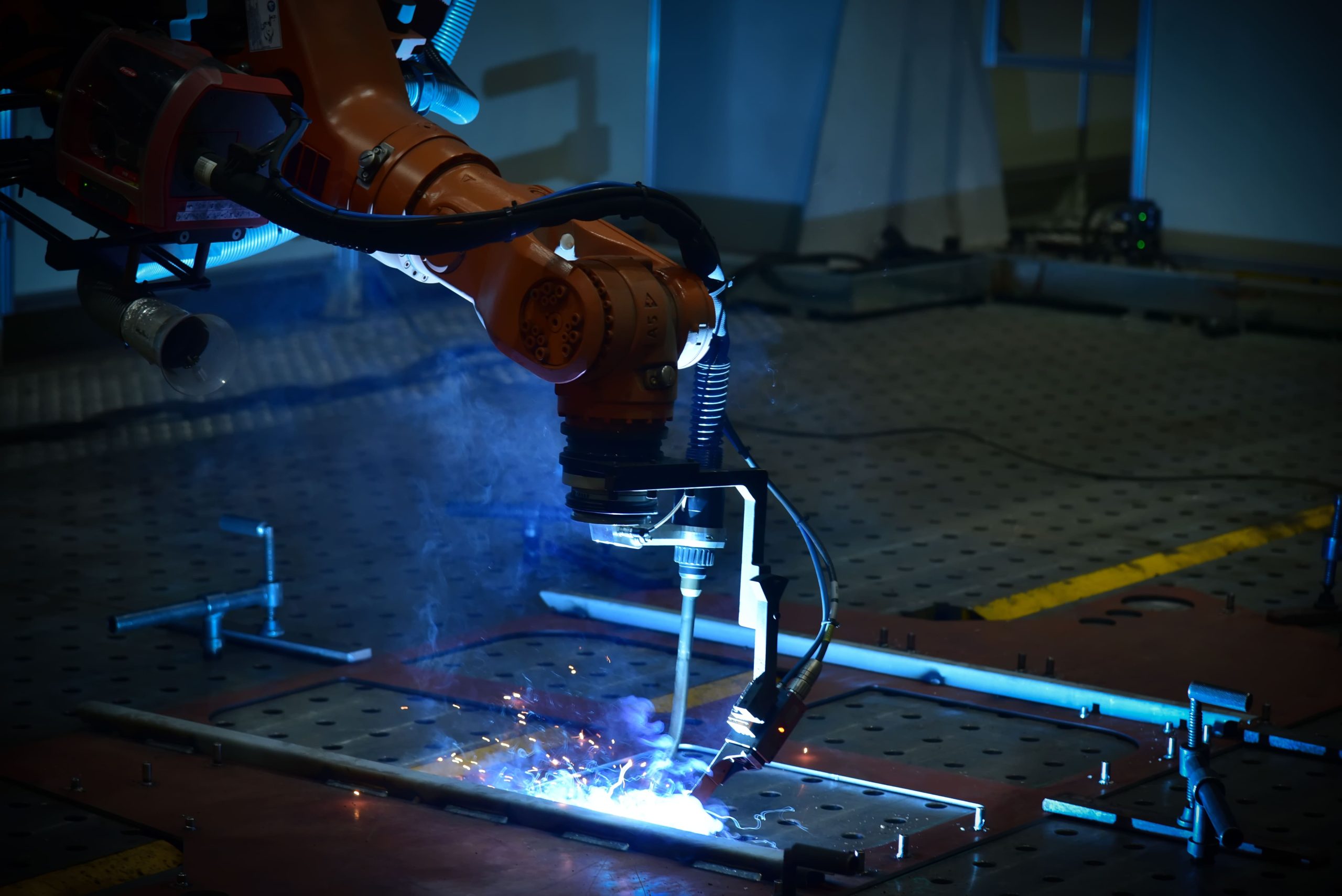
The Philippines automotive welding equipment market is moving into a more active phase as local vehicle production and component manufacturing pick up pace. Over the past few years, assembly plants have been scaling operations again, particularly in segments such as passenger vehicles and light commercial units. This has a direct knock-on effect on demand for welding equipment, since almost every stage of vehicle production relies on it, from body frames to exhaust systems. What stands out is the gradual shift in how manufacturers are thinking about welding. It is no longer just about joining metal parts; consistency, speed, and defect reduction now matter just as much. In several industrial zones across Luzon, suppliers have started upgrading to more precise systems, especially where export-quality standards apply. While the market is still relatively import-dependent, there is a noticeable push toward more advanced and automated solutions as companies try to stay competitive within Southeast Asia.
What’s Driving the Automotive Welding Equipment Market in the Philippines?
Expansion of Local Automotive Manufacturing
One of the most visible contributors to equipment demand is the steady expansion of domestic vehicle assembly and parts production. Local plants are not just increasing output, they are also refining processes to reduce waste and improve uniformity. Welding sits at the center of this transition. In practice, manufacturers are replacing older manual setups with semi-automated or programmable systems, particularly for high-volume components such as chassis parts and seat structures. This shift is not always smooth. Smaller suppliers often hesitate due to cost concerns, but larger Tier 1 players are already moving ahead, setting a benchmark the rest of the supply chain may eventually need to follow.
Rising Relevance of Electric Vehicles
Electric mobility is still in its early stages in the Philippines, yet its influence on manufacturing decisions is already visible. EV components demand a different level of precision, especially when working with lightweight materials or battery enclosures. Traditional welding methods do not always meet these requirements. As a result, companies exploring EV assembly or parts production are leaning toward inverter-based and robotic welding systems. There is also a learning curve involved. Skilled labor for such technologies is limited, which slows adoption despite clear long-term benefits. Still, early adopters are likely to gain an edge as EV demand gradually builds.
Shift Toward Automation and Quality Control
A less obvious but equally important factor is the pressure to meet global quality benchmarks. Export-oriented manufacturers, in particular, cannot afford inconsistencies in weld quality. Even minor defects can lead to rejected shipments or costly rework. This has pushed companies to invest in systems that offer better control and repeatability. Robotic welding cells, for example, are becoming more common in larger facilities. At the same time, there is growing interest in integrating monitoring tools that track weld performance in real time. While automation improves efficiency, it also introduces higher upfront costs, which remain a sticking point for many mid-sized firms.
Government-Led Initiatives
Government support has played a steady, if somewhat understated, role in shaping the market. Programs linked to automotive manufacturing incentives continue to encourage local production, while policies around electric vehicles are opening new areas of investment. The Electric Vehicle Industry Development Act has been particularly relevant, as it lays the groundwork for local EV assembly and supporting infrastructure. On the ground, these initiatives translate into more interest from both domestic and foreign manufacturers. Industrial parks and special economic zones are seeing renewed activity, with several firms exploring expansion or modernization plans. While policy support alone does not guarantee rapid transformation, it certainly lowers the entry barrier for companies considering long-term investments.
Market Competition
Competition in the welding equipment space is quite mixed. Global manufacturers dominate the high-end segment, especially in robotic and automated systems. Their products are often preferred by large automotive players who prioritize reliability and precision. At the same time, regional distributors and local engineering firms play a crucial role. They handle installation, maintenance, and customization, which are often more important than the equipment itself. Buyers rarely choose based on price alone. After-sales support, availability of spare parts, and technical expertise often tip the balance. This creates a layered market where both global and local players find space to operate.
High Import Dependency
A common challenge is the heavy reliance on imported welding equipment. Most advanced systems, including robotic units and high-precision power sources, are sourced from overseas. This adds multiple layers of cost, from shipping and duties to currency fluctuations. For smaller manufacturers, this becomes a real constraint. Even when there is clear value in upgrading equipment, the initial investment can be difficult to justify. Delays in procurement and servicing also affect production timelines. Until some level of local capability develops, this dependency will likely remain a limiting factor.
Future Outlook
Looking ahead to 2030, the direction seems fairly clear even if the pace remains uneven. More manufacturers will transition toward automated and semi-automated welding setups, particularly those linked to export markets or EV production. Manual welding will not disappear, but its share will gradually shrink in high-volume applications. There is also likely to be a stronger emphasis on efficiency. Energy-saving equipment and systems that reduce material waste will gain traction, especially as operational costs rise. At the same time, training and workforce development will become more important. Technology alone cannot deliver results without skilled operators.
Consultants at Nexdigm, in their latest publication “Philippines Automotive Welding Equipment Market Outlook to 2030,” highlight segmentation by Equipment Type, Vehicle Type, Application, and End User. Their view is fairly grounded: companies that invest early in automation, build reliable service networks, and focus on practical efficiency gains are more likely to succeed. The opportunity is there, but it favors those willing to adapt rather than those waiting for the market to mature on its own.
To take the next step, simply visit our Request a Consultation page and share your requirements with us.
Harsh Mittal
+91-8422857704