
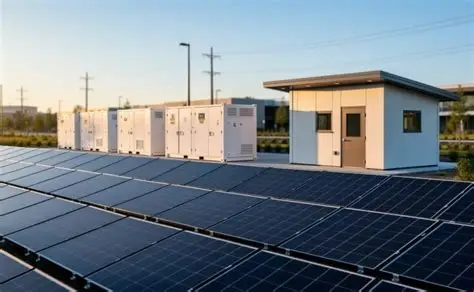
The Philippines Battery Energy Storage for Microgrids Market is witnessing strong growth, driven by rising electricity demand, renewable energy expansion, grid reliability challenges, and the need to supply power across more than 7,600 islands. Battery Energy Storage Systems (BESS) are increasingly being integrated into microgrids to improve energy reliability, reduce dependence on diesel generators, and support renewable energy deployment. With installed power-generation capacity exceeding 30 GW, a population of more than 115 million, and rapidly growing industrial and commercial sectors, demand for battery-backed microgrids is increasing across remote communities, islands, telecom towers, commercial facilities, and industrial operations.
Key Market Drivers for the Philippines Battery Energy Storage for Microgrids Market
Island Electrification and Energy Access Requirements Accelerate Demand
The Philippines’ archipelagic geography creates significant opportunities for decentralized energy systems. Thousands of remote islands and off-grid communities continue to require reliable electricity solutions where conventional grid expansion remains costly. Battery-backed microgrids integrated with solar and wind generation are increasingly deployed to replace diesel-based power systems, improve energy access, and reduce operational costs. These solutions are becoming essential for island communities, tourism destinations, and remote economic zones.
Renewable Energy Expansion Strengthens Storage Opportunities
The Philippines aims to increase the share of renewable energy to 35% of power generation by 2030 and 50% by 2040. Growing deployment of solar, wind, hydro, and geothermal projects is increasing the need for battery storage systems capable of managing intermittency and improving grid stability. Hybrid solar-plus-storage microgrids are gaining traction across commercial, industrial, and remote applications as organizations seek reliable and sustainable energy solutions.
Commercial, Industrial, and Telecom Infrastructure Support Market Growth
Rapid expansion of telecommunications infrastructure, industrial facilities, data centers, mining operations, and commercial developments is driving demand for resilient power systems. Battery energy storage integrated with microgrids enables peak-load management, backup power, voltage regulation, and energy optimization, making it increasingly attractive for energy-intensive operations facing high electricity prices and grid reliability concerns.
Government Initiatives Supporting the Philippines Battery Energy Storage for Microgrids Market
The Philippine government is actively supporting distributed energy systems through the National Renewable Energy Program (NREP), rural electrification initiatives, and clean-energy policies. Investments under the Build Better More program and energy-transition roadmap continue to strengthen electricity infrastructure and renewable energy deployment. Additionally, national efforts to improve electricity access, reduce diesel dependence, and increase renewable energy penetration are creating favorable conditions for battery-powered microgrids. Government support for private-sector renewable energy investments and energy-storage deployment is expected to accelerate market development.
Competitive Landscape of the Philippines Battery Energy Storage for Microgrids Market
The Philippines Battery Energy Storage for Microgrids Market is becoming increasingly competitive as battery manufacturers, renewable-energy developers, utilities, and technology providers expand their presence. Competition is centered on battery efficiency, storage duration, lifecycle performance, thermal management, and energy-management software capabilities. Major participants including Tesla Energy, BYD, Huawei Digital Power, Sungrow, Fluence, Hitachi Energy, Schneider Electric, Meralco, Aboitiz Power, and ACEN Corporation are actively investing in battery storage and microgrid solutions. Increasing deployment of solar-plus-storage projects and intelligent energy-management systems is further driving innovation and competition.
Major Challenges Facing the Philippines Battery Energy Storage for Microgrids Market
High Capital Costs and Financing Constraints
Battery storage systems remain capital-intensive, particularly for large-scale microgrids serving remote regions. While technology costs continue to decline globally, financing and project economics remain key considerations for developers and end users.
Climate and Grid Integration Challenges
Tropical weather conditions, typhoons, humidity, and challenging island logistics can affect installation and maintenance requirements. In addition, successful deployment requires advanced grid management and energy-control systems to ensure reliable integration with renewable energy resources.
Future Outlook
The Philippines Battery Energy Storage for Microgrids Market is expected to witness robust growth through 2035, supported by installed power capacity exceeding 30 GW, renewable energy targets of 35% by 2030, and a population surpassing 115 million. Increasing deployment of solar-plus-storage systems across island communities, mining operations, industrial parks, telecom infrastructure, and commercial facilities will continue to strengthen demand. Additionally, growing investments in battery manufacturing, smart-grid technologies, AI-enabled energy management platforms, and distributed energy resources are expected to create significant opportunities for energy-storage developers, battery suppliers, and microgrid operators throughout the country.
Consultants at Nexdigm, in their latest publication “Philippines Battery Energy Storage for Microgrids Market Outlook to 2035” analyse the sector By Battery Technology Chemistry (Lithium Iron Phosphate (LFP), Nickel Manganese Cobalt (NMC) and Lithium Titanate (LTO)), By Power Capacity Rating (Below 100 kW and 100 kW to 500 kW) and By Grid Connection Status (Grid-Tied Microgrid, Islanded Independent Microgrid and Hybrid Diesel-Renewable Microgrid).
Nexdigm suggests that businesses in the Philippines Battery Energy Storage for Microgrids Industry prioritize lithium-ion battery systems, solar-plus-storage microgrids, AI-enabled energy-management platforms, and resilient off-grid power solutions to capitalize on the country’s 30 GW+ power capacity, 35% renewable-energy target, expanding island electrification programs, and growing demand for reliable, sustainable, and decentralized energy infrastructure across commercial, industrial, telecom, and remote-community applications.
To take the next step, simply visit our Request a Consultation page and share your requirements with us.
Harsh Mittal
+91-8422857704