
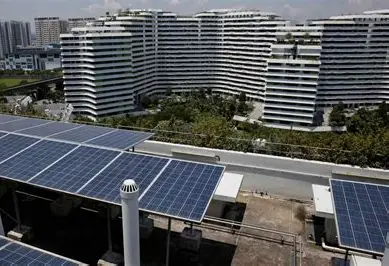
The Philippines Building Energy Retrofit Market is witnessing strong growth, driven by rising electricity costs, urbanization, sustainability initiatives, and increasing demand for energy-efficient buildings. Building energy retrofits involve upgrading HVAC systems, lighting, insulation, controls, and building management systems to improve energy performance and reduce operating expenses. With a population exceeding 115 million, urbanization approaching 50%, and commercial buildings accounting for a substantial share of electricity consumption, building owners are increasingly investing in retrofit solutions. Growth in office spaces, shopping malls, hotels, hospitals, educational institutions, and mixed-use developments is further accelerating demand for energy-efficient building technologies.
Key Market Drivers for the Philippines Building Energy Retrofit Market
Rising Electricity Costs and Cooling Demand Accelerate Retrofit Activity
Electricity prices in the Philippines remain among the highest in Southeast Asia, encouraging building owners to prioritize energy-efficiency improvements. In commercial buildings, HVAC and cooling systems can account for 40–60% of total electricity consumption, making energy-efficient chillers, smart thermostats, and building automation systems attractive investments. Rising energy costs are driving demand for retrofits that deliver measurable reductions in operating expenses while improving occupant comfort.
Commercial Real Estate and Urban Development Create Significant Opportunities
Major urban centers including Metro Manila, Cebu, and Davao continue to witness expansion in commercial buildings, mixed-use developments, hotels, healthcare facilities, and retail infrastructure. Many existing buildings are undergoing modernization to improve sustainability performance and align with internationally recognized green-building standards. These projects are increasing demand for LED lighting upgrades, smart controls, building management systems, and energy-monitoring solutions.
Data Centers and Digital Infrastructure Expansion Strengthen Market Growth
The Philippines is becoming an increasingly attractive location for digital infrastructure investment. Growth in cloud services, telecommunications, and data-center construction is increasing demand for high-efficiency cooling systems, intelligent energy management, and building optimization technologies. Facility operators are investing in retrofit projects that reduce energy consumption while maintaining operational reliability and sustainability performance.
Government Initiatives Supporting the Philippines Building Energy Retrofit Market
The Philippine government continues to promote energy efficiency through the Energy Efficiency and Conservation Act (Republic Act No. 11285) and long-term sustainable development strategies. In addition, the Build Better More infrastructure program is supporting investments exceeding USD 35 billion across transportation, energy, utilities, and public infrastructure projects. Government agencies are encouraging energy-efficient building designs, green construction practices, and modernization of existing facilities. These initiatives are creating favorable conditions for HVAC upgrades, lighting retrofits, automation systems, and intelligent energy-management solutions across commercial and institutional buildings.
Competitive Landscape of the Philippines Building Energy Retrofit Market
The Philippines Building Energy Retrofit Market is becoming increasingly competitive as Energy Service Companies (ESCOs), HVAC manufacturers, and building automation providers expand their offerings. Competition is focused on energy-efficient cooling systems, LED lighting retrofits, occupancy-based controls, building management systems (BMS), AI-driven energy analytics, and performance-based energy contracts. Major participants including Schneider Electric, Siemens, Honeywell, Johnson Controls, Daikin, Carrier, Trane Technologies, and local engineering service providers continue supporting retrofit projects across commercial offices, shopping malls, hotels, healthcare facilities, universities, and government buildings. The growing focus on reducing operating costs and improving sustainability performance is accelerating adoption of integrated retrofit solutions.
Major Challenges Facing the Philippines Building Energy Retrofit Market
High Initial Investment Requirements
Although energy retrofits can provide significant long-term savings, upfront capital costs for HVAC modernization, building automation systems, energy-management platforms, and lighting upgrades can be substantial for some building owners.
Limited Awareness and Technical Expertise
Adoption may be constrained by limited awareness of retrofit benefits among smaller building owners and by shortages of specialized expertise required to design, implement, and optimize advanced energy-efficiency projects.
Future Outlook
The Philippines Building Energy Retrofit Market is expected to witness strong growth through 2035, supported by a population exceeding 115 million, infrastructure investments surpassing USD 35 billion under the Build Better More program, and a rapidly expanding commercial real estate sector. Rising electricity prices, growth in hyperscale and colocation data centers, and increasing adoption of green-building standards are expected to accelerate retrofit activity across offices, malls, hotels, hospitals, and educational facilities. Additionally, smart building technologies, AI-enabled energy management systems, high-efficiency HVAC solutions, and LED lighting upgrades can reduce building energy consumption by 20–40%, strengthening demand for retrofit projects. As urbanization approaches 50% and digital infrastructure investments continue to rise, energy-efficiency modernization is expected to become a key priority for both private and public-sector building owners across the Philippines.
Consultants at Nexdigm, in their latest publication “Philippines Building Energy Retrofit Market Outlook to 2035” analyse the sector By Building Type (BPO Hub Facilities, Financial District Headquarters and Mixed-use Integrated Developments), By Retrofit Scope (Superficial Component Upgrades and Deep Mechanical Systems Overhaul) and By Geographic Region (National Capital Region, Central Visayas and Davao Region).
Nexdigm suggests that businesses in the Philippines Building Energy Retrofit Industry prioritize high-efficiency HVAC retrofits, smart building management systems, LED lighting upgrades, AI-driven energy analytics, and ESCO-based performance contracting models to capitalize on the country’s 115 million+ population, USD 35 billion+ infrastructure investments, expanding commercial real estate sector, and growing demand for sustainable and cost-efficient building operations across commercial, institutional, and public-sector facilities.
To take the next step, simply visit our Request a Consultation page and share your requirements with us.
Harsh Mittal
+91-8422857704