

The private education market is expanding rapidly, with higher education alone reaching about USD 154 million and growing near 20.23% annually, driven by rising youth population, private sector participation, and demand for skilled workforce pathways.
Consumer preference surveys help institutions identify program expectations, affordability thresholds, and experience drivers, enabling targeted positioning and improved satisfaction across private education offerings.
Enrollment growth across private institutions and capacity expansion indicate sustained demand, positioning private education as a key growth segment within the national learning ecosystem.
In such a competitive, fast-expanding education landscape, understanding student and parent preferences is critical for differentiation and enrollment growth.
Conventional Challenges in the Consumer Surveys
Consumer surveys in the Philippines private education context are structured research tools used to capture student and parent preferences, expectations, affordability perceptions, and decision drivers across school and program selection. They systematically gather insights on course relevance, campus experience, pricing sensitivity, and career outcomes to help private education providers rapidly expand their market.
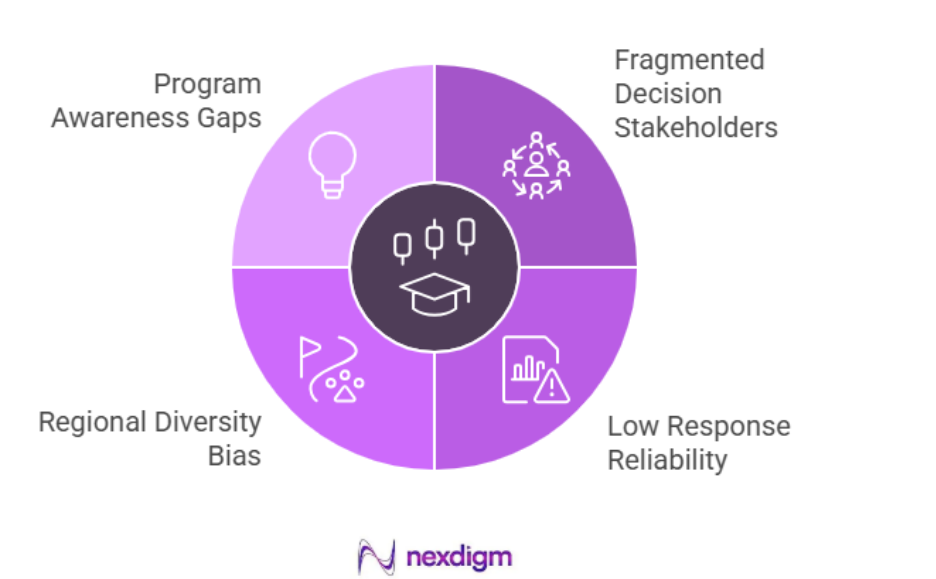
Fragmented Decision Stakeholders
Student, parent, and sponsor preferences often diverge, complicating accurate demand of interpretation in private education choices.
Low Response Reliability
Survey responses may reflect aspirational preferences rather than actual enrollment behavior or affordability constraints.
Regional Diversity Bias
Urban-centric sampling overlooks provincial education expectations and access constraints affecting private school selection.
Program Awareness Gaps
Respondents frequently lack clarity on course outcomes, accreditation, and career pathways, distorting preference signals.
Nexdigm’s Consumer Survey Services
Nexdigm offers end to end consumer survey services that help organizations understand customer expectations, preferences, and experience gaps and convert insights into actionable business improvements. Its services span research design, data collection, analytics, and strategy translation across sectors.
- Custom Survey Architecture: Designs sector specific questionnaires aligned to customer journeys, decision stages, and product or service attributes relevant to each industry.
- Multi Stakeholder Insight Capture: Collects perspectives from users, buyers, influencers, and decision makers to reflect real purchase and usage dynamics.
How Nexdigm Overcomes These Challenges
Nexdigm delivers customized consumer survey solutions combining sector expertise, advanced analytics, and actionable insights, enabling organizations to understand customer preferences, identify experience gaps, and translate feedback into targeted product, service, and strategy improvements.
Multi-Stakeholder Survey Design
Nexdigm captures aligned insights from students, parents, guardians, and financial sponsors who jointly influence private education decisions in the Philippines. It maps differing priorities such as academic quality, employability outcomes, affordability, campus safety, and accessibility.
It ensures demand assessment reflects real household decision dynamics rather than single respondent bias. This approach helps institutions understand trade-offs families make across tuition, location, and program reputation.
Behavior-Linked Preference Modeling
Nexdigm integrates stated survey preferences with actual enrollment patterns, tuition payment capacity, scholarship uptake, and program application data to validate intent against behavior.
It segments respondents by affordability bands, academic readiness, and career goals, enabling realistic demand estimation across course types and price tiers. Institutions gain evidence on which programs attract committed enrollment versus aspirational interest, supporting accurate portfolio planning and pricing alignment.
Geo-Segmented Sampling Framework
Nexdigm ensures statistically balanced representation across metropolitan, secondary city, and provincial education markets where access, income levels, and institutional awareness differ significantly.
Sampling accounts for regional school density, transport connectivity, digital access, and local employment pathways influencing private education demand. This reveals geographic variation in program preference, price tolerance allowing providers to tailor campus expansion, outreach, and delivery formats to diverse Philippines learner segments.
Nexdigm’s Case:
A private university network engaged Nexdigm to conduct student and parent preference surveys across programs and campuses. Insights revealed pricing sensitivity and employability concerns. Tuition restructuring and curriculum updates increased enrollment conversion by 19% and improved student satisfaction scores by 23% within one admission cycle.
To take the next step, simply visit our Request a Consultation page and share your requirements with us.
Harsh Mittal
+91-8422857704