

Students in the Philippines have more education options than before, from expanding private schools to online and overseas programs. As expectations around support, communication, and outcomes rise, everyday experience now plays a big role in whether learners feel satisfied and choose to stay with an institution.
Education service quality surveys simply capture how students actually experience teaching, support services, facilities, and digital processes. When schools understand what students value and where frustrations exist, they can fix issues early and create an environment that encourages students to continue their education with them.
Why Education Providers Need Student Experience Surveys
- Students Expect More Than Academics Learners compare schools on teaching support, communication, and campus life; without listening to them directly, institutions misjudge what truly keeps students engaged and satisfied.
- Dropouts Quietly Drain Revenue When frustrations go unnoticed, students leave or transfer, forcing schools to spend more on new enrollments while seats and resources remain underused.
- Everyday Service Issues Stay Hidden Delays in responses, unclear guidance, facility concerns, and online glitches often persist because no structured feedback channel captures real student experiences.
- Quality Reviews Need Student Voice Accreditation and quality checks increasingly look for evidence of learner satisfaction; without surveys, institutions struggle to demonstrate service effectiveness and improvement.
- Hard to Stand Out Without Proof Schools claim strong support and care, yet without comparative feedback, they cannot show how their experience differs from competing institutions.
- Campus Experiences Differ Widely Urban and provincial campuses face different expectations and constraints; without local feedback, schools miss what matters most to each student community.
- Digital Touchpoints Shape Perception Admissions portals, payment systems, and learning platforms influence trust; unreported usability problems frustrate students and increase support load.
Nexdigm Education Service Quality Survey Framework
Nexdigm’s approach to education service quality surveys follows how students actually move through their learning journey across campuses and services. It combines practical feedback collection and clear analysis so institutions can quickly see what students experience and where to improve retention and satisfaction.
- Omnichannel Data Collection
- Stratified Sampling Model
- Benchmarking Framework
- Action Translation Toolkit
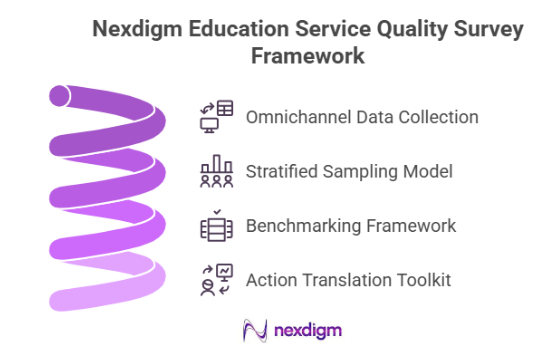
Nexdigm Student Experience Survey Methodology
Omnichannel Data Collection
Students share feedback in the ways they already communicate, on phones, online links, or quick campus interactions. In a country with widespread mobile use, this makes it easier for different student groups to respond, not just the most vocal ones, giving a more honest view of experience.
Stratified Sampling Model
Responses are balanced across campuses, programs, and year levels so no group dominates the picture. This helps institutions see whether an issue is affecting first-year students, a specific course, or a particular campus instead of assuming it is everywhere.
Benchmarking Framework
Student feedback is compared across campuses and similar institutions, showing where experience truly lags or leads. This helps schools understand whether a concern is unique to them or part of wider competition for students.
Action Translation Toolkit
Survey results are turned into simple dashboards and clear action steps for teams to implement. This ensures feedback leads to visible improvements in services students use daily, supporting stronger satisfaction and continued enrollment.
Nexdigm’s Case
A private university in the Philippines saw increasing second-year dropouts despite steady admissions. Nexdigm’s service quality survey showed students struggled with slow advising and unclear course guidance. After streamlining advising and standardizing communication, the university reduced attrition by 12% within one academic cycle and improved student support satisfaction.
To take the next step, simply visit our Request a Consultation page and share your requirements with us.
Harsh Mittal
+91-8422857704